Reading Time: 8 min read
What the “16% Growth” Headline Actually Means
Smart irrigation is becoming a larger part of the home-watering market, but the percentage in this headline should not be read as proof that home gardeners are adopting smart irrigation at exactly 16% per year. Growth forecasts vary by source, geography, product category and forecast period.
For gardeners, the useful signal is simpler: timers, app-connected controllers, soil-moisture sensors, weather-aware scheduling and flow monitoring are becoming easier to combine with ordinary drip irrigation. The important question is not whether the market grows by one precise percentage. It is whether these tools solve a real watering problem in your garden.
Smart Irrigation Is a Control Layer — Not a Substitute for Good Irrigation
A smart controller cannot compensate for poor water distribution, clogged emitters, excessive pressure, badly grouped plants or a leaking system. The physical irrigation system still does the actual work.
A practical home setup usually has two layers:
- Delivery: hose, tubing, dripline, emitters, micro-sprayers or another method that moves water to the root zone.
- Control: a timer or controller that decides when a zone runs, sometimes using sensor or weather information as feedback.
Start by making the delivery layer reliable. Automation becomes valuable after water is reaching the right plants at a predictable rate.
The Five Building Blocks of a Useful Smart-Watering System
1. Reliable Water Delivery
For vegetable beds and containers, drip irrigation or carefully selected micro-irrigation is often easier to control than broad overhead watering. The objective is consistent delivery to the crop root zone, not simply adding electronics to a hose.
2. Watering Zones
Plants with very different water needs should not automatically share the same schedule. Containers, raised beds, mature shrubs and newly planted crops may need different runtimes or frequencies. Zoning lets the controller respond to those differences.
3. A Timer or Controller
A basic digital timer can automate a repeatable schedule. A connected controller can add remote adjustments, multiple zones, weather integration or alerts. “Smart” is useful only when those features reduce unnecessary watering or make the system easier to manage.
4. Feedback
Soil-moisture sensors, rain sensors, flow meters and weather information can provide feedback to the controller. They should be treated as decision inputs, not unquestionable measurements.
5. Manual Override
A garden automation system should always remain easy to override. Transplants, heat waves, repairs, heavy rain and crop changes can make yesterday's schedule inappropriate today.
Soil-Moisture Sensors: Useful, but Placement Matters
A soil-moisture reading represents conditions around the sensor, not the moisture level of an entire garden. Placement near an emitter may show wetter conditions than the surrounding bed, while placement near the surface may not represent deeper roots.
Use the sensor as one source of evidence. Check the soil in the active root zone and compare what the sensor reports with what you observe. If those consistently disagree, adjust sensor depth or location before changing the whole irrigation strategy.
Weather-Aware Controllers: Good for Adjustment, Not Prediction Perfection
Weather-aware irrigation can reduce the need to manually reprogram a timer every time conditions change. A controller may use rainfall, temperature or evapotranspiration-related information to modify watering.
But local conditions still matter. A windy balcony, a south-facing container, a shaded bed and a mulched raised bed can behave very differently even when they share the same local weather forecast.
Treat weather automation as a useful adjustment layer, then verify the result at the plants.
Why Drip Irrigation and Smart Control Work Well Together
Drip systems make automated watering easier to reason about because water is delivered at defined points near plants. A controller can determine when a zone runs, while emitters determine where water goes.
For a reliable system, pay attention to filtration, pressure regulation, tubing layout and emitter condition. Automation that repeatedly runs clogged or poorly balanced lines simply automates the problem.
Do Smart Systems Automatically Save Water?
No fixed percentage should be promised for every garden. Water use depends on the previous watering method, climate, crop, soil or potting mix, system design, leaks, scheduling and user behavior.
The strongest opportunities usually come from avoiding obvious waste: watering during or immediately after meaningful rainfall, running zones longer than the root zone requires, leaving leaks unnoticed, or applying the same schedule to plants with different needs.
A well-configured controller can help with those problems. A badly configured one can repeat them automatically.
A Practical Upgrade Path for Home Gardeners
Stage 1: Fix the Physical System
Check for leaks, clogged emitters, poor pressure, runoff and uneven coverage. Confirm that water reaches the active root zone.
Stage 2: Automate a Known-Good Schedule
Add a dependable timer before adding complexity. A simple controller running an appropriate schedule is more useful than an advanced controller attached to an unreliable irrigation layout.
Stage 3: Separate Different Watering Needs
If containers dry much faster than raised beds, create separate zones where practical rather than compromising with one schedule.
Stage 4: Add Feedback Only Where It Solves a Problem
Add moisture sensing, weather-based adjustment or flow monitoring when each feature addresses a specific failure mode you actually have.
Stage 5: Review the System as the Garden Changes
Plants grow, seasons change and root systems expand. Smart irrigation still needs periodic human review.
Smart Irrigation for Containers and Balconies
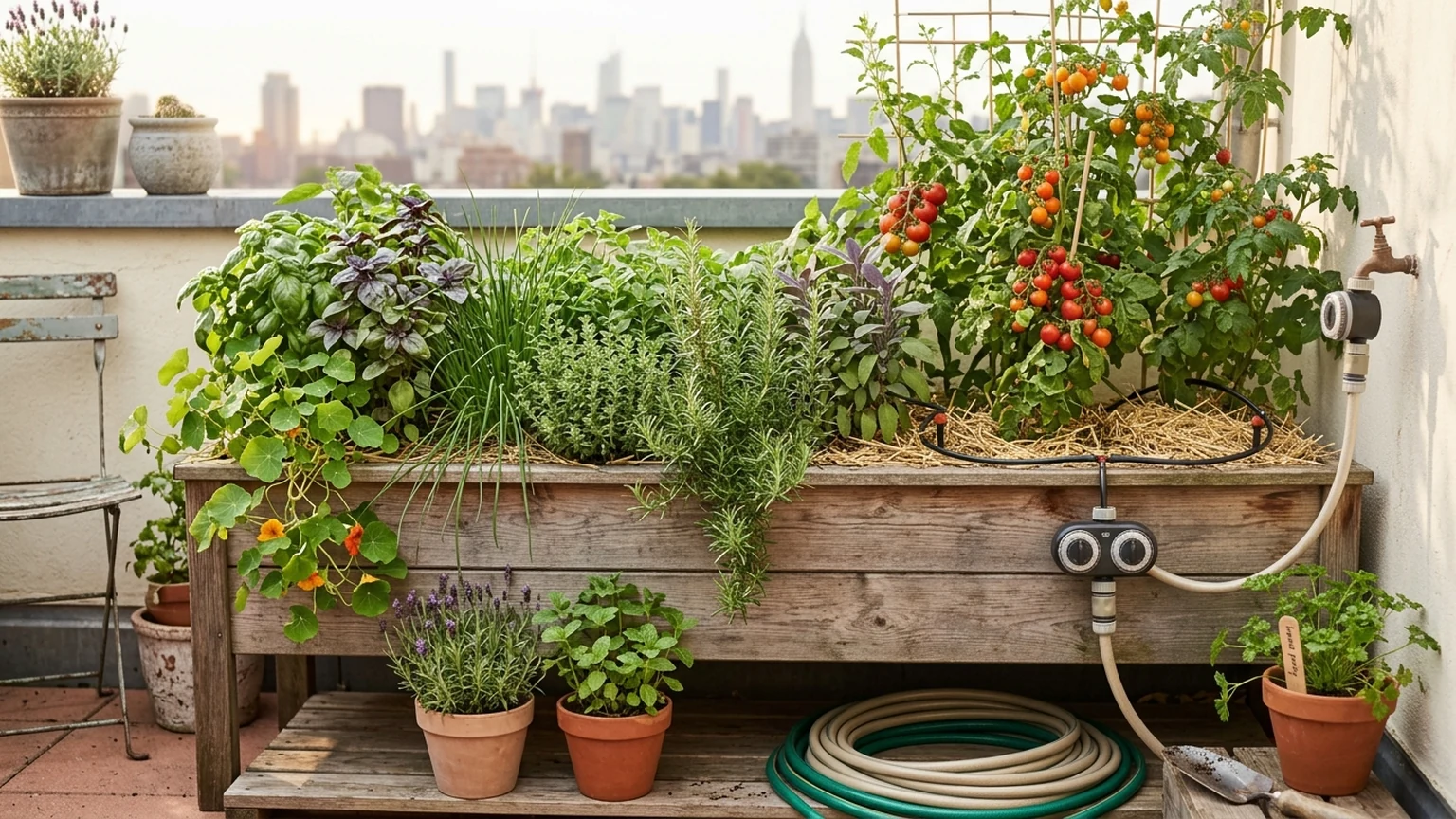
Small-space gardens can benefit from automation because containers may dry quickly and irregular watering is common when gardeners are away from home.
For balconies, prioritize secure connections, low-flow delivery and protection against uncontrolled runoff. A timer is useful, but it should not turn a small leak into hours of unattended water loss. Check fittings and drainage before leaving an automated system unattended for extended periods.
Smart Irrigation for Raised Beds
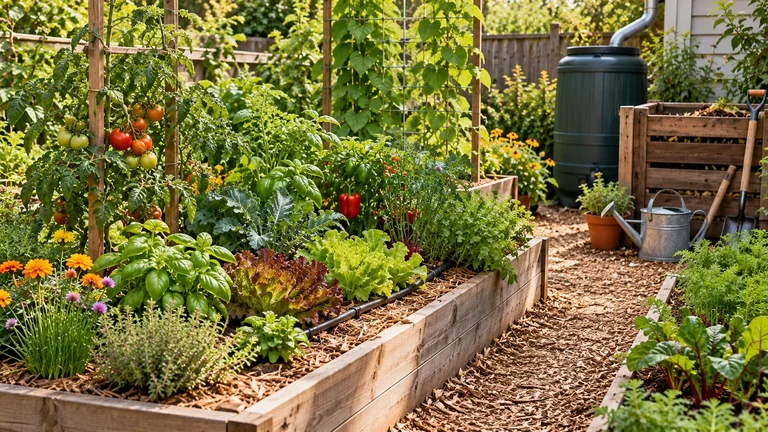
Raised beds often work well with dripline or individual emitters grouped into one or more zones. Mulch can reduce surface evaporation, but it does not eliminate the need to check moisture below the surface.
Rather than watering by a universal rule such as “deeply every X days,” determine whether the active root zone actually needs water and adjust runtime as crops, weather and soil conditions change.
When a Basic Timer Is Better Than a Smart Controller
You may not need app control, cloud connectivity or multiple sensors if you have one small irrigation zone, a stable watering routine and easy access to the garden.
A basic timer can be the better choice when simplicity, low maintenance and predictable operation matter more than remote control.
When a Smarter Controller Starts to Make Sense
Additional automation becomes more useful when you have multiple zones, travel frequently, deal with rapidly changing weather, need remote adjustments, want alerts or have enough irrigation complexity that manual scheduling becomes difficult.
The value comes from solving management problems—not from owning more connected devices.
Common Smart-Irrigation Mistakes
- Automating a system before checking emitter flow and leaks.
- Using one zone for plants with very different watering needs.
- Treating a single moisture sensor as representative of an entire garden.
- Assuming weather data perfectly describes conditions at the plant.
- Setting a schedule once and never revisiting it.
- Buying connected hardware before deciding what problem it needs to solve.
- Assuming “smart” automatically means water-efficient.
A Simple Decision Framework
Choose a basic timer when you need dependable automation for one straightforward watering zone.
Choose a multi-zone controller when different parts of the garden require different schedules.
Add weather awareness when changing conditions frequently make fixed schedules inappropriate.
Add soil-moisture sensing when root-zone moisture is difficult to judge consistently and you can place the sensor meaningfully.
Add flow monitoring when detecting leaks, broken lines or unusual water use would materially improve reliability.
FAQ
Does smart irrigation really save water?
It can reduce avoidable watering when the system is designed and configured well, but there is no universal savings percentage. Results depend on what system it replaces and how the garden is managed.
Do I need a soil-moisture sensor?
No. Many gardens can be managed effectively with a reliable timer and regular root-zone checks. A sensor becomes useful when it provides information that improves a real watering decision.
Is a Wi-Fi controller necessary?
No. Connectivity is valuable for remote control, alerts and some weather-aware functions, but a basic timer may be more appropriate for a simple garden.
Can smart irrigation work on a balcony?
Yes, particularly with low-flow drip systems, but secure fittings, drainage and runoff control are especially important in apartments and balconies.
Should every plant be watered on the same schedule?
No. Plants with substantially different root zones, container sizes or water requirements may need separate zones or different schedules.
Start With the Watering Problem, Not the Gadget
If you are new to smart irrigation, begin by mapping your watering zones and checking how evenly your current system delivers water. Then automate the simplest reliable version of that system.
Continue with GardHack's drip-irrigation, water-smart gardening and rainwater guides to build the physical watering system before adding more automation.