Reading Time: 10 min read
5 min read
From Sustainable Living to Thriving Ecosystems: Unlocking the Power of Permaculture in Your Backyard
Trend analysis suggests that permaculture is increasingly gaining traction as a viable solution to our global challenges. As water scarcity and food inflation continue to rise, people are seeking out sustainable and resilient ways to grow their own food. Permaculture's focus on small-space growing, efficient water use, and practical resilience has made it an attractive option for those looking to reduce their environmental impact.
The mainstreaming of permaculture is not just a passing fad – it's a response to the pressing issues facing our planet. By adopting permaculture principles, individuals can create thriving ecosystems that produce abundant food while minimizing waste and conserving resources. As water pressure continues to build, permaculture offers a beacon of hope for those seeking practical solutions to our most pressing problems.
Permaculture Is a Design Framework — Not a Gardening Trend Checklist
Interest in resilient food growing, water efficiency, soil health and low-input garden design has increased the visibility of ideas commonly associated with permaculture. That does not mean every sustainable gardening technique is automatically “permaculture,” or that one method defines the movement.
Permaculture is better understood as a design framework: observe a site, understand flows of water, sunlight, nutrients, access and labor, then arrange elements so that the system becomes easier to maintain and more useful over time.
The practical value is not in copying a fashionable garden style. It is in designing around the conditions you actually have.
Why Permaculture Ideas Are Relevant to Home Gardeners in 2026
For home gardeners, the strongest appeal is practical rather than ideological.
Many households are dealing with some combination of:
- limited growing space,
- higher food costs,
- water restrictions or expensive irrigation,
- hotter or less predictable growing seasons,
- and limited time for garden maintenance.
Permaculture-style design can be useful because it asks how a garden can make better use of existing resources instead of continually adding inputs.
That may mean capturing rainfall, keeping soil covered, using perennial plants where appropriate, placing frequently harvested crops close to the house, or combining plants with different canopy heights.
Start With Observation, Not Construction
One of the most useful permaculture habits is also one of the least dramatic: observe before building.
Before installing raised beds, ponds, swales, trellises or irrigation, identify:
- where the strongest sunlight falls,
- where shade moves through the day,
- where rainwater naturally flows,
- where water collects or drains poorly,
- which areas dry fastest,
- how wind moves through the space,
- and which routes you actually use every day.
A design that follows those patterns is usually easier to manage than one imposed without regard to the site.
Use Zones to Reduce Work
Permaculture often organizes a site by frequency of use.
For a small home garden, the concept can be very simple:
- High-use zone: herbs, salad greens and containers you check almost every day.
- Medium-use zone: tomatoes, peppers, beans and other crops that need regular attention.
- Lower-use zone: perennial herbs, berries, compost or other systems that need less frequent intervention.
The point is not to follow a rigid numbered diagram. The point is to reduce unnecessary walking, watering and forgotten maintenance.
Design Around Functions, Not Just Individual Plants
A useful permaculture question is: What does this element do besides produce food?
A single element may perform several functions.
For example:
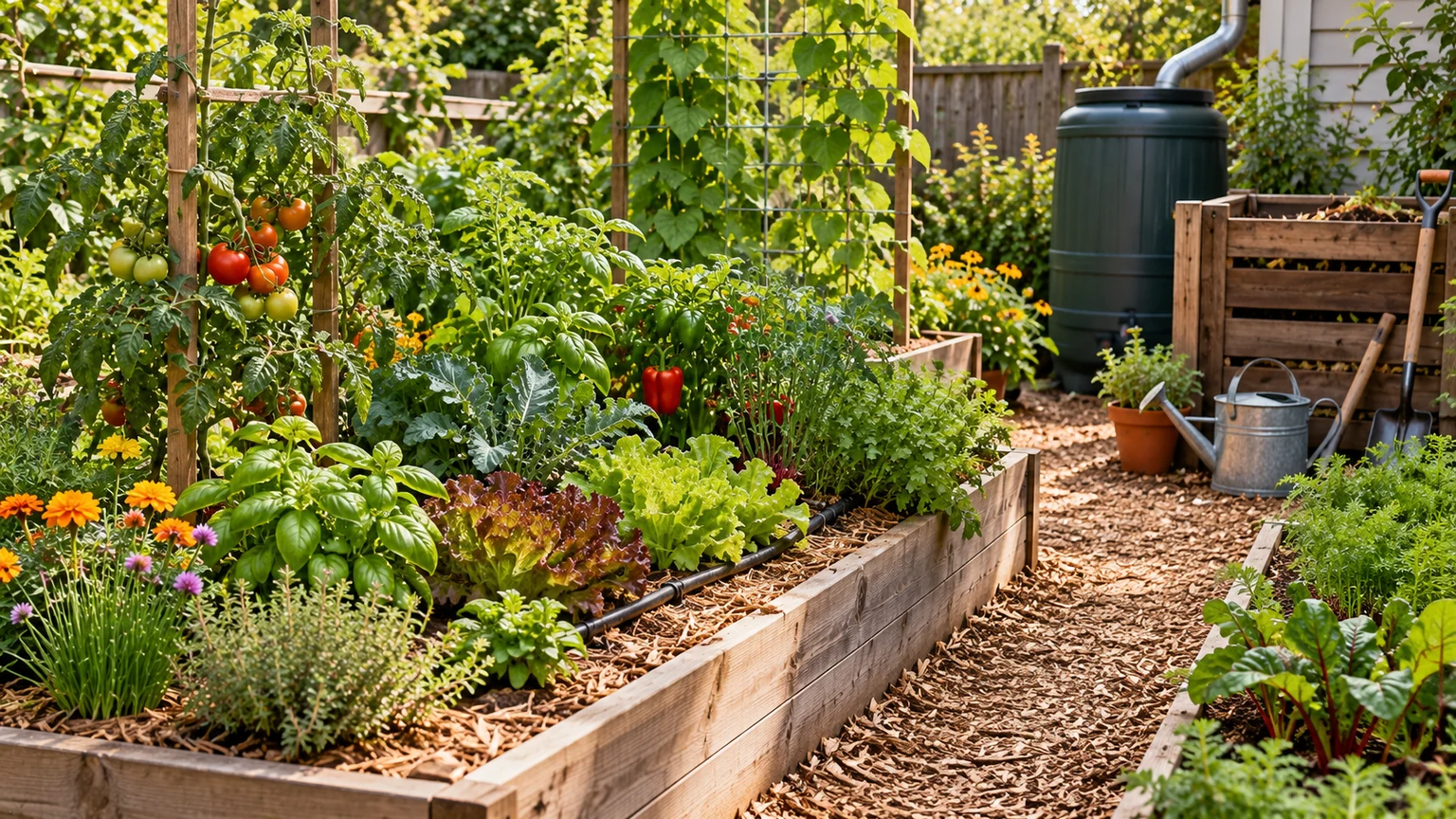
- a trellis can support beans while creating seasonal shade,
- mulch can reduce evaporation while protecting soil structure,
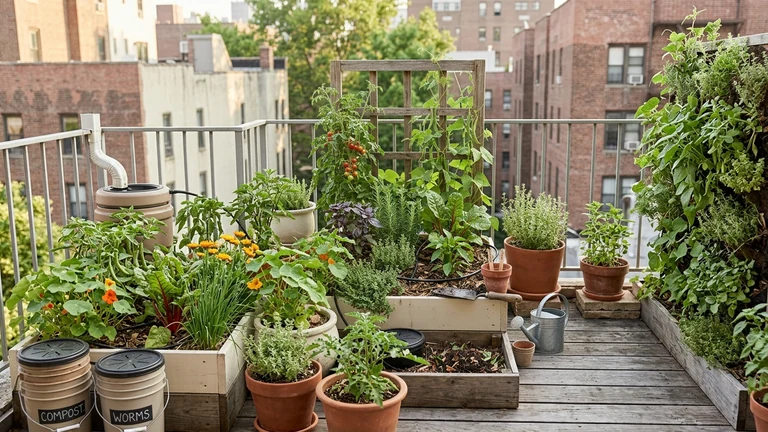
- a rain barrel can store runoff while reducing dependence on treated water for irrigation,
- a flowering herb can provide food while also supporting beneficial insects,
- and a deciduous vine can provide summer shade while allowing more winter light.
This is more useful than trying to force every garden element into a specific permaculture label.
Water Comes Before Plant Density
Water-smart design is one of the strongest practical connections between permaculture and modern home gardening.
The first goal should usually be to slow, store or direct water safely before trying to increase planting density.
Useful strategies can include:
- mulching exposed soil,
- drip irrigation,
- grouping crops with similar water needs,
- rainwater capture where legal and practical,
- improving soil organic matter,
- and directing overflow away from foundations and structures.
No technique guarantees lower water use on its own. Results depend on climate, soil, plant selection, irrigation design and maintenance.
Rainwater Harvesting Fits Naturally Into Permaculture Design
Rainwater harvesting is a good example of using an existing flow rather than creating a new resource demand.
A roof or other suitable catchment surface can direct rainfall into storage for later garden use.
But storage capacity and rainfall potential are not the same thing. A small barrel can fill quickly during a storm, so overflow routing is part of the system.
The practical design question is:
Where does the water come from, where can it be stored, and where does excess water go safely?
Greywater Requires More Caution Than Rainwater
Greywater is sometimes discussed alongside permaculture, but it should not be treated as a universal DIY irrigation source.
Rules vary significantly by location, and safe use depends on the source water, plumbing configuration, soaps or cleaning products involved, soil conditions and the crops being irrigated.
Do not assume that household wastewater can simply be redirected onto edible crops. Check local regulations and use a system designed for the intended purpose.
Soil Cover Is More Important Than a Perfect Garden Aesthetic
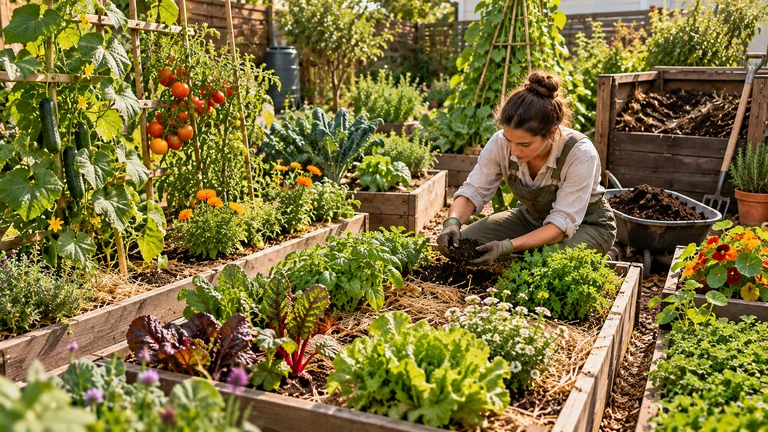
Keeping soil covered is one of the simplest low-input practices available to a home gardener.
Depending on the site, cover can come from:
- organic mulch,
- living groundcovers,
- crop residues,
- or closely managed plant canopies.
Covered soil generally experiences less direct sun exposure and less surface disturbance than bare soil.
The goal is not to create a permanently untouched garden. The goal is to avoid unnecessary exposure and disturbance while still managing crops effectively.
Perennial Plants Can Reduce Replanting — But They Are Not Automatically Better
Permaculture designs often include perennial plants because they remain in place for multiple seasons.
For home gardens, useful perennial candidates may include herbs, berries or other crops suited to the local climate.
But perennial planting should still be selective.
A plant that becomes too large, shades the wrong area or requires more water than the site can provide is not automatically a good choice simply because it is perennial.
Small-Space Permaculture Is Mostly About Layering and Timing
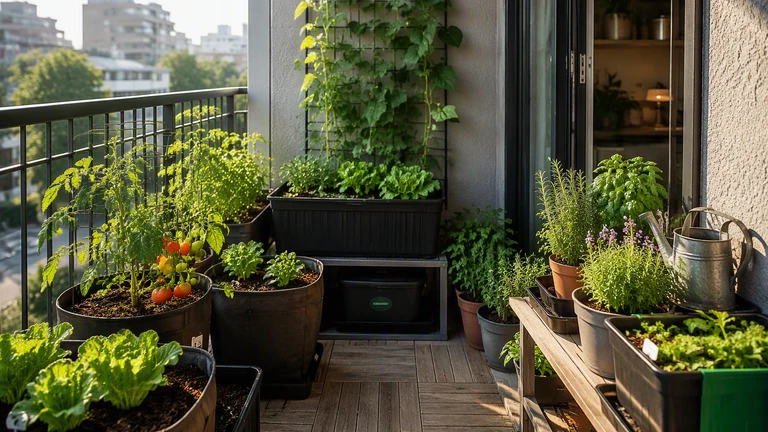
You do not need acreage to apply permaculture-style thinking.
In a small yard, patio or raised bed, useful strategies include:
- using vertical supports for climbing crops,
- growing short crops beneath taller crops where light remains adequate,
- succession planting,
- using containers to exploit otherwise unused sunny areas,
- placing herbs close to the kitchen,
- and keeping irrigation simple enough to maintain.
The objective is efficient use of space, not maximum biological complexity.
Hydroponics Is Not a Core Requirement of Permaculture
Hydroponics can be a useful food-growing technology, especially where soil access is limited, but it should not be presented as a defining permaculture technique.
Permaculture traditionally emphasizes relationships among land, water, soil, plants, animals and human use. Hydroponic systems operate under a different set of constraints and inputs.
A gardener can use hydroponics alongside a permaculture-inspired garden, but the two concepts should not be treated as interchangeable.
Companion Planting Should Be Used Carefully
Companion planting often appears in permaculture discussions, but many popular pairing charts mix practical compatibility with folklore.
The strongest reasons to combine crops are usually practical:
- similar water requirements,
- different canopy heights,
- different harvest timing,
- efficient use of space,
- and increased plant diversity.
Do not assume that one plant automatically protects, feeds or improves another simply because the pairing appears on a chart.
What Permaculture Cannot Guarantee
Permaculture design can improve how resources are organized, but it does not guarantee:
- higher yields,
- zero pesticide use,
- zero fertilizer use,
- lower water consumption in every climate,
- complete food self-sufficiency,
- or a maintenance-free garden.
A poorly matched plant, inadequate sunlight, bad drainage or incorrect irrigation can still cause problems inside a permaculture-inspired design.
Common Mistake 1 — Starting With Big Earthworks
Swales, ponds and major landscape changes are visually associated with permaculture, but they are not automatically appropriate for a home property.
Earthworks can affect drainage, structures, neighboring properties and underground utilities.
Small gardens usually benefit from beginning with reversible changes such as mulch, containers, planting layout and simple water management.
Common Mistake 2 — Trying to Make Every Element Do Everything
“Stacking functions” does not mean every plant or structure must solve multiple problems at once.
Complexity can become a maintenance burden.
A simple element that performs one important function reliably can be more valuable than a complicated system that is difficult to manage.
Common Mistake 3 — Ignoring Mature Plant Size
A small tree, shrub or vine may look harmless when planted, but its mature canopy and root system can dominate a compact garden.
Plan for mature size, not nursery size.
Common Mistake 4 — Confusing Diversity With Overcrowding
A diverse garden is not the same as a densely packed garden.
Plants still require light, airflow, root space and access for maintenance.
Use diversity deliberately rather than simply adding more species.
A Practical Permaculture Workflow for a Small Garden
- Observe the site. Map sun, shade, wind and water movement.
- Identify constraints. Space, water, time, soil and local rules.
- Place high-use elements first. Herbs, greens and frequently harvested crops belong near convenient access.
- Plan water. Decide how irrigation, rain capture and overflow will work.
- Protect the soil. Use appropriate mulch or living cover.
- Add vertical structure. Use trellises where climbing crops make sense.
- Layer carefully. Combine crop heights without creating excessive shade.
- Add perennials selectively. Choose plants that fit mature size and climate.
- Observe again. Adjust the system based on actual performance.
What “Mainstream” Should Mean Here
The useful interpretation is not that permaculture has suddenly become a universal gardening standard.
It is that several ideas long associated with permaculture — water harvesting, soil cover, perennial planting, low-input design, biodiversity and thoughtful placement — increasingly overlap with the practical concerns of ordinary home gardeners.
That is a more defensible reason for its growing visibility than claiming a single 2026 permaculture boom.
The Bottom Line
Permaculture is most useful when it changes the way you design the garden rather than simply adding another list of techniques.
Observe first. Place elements deliberately. Protect soil. Manage water. Use vertical space. Add diversity without overcrowding. Choose perennial plants where they genuinely fit.
The goal is not to imitate a textbook permaculture garden. The goal is to build a garden that uses its site, water and labor more intelligently over time.
FAQ
What is permaculture?
Permaculture is a design approach that considers relationships among people, plants, soil, water, energy and other site resources. In a home garden, it can be used to organize these elements more efficiently.
Is permaculture becoming mainstream in 2026?
Permaculture-related ideas are increasingly visible in discussions about resilient gardening, water conservation, soil health and local food production. It is more accurate to describe this as growing overlap with mainstream gardening concerns than to claim that permaculture has become a universal standard.
Do I need a large property for permaculture?
No. Small-space applications can include container placement, vertical growing, succession planting, mulching, rainwater capture and arranging frequently used crops near convenient access.
Is hydroponics part of permaculture?
Hydroponics can be used alongside a permaculture-inspired system, but it is not a core requirement or defining feature of permaculture.
Does permaculture always save water?
No. Water use depends on climate, crop choice, irrigation design, soil, mulch and maintenance. Permaculture can help organize water more intelligently, but it does not guarantee lower consumption.
Can I use greywater in a permaculture garden?
Possibly, but greywater use is regulated differently by location and requires careful attention to source water, plumbing, products used in the household and crop type. It should not be treated as a universal DIY solution.
What is the best first step?
Observe your site before building anything. Understanding sunlight, drainage, water movement, access and existing vegetation will usually improve every later design decision.
Build a More Resilient Garden
One practical system every Tuesday — water-smart gardening, food resilience, permaculture and small-space growing.
No fluff. No spam. Just practical systems that work.