Reading Time: 9 min read
Drip Irrigation for Apartment Balconies in 2026: How to Choose the Right Kit
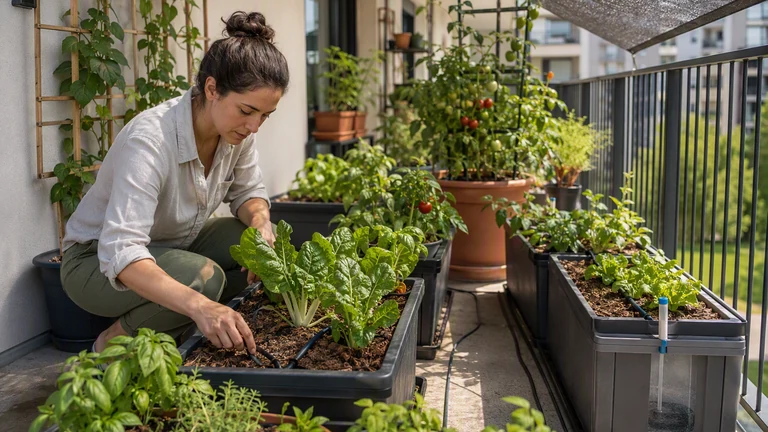
A balcony drip system can make container watering more consistent, but the right setup depends less on a brand name than on how water reaches the balcony, how many containers you have, and whether those containers need similar amounts of moisture.
There is no single “best” kit for every apartment balcony. Some balconies have an outdoor tap. Others need a reservoir and pump. Some have five herb pots; others have twenty containers, hanging baskets and a raised planter.
The useful question is not “Which kit won?” It is “Which system architecture fits this balcony?”
Start With the Water Source
Before comparing tubing, emitters or timers, determine where the irrigation water will come from.
Most balcony systems fall into two broad categories:
- Tap-fed systems connected to an outdoor faucet or suitable water outlet.
- Reservoir-fed systems that draw water from a tank or container, usually with a small pump.
These are not interchangeable.
A gravity-fed reservoir may not produce enough pressure for some emitters. A pump-based kit needs power or batteries. A tap-fed kit may require a pressure reducer or adapter depending on the supply.
For a Few Pots, Simpler Is Usually Better
If you have only a handful of containers, a complicated multi-zone controller can create more failure points than benefits.
A basic system may need only:
- main supply tubing,
- small distribution tubing,
- one or more emitters per container where appropriate,
- simple connectors,
- and a timer if automatic watering is useful.
For larger balconies, expansion fittings and multiple branches become more important.
Choose Emitters for the Containers — Not Just the Kit
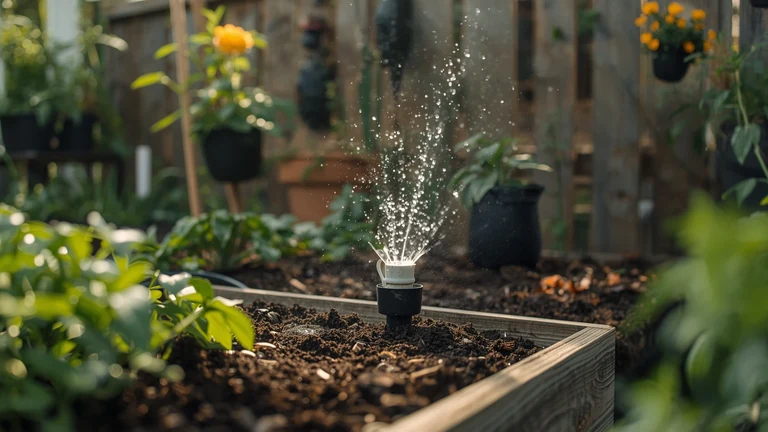
Emitter choice matters because containers differ dramatically in volume, exposure and plant water demand.
A small herb pot does not necessarily need the same flow as a large tomato container.
Useful options can include:
- fixed-flow drip emitters,
- adjustable emitters,
- micro-drip stakes,
- and short drip-line loops for larger containers.
Adjustable emitters can be convenient, but they still need calibration. “Adjustable” does not mean the system automatically knows what each plant needs.
Pressure Matters More Than Many Buyers Expect
Many balcony irrigation problems are really pressure and flow problems.
Too little pressure can leave the farthest emitters under-supplied. Excessive pressure can cause fittings to leak or disconnect.
Before buying a kit, check whether it specifies:
- recommended operating pressure,
- maximum line length,
- maximum number of emitters,
- and whether a pressure reducer is included or required.
Reservoir-and-pump kits should also specify pump capacity and expected head height.
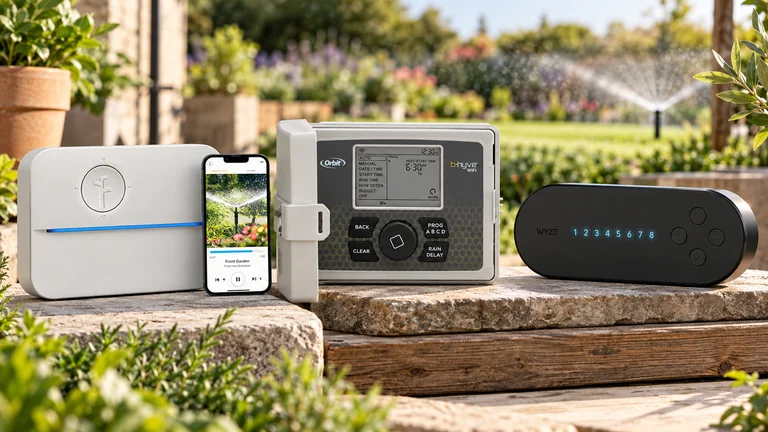
A Timer Is Useful — But It Does Not Know the Weather
A timer can prevent forgotten watering and help maintain a routine, especially when you are away from home.
But a fixed schedule should not replace observation.
Container water demand changes with:
- temperature,
- wind,
- sun exposure,
- plant size,
- container size,
- growing medium,
- and rainfall if the balcony is exposed.
A schedule that works in mild weather may be completely inadequate during a heat wave.
Do Not Use a Universal “Every 7–10 Days” Schedule
There is no responsible fixed interval that works for all balcony containers.
During hot, windy conditions, some containers can dry quickly. Large self-watering planters may remain adequately moist much longer.
Instead:
- check root-zone moisture,
- observe plant response,
- run the system long enough to wet the intended root zone,
- then adjust frequency according to actual conditions.
Balcony Drainage Is Part of the Irrigation System
Good irrigation should not create runoff problems for the apartment below you.
Before automating watering, check:
- where excess water drains,
- whether saucers overflow,
- whether runoff can stain walls or flooring,
- and whether building or lease rules restrict drainage from balconies.
Automating an irrigation system without solving drainage can simply automate the problem.
Think in Watering Zones
One of the most effective improvements is to group containers with similar water needs.
For example:
- rosemary, thyme and other relatively dry-tolerant herbs may form one group,
- leafy greens may form another,
- large fruiting vegetables may require a separate watering pattern.
If every pot has radically different requirements, one timer and one flow rate will be difficult to manage well.
Self-Watering Containers Change the Equation
A balcony already using self-watering containers may not need conventional drip irrigation for every pot.
In some gardens, the most practical solution is a hybrid setup:
- drip irrigation for ordinary containers,
- reservoir monitoring for self-watering planters,
- and occasional hand watering for unusual plants.
Automation does not need to cover every container to be useful.
What to Look for in a Balcony Drip Kit
Instead of relying on unsupported rankings, compare kits using practical criteria.
1. Water-source compatibility
Does it work with your tap, reservoir or pump arrangement?
2. Pressure requirements
Will the emitters operate reliably with the pressure available?
3. Number of containers supported
Ignore impressive accessory counts if the system cannot maintain consistent flow through the actual layout.
4. Adjustable distribution
Can higher-demand and lower-demand pots receive different amounts of water?
5. Expandability
Can you add containers later without replacing the entire system?
6. Timer compatibility
If automatic watering matters, confirm that the system and water source can actually be controlled by the timer you intend to use.
7. Replacement parts
Standard tubing sizes and readily available connectors can make future repairs much easier.
8. Leak resistance
Balcony installations should use secure fittings and be checked regularly because leaks can affect floors, walls and neighboring units.
A Practical Balcony Layout
Keep the main line as short and simple as practical.
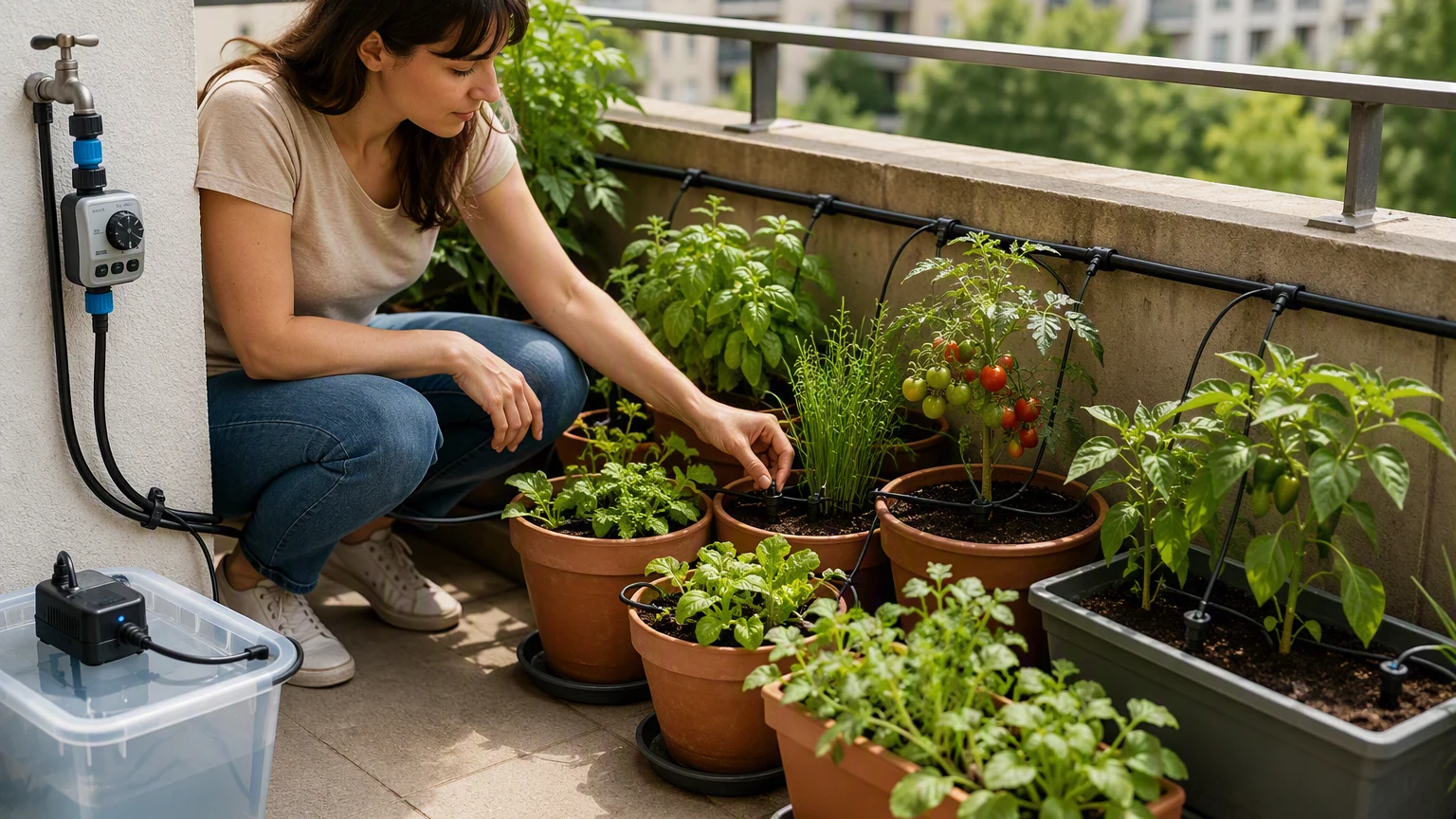
A useful layout often looks like this:
- water source or reservoir,
- timer or controller where appropriate,
- pressure regulation if required,
- main supply line,
- short branches to groups of containers,
- emitters positioned in the root zone,
- end cap or flush point.
Avoid unnecessary loops and extremely long branches unless the system is designed for them.
Test the System Before Leaving It Unattended
Automatic irrigation should be observed through several complete cycles before you rely on it while away.
Check:
- every emitter,
- all connectors,
- container drainage,
- the wetting pattern after a full cycle,
- and whether the reservoir contains enough water for the planned interval.
Recheck the system after hot weather, after moving pots and after changing the number of emitters.
Common Balcony Drip-Irrigation Mistakes
- Using identical flow for every container.
- Ignoring pressure requirements.
- Using tiny containers for large thirsty crops.
- Setting a timer once and never adjusting it.
- Allowing runoff to reach neighboring balconies.
- Depending on automation without checking emitters for clogging.
- Assuming more components mean a better system.
Tap-Fed or Reservoir-Fed: Which Is Better?
Neither is universally better.
Tap-fed systems are convenient where a suitable outdoor water connection exists and building rules permit its use.
Reservoir-fed systems can work where no outdoor tap is available, but they introduce additional variables: reservoir capacity, pump reliability, battery or power supply and the risk of the tank running dry.
The correct choice is the one that matches the balcony infrastructure.
Do All Plants Work With Drip Irrigation?
Many balcony vegetables, herbs and ornamentals can be watered effectively with drip irrigation, but not every plant should receive the same irrigation pattern.
Succulents, Mediterranean herbs, leafy greens and fruiting tomatoes can have very different moisture requirements.
The irrigation hardware may be compatible with all of them. The watering schedule usually is not.
What We Would Not Use as a Buying Criterion
Do not choose a kit simply because it claims:
- maximum water savings,
- perfect watering,
- universal plant compatibility,
- automatic optimization,
- or a fixed number of days between watering.
Those claims ignore too many variables that matter on a real balcony.
A Simple Buying Workflow
- Count your containers.
- Group them by water demand.
- Identify the water source.
- Measure the approximate tubing route.
- Check pressure or pump requirements.
- Choose suitable emitters.
- Decide whether a timer is useful.
- Plan drainage.
- Install and observe several complete cycles.
- Adjust according to real soil moisture and weather.
The Bottom Line
The best balcony drip-irrigation kit is not the one with the most accessories or the highest unsupported rating.
It is the system that matches your water source, container count, pressure, drainage conditions and plant groups — and that you can inspect and adjust easily.
For apartment balconies, reliability and controllability matter more than complexity.
FAQ
Do I need an outdoor faucet?
No. Tap-fed systems are convenient, but reservoir-and-pump systems can work on balconies without an outdoor faucet.
Do I need a pump?
Only if your water source or irrigation design requires one. Tap-fed systems usually do not need a pump, while many reservoir systems do.
How often should balcony drip irrigation run?
There is no universal interval. Base frequency on root-zone moisture, weather, plant size, container size and growing medium.
Can one system water herbs and tomatoes?
Yes, if the system allows you to deliver appropriate amounts of water to different containers. Their watering requirements should not automatically be treated as identical.
Should every container have one emitter?
Not necessarily. Larger containers may benefit from multiple emitters or a short drip-line loop so that the root zone wets more evenly.
Can I leave the system running while I travel?
Automatic irrigation can help, but test several complete cycles first, confirm drainage, inspect for leaks and make sure a reservoir-fed system has sufficient capacity.
What matters most when choosing a kit?
Water-source compatibility, pressure, container count, emitter flexibility, drainage and ease of maintenance matter more than marketing rankings.
Quick Decision Matrix: Which Balcony Drip Setup Fits Your Space?
| Balcony situation | Best starting system type | What matters most |
|---|---|---|
| Outdoor faucet available | Tap-fed low-pressure drip kit | Pressure regulation, secure fittings and timer compatibility |
| No outdoor faucet | Reservoir-fed pump system | Pump compatibility, reservoir capacity and leak protection |
| Only a few containers | Simple adjustable emitter kit | Low part count and individual flow adjustment |
| Mixed herbs and fruiting crops | Expandable multi-branch system | Separate delivery rates and practical zoning |
| Frequent travel | Timer-controlled system with tested reserve capacity | Reliability, drainage and several successful test cycles before departure |
How to Compare Kits Without Fake Rankings
A useful balcony comparison should not pretend that one kit is universally best. Compare systems on water-source compatibility, pressure requirements, number of supported containers, emitter adjustability, expansion options, replacement-part availability and leak resistance.
If you have already mapped those requirements, continue with GardHack's smart watering automation guide before adding a timer or connected controller.
Build a More Resilient Garden
One practical system every Tuesday — water-smart gardening, food resilience, permaculture and small-space growing.
No fluff. No spam. Just practical systems that work.