Reading Time: 5 min read
Vegetable Garden ROI Calculator
A garden can replace part of your grocery spending, but the result depends on what you harvest, what equivalent produce would have cost, and what you spend to grow it. Use the calculator below as a planning estimate rather than a guarantee.
Estimate Your Garden ROI
Enter your numbers and calculate.
How the Calculator Works
The core calculation is straightforward:
Net grocery offset = harvest retail value − allocated setup cost − recurring seasonal cost.
For reusable infrastructure, the calculator spreads first-year setup cost across the number of seasons you expect to use it. That prevents a durable bed, trellis or irrigation system from being treated as though it must be repurchased every season.
What Should Count as Harvest Value?
Use the price of produce you would realistically have purchased. If your household normally buys conventional tomatoes at one price, do not automatically value the harvest using a premium specialty-store price.
Count only produce that is actually harvested and usable. A theoretical maximum yield is not the same as grocery value.
What Should Count as Growing Cost?
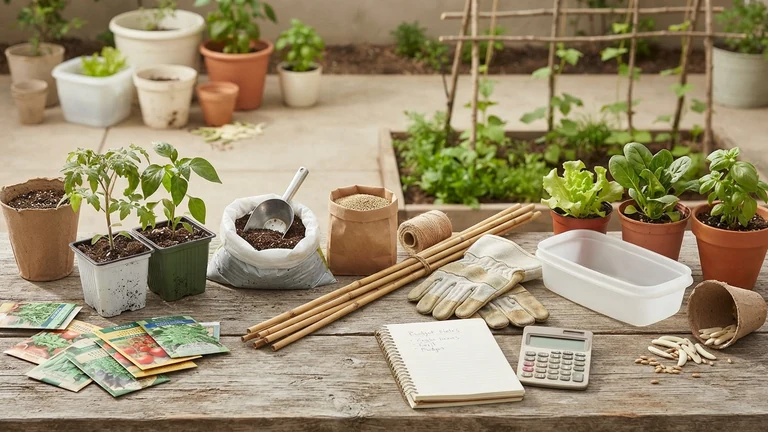
Setup Costs
- Containers or raised-bed materials
- Trellises and reusable supports
- Reusable irrigation equipment
- Durable hand tools purchased specifically for the garden
Recurring Costs
- Seeds and starter plants
- Potting mix or soil amendments
- Fertilizer where needed
- Replacement irrigation parts
- Other inputs purchased each season
Why First-Year ROI Often Looks Worse
The first season may include infrastructure that remains useful for several years. A $120 setup used for three seasons represents about $40 of setup cost per season before recurring inputs are added.
This does not guarantee that later seasons will be profitable. It simply avoids charging the entire reusable investment to every season.
Which Crops Can Improve Grocery Offset?
Crops tend to contribute more useful grocery replacement when they combine several characteristics:
- your household buys them regularly;
- they have meaningful retail value;
- they grow reliably in your conditions;
- they produce repeatedly or use space efficiently;
- you actually harvest and eat what is grown.
Fresh herbs, leafy greens, productive peppers and some tomatoes can perform well under the right conditions, but there is no universal highest-ROI crop.
Track the Harvest Instead of Guessing
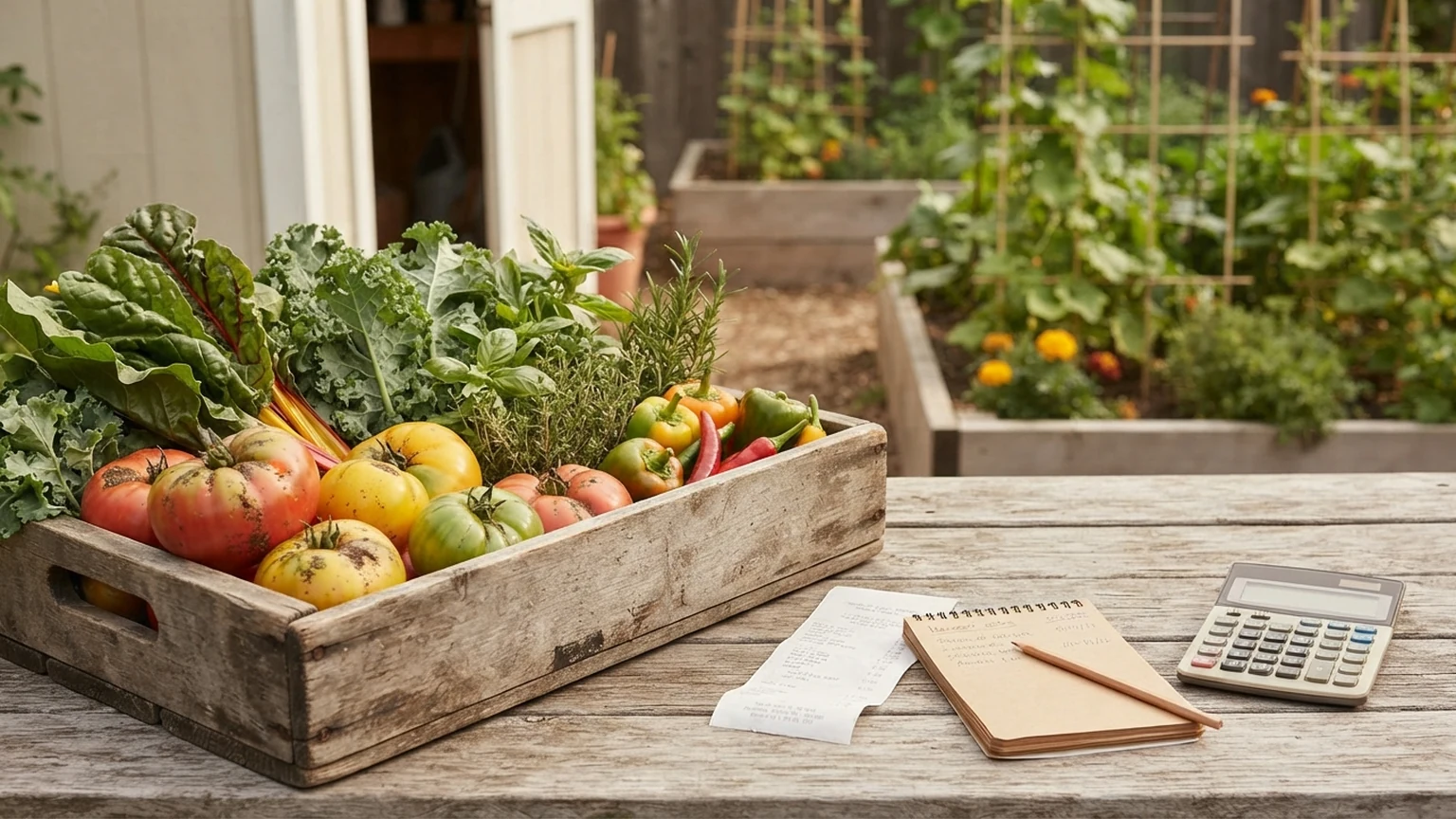
For a more defensible estimate, weigh or count what you harvest and periodically compare it with the price of equivalent produce where you normally shop.
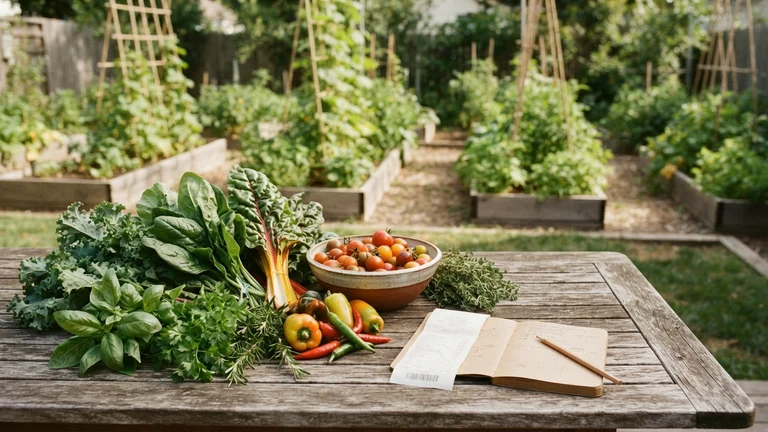
A notebook or simple spreadsheet can record:
- crop;
- harvest amount;
- equivalent grocery price;
- estimated harvest value;
- seasonal inputs.
Example
Suppose a garden produces an estimated $350 of produce during the season. You spent $120 on reusable setup expected to last three seasons and another $65 on seasonal inputs.
- Allocated setup cost: $40
- Recurring cost: $65
- Total seasonal cost: $105
- Harvest value: $350
- Estimated grocery offset after costs: $245
The result is useful for planning, but it remains an estimate because yields and grocery prices change.
What This Calculator Cannot Tell You
It cannot predict weather, pest pressure, crop failure, exact yields or future grocery prices. It also does not automatically assign a monetary value to your time.
If labor cost matters to your personal comparison, track it separately and include whatever hourly value is meaningful for your decision.
Common ROI Mistakes
- Using maximum theoretical yields instead of actual harvest.
- Valuing produce at prices you would never normally pay.
- Ignoring recurring soil, seed or fertilizer costs.
- Counting unused or spoiled produce as grocery savings.
- Charging reusable infrastructure entirely to every season.
FAQ
How much money can I save with a home garden?
There is no universal amount. Savings depend on crop choice, usable harvest, local grocery prices, setup costs, recurring inputs and how much of the produce your household actually replaces at the store.
Does this calculator guarantee savings?
No. It is a planning estimator. Weather, pests, crop performance, grocery prices and actual household use can change the result.
Should I include the cost of my time?
Include it if labor cost matters to the decision you are making. Many home gardeners treat gardening time as recreation, while others want a strict economic comparison.
Should I count the whole raised-bed cost every year?
Not if the bed is expected to remain usable for multiple seasons. Allocate durable setup cost across a realistic service life, while keeping recurring inputs as seasonal costs.
Which vegetables usually have the best ROI?
There is no universal winner. Strong candidates tend to be crops your household buys frequently, uses fully and can grow productively in the available space.
Turn the Estimate Into a Better Garden Plan
Use the calculator as a decision tool: test different crop-value assumptions, reduce unnecessary setup costs and compare the result with what your household actually buys. Then track real harvests during the season and replace the estimates with your own evidence.