Reading Time: 9 min read
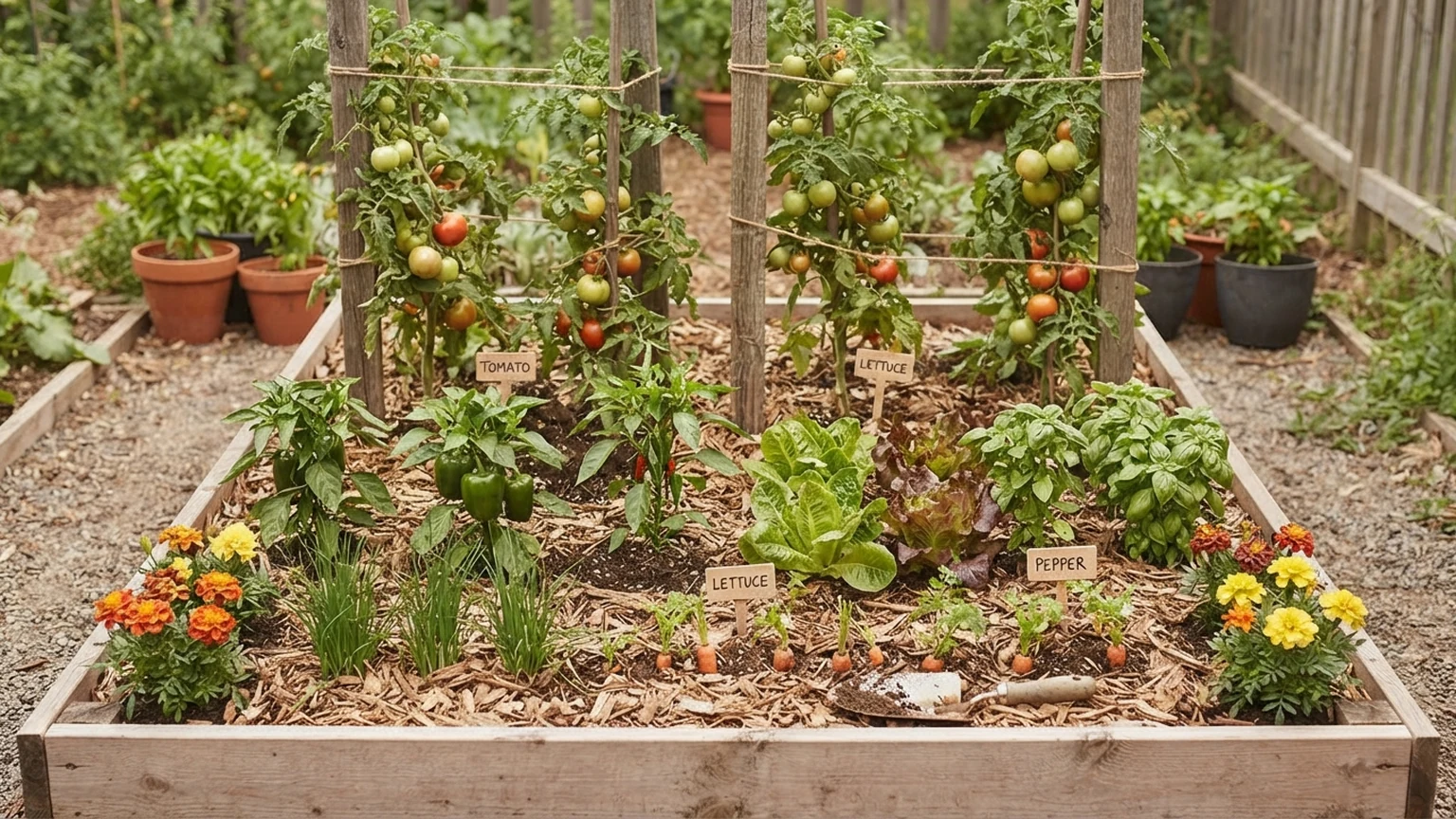
A comprehensive guide to harmonious gardening, this chart reveals the best plant pairings for a thriving and diverse garden.
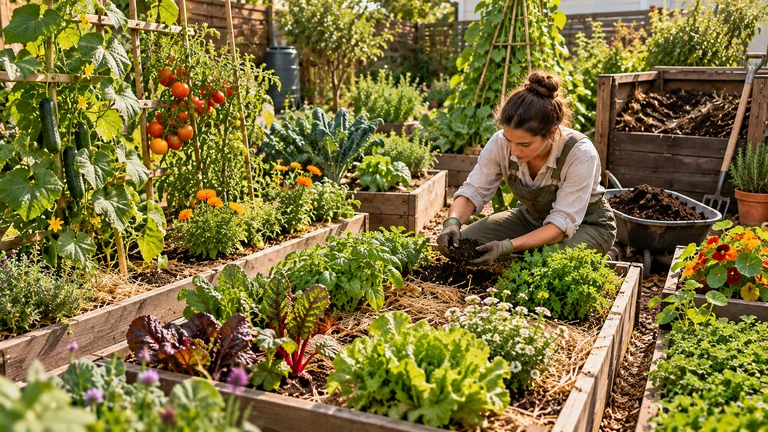
As we strive to grow our own food in smaller spaces, it's essential to consider the intricate relationships between different plants. Companion planting is a simple yet powerful technique that can enhance yields, reduce pests and diseases, and create a more resilient garden ecosystem.
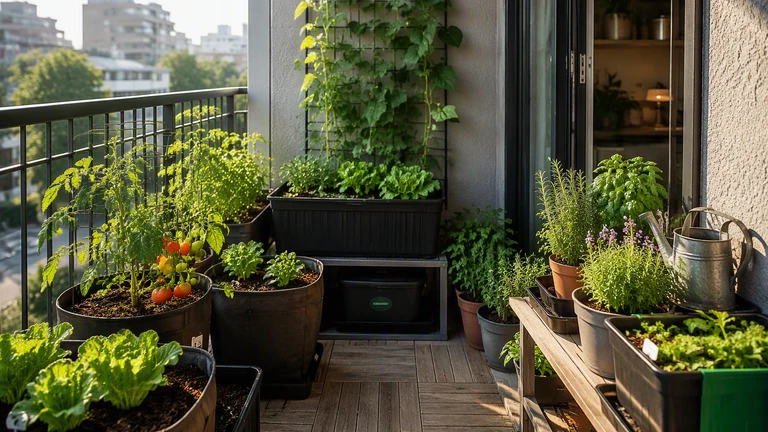
A practical companion planting chart for vegetables, herbs, and small-space gardens can help you make informed decisions about which plants to pair together. By understanding the benefits of certain combinations, such as the nitrogen-fixing properties of legumes or the pest-repellent qualities of marigolds, you can create a harmonious and productive garden that minimizes waste and maximizes flavor.
Companion Planting Is a Planning Tool — Not a Guarantee
Companion planting is useful when it helps you combine crops that fit the same space, season and growing conditions. But many popular companion charts mix practical garden design with traditional claims that are not equally well supported.
Use companion planting as a spatial and ecological planning tool, not as a list of magical plant friendships.
A useful pairing should make sense because of factors such as:
- compatible sunlight needs,
- similar watering requirements,
- different canopy heights,
- different root zones,
- complementary harvest timing,
- support for beneficial insects,
- or efficient use of limited garden space.
A pairing should not be treated as automatically beneficial simply because it appears on a traditional chart.
What Companion Planting Can — and Cannot — Do
Companion planting can help organize a diverse garden, improve use of vertical and horizontal space, support longer seasonal coverage and increase floral diversity for beneficial insects.
What it cannot do is guarantee:
- higher yields,
- pest elimination,
- disease prevention,
- reduced water use,
- or better soil fertility in every situation.
Those outcomes depend on crop variety, soil, climate, plant density, irrigation, pest pressure and management.
Seven Questions to Ask Before Pairing Crops
- Do both crops need similar light?
- Do they compete heavily for space?
- Will one shade the other at maturity?
- Do their watering needs match?
- Can their harvest timing complement each other?
- Are they from the same disease-prone plant family?
- Is the claimed companion benefit actually plausible?
These questions are more useful than memorizing long lists of supposedly “good” and “bad” neighbors.
Practical Companion Planting Chart
Tomatoes
Good practical neighbors:
- basil,
- lettuce,
- low-growing herbs.
Why it can work: these crops can occupy different canopy levels and use space efficiently around a staked or trellised tomato.
Watch: avoid overcrowding. Tomatoes need airflow, access for pruning and enough root-zone space.
Peppers
Good practical neighbors:
- basil,
- lettuce,
- onions.
Why it can work: they can share warm-season conditions while using different parts of the bed.
Watch: peppers can be shaded by taller crops if spacing is too tight.
Lettuce
Good practical neighbors:
- tomatoes,
- peppers,
- taller seasonal crops that provide limited afternoon shade.
Why it can work: lettuce is low-growing and fast-maturing, making it useful for succession planting and temporary space filling.
Watch: heavy shade can reduce growth, while hot exposed conditions can accelerate bolting.
Carrots
Good practical neighbors:
- lettuce,
- onions,
- radishes.
Why it can work: different canopy and root patterns can help use space efficiently.
Watch: carrots still need loose enough soil and should not be crowded by aggressive root systems.
Beans
Good practical neighbors:
- leafy greens,
- cucumbers in suitable layouts,
- other crops that do not heavily compete for the same canopy space.
Why it can work: beans can add vertical structure and diversity to a bed.
Important nitrogen reality check: legumes form relationships with nitrogen-fixing bacteria under suitable conditions, but that does not mean they instantly release large amounts of nitrogen to neighboring crops during the same growing season.
Much of the fixed nitrogen remains in the plant and root system until residues are returned to the soil and decomposed.
Basil
Good practical neighbors:
- tomatoes,
- peppers,
- other warm-season crops with compatible watering needs.
Why it can work: basil stays relatively compact and can occupy otherwise unused bed edges.
Watch: do not interpret tomato-and-basil pairing as a guarantee of better tomato flavor, pest prevention or higher yield.
Onions
Good practical neighbors:
- carrots,
- lettuce,
- peppers.
Why it can work: upright foliage and narrow spacing can fit around other crops without creating a dense canopy.
Watch: spacing and harvest access still matter.
Marigolds
Useful role:
- add floral diversity,
- support some beneficial insects,
- provide season-long color and habitat value.
Certain Tagetes species can suppress some plant-parasitic nematodes under particular conditions, especially when used deliberately as part of a rotation or dense planting strategy.
Do not assume that planting a few marigolds beside tomatoes automatically repels nematodes or other pests.
Compatibility Is Often More Important Than “Companionship”
Two plants do not need a special biological relationship to work well together.
Often the most successful pairing is simply one where:
- both crops need similar soil moisture,
- one does not shade the other excessively,
- their mature sizes fit the available space,
- their roots are not competing too aggressively,
- and their planting and harvest timing complement each other.
That is practical compatibility, and for small-space gardens it is often more important than traditional companion-planting folklore.
Use Canopy Layers to Make Better Pairings
Small-space gardens benefit from vertical planning.
You can combine:
- a tall crop,
- a medium crop,
- and a low-growing crop
when each still receives enough light and airflow.
For example, a staked tomato can occupy the upper canopy while lettuce uses lower space earlier in the season.
The goal is not maximum plant density. The goal is efficient space use without creating overcrowding.
Use Timing as a Companion Strategy
Some of the best plant pairings work because the crops use the same space at different times.
A fast crop such as radish or lettuce may be harvested before a larger summer crop fills the bed.
This type of succession planting can be more reliable than expecting one plant to chemically “help” another.
Beneficial Insects: A More Plausible Companion Benefit
Flowering herbs and flowers can increase plant diversity and provide nectar or pollen for some beneficial insects.
That does not mean they create a pest-free garden.
Think of flowering companions as one part of integrated garden management rather than a substitute for monitoring pests and responding when necessary.
Plant Families Still Matter
Companion planting should not replace crop-family awareness.
Closely related crops can share pests and diseases.
For example, tomatoes and peppers both belong to the nightshade family. They may grow successfully near each other, but planting large concentrations of the same family can also concentrate similar pest and disease risks.
Diversity should therefore be considered across the whole garden, not just within one pair of plants.
What Companion Planting Cannot Fix
Companion planting cannot compensate for:
- poor soil,
- inadequate sunlight,
- overcrowding,
- incorrect watering,
- nutrient deficiencies,
- established pest infestations,
- poor disease management,
- or unsuitable crop timing.
If the basic growing conditions are wrong, adding a “companion” plant will not solve the underlying problem.
Common Mistake 1 — Treating Charts as Rules
Many companion charts repeat the same pairings without explaining why they should work.
Use a chart as a starting hypothesis, not as a guarantee.
If a pairing makes sense for your climate, spacing and watering system, test it and observe the result.
Common Mistake 2 — Overcrowding in the Name of Diversity
Adding more plant species does not automatically improve a garden.
Too many plants packed together can reduce airflow, increase competition and make harvesting or pest inspection difficult.
Diversity works best when each crop still has enough functional space.
Common Mistake 3 — Ignoring Watering Compatibility
A pairing can fail even if both plants appear on the same companion chart.
If one crop prefers consistently moist soil and another performs better with a different moisture pattern, managing them together may become unnecessarily difficult.
Watering compatibility matters.
Common Mistake 4 — Expecting Pest Repellence to Replace Monitoring
Aromatic herbs and flowers may contribute to a diverse garden, but they should not be treated as a guaranteed pest barrier.
Continue checking leaves, stems and soil regularly.
A Better Way to Use a Companion Planting Chart
Use the chart in this order:
- Choose the crops you actually want to eat or use.
- Check their sunlight and temperature requirements.
- Compare their watering needs.
- Check mature plant size and canopy height.
- Plan access for harvesting and maintenance.
- Use succession where a fast crop can finish before a larger crop fills the space.
- Add flowers or herbs where they improve diversity without causing crowding.
- Observe the result and adjust next season.
The Bottom Line
Companion planting is most useful when it helps you design a more diverse, space-efficient and manageable garden.
The strongest pairings are often not mysterious at all. They work because the plants:
- fit the same climate window,
- use different canopy levels,
- have compatible water needs,
- mature at complementary times,
- or add useful biological diversity.
Use companion planting as a planning framework, not as a promise that one plant will automatically protect or feed another.
FAQ
What is companion planting?
Companion planting is the practice of growing different crops near one another in ways intended to improve space use, diversity, management or ecological function. Some traditional pairings have stronger practical explanations than others.
Does companion planting always increase yield?
No. Yield depends on many factors including light, soil, nutrients, water, variety, spacing and pest pressure. Companion planting can improve garden design, but it does not guarantee higher production.
Do marigolds repel pests from tomatoes?
Not automatically. Certain Tagetes species can affect some nematodes under specific conditions, but a few marigolds beside a tomato plant should not be treated as universal pest control.
Do beans feed neighboring plants with nitrogen?
Not immediately in the simple way companion charts sometimes suggest. Nitrogen fixation occurs through specific bacteria associated with legume roots, and much of that nitrogen remains in plant tissues until residues decompose.
Are tomatoes and basil good companions?
They can be compatible because both prefer warm conditions and basil can fit into smaller spaces around tomatoes. That does not prove that basil automatically improves tomato flavor, prevents pests or increases yield.
What matters most when choosing companions?
Prioritize compatible light, water, spacing, mature size, seasonal timing and access for maintenance. Those practical factors usually matter more than folklore-based pairing lists.
Build a More Resilient Garden
One practical system every Tuesday — water-smart gardening, food resilience, permaculture and small-space growing.
No fluff. No spam. Just practical systems that work.