Reading Time: 8 min read
How Much Water Can One Rain Barrel Actually Save?
A rain barrel can be one of the simplest ways to make a garden more water-smart, but the amount of water it can actually replace depends on more than the size of the barrel.
The three numbers that matter most are:
- how much roof area drains into the downspout,
- how much rain falls,
- and how much storage capacity you have available when the rain arrives.
A small roof section can generate far more runoff than one typical barrel can hold. That means the real question is not simply “How much rain falls?” but:
How much of that runoff can you capture, store and actually use before the next storm?
The Basic Rainwater Capture Formula
A useful planning estimate is:
Potential roof capture ≈ roof area × rainfall × 0.623 gallons per square foot per inch of rain.
The 0.623 factor converts one inch of rainfall over one square foot into gallons.
This gives the theoretical amount of water landing on the roof area feeding your barrel. Actual usable capture will usually be somewhat lower because of splash, gutter losses, first-flush diversion, overflow and other system losses.
Worked Example: 500 Square Feet of Roof + 1 Inch of Rain
Suppose one downspout receives runoff from approximately 500 square feet of roof.
The theoretical capture is:
500 × 1 × 0.623 ≈ 312 gallons.
That does not mean a 55-gallon rain barrel suddenly stores 312 gallons.
If your barrel holds 55 gallons, it can store only about 55 gallons at one time. The rest must either overflow, flow into additional storage, or be captured later after the barrel has been emptied and reused.
This distinction is essential:
Roof capture potential is not the same thing as barrel storage capacity.
Can One Barrel Really Save Hundreds of Gallons Per Month?
It can — under the right conditions — but not simply because the barrel itself holds hundreds of gallons.
A 50- to 60-gallon barrel can cycle through multiple fills during a rainy month if:
- enough rain falls,
- the connected roof area is large enough,
- the barrel is emptied into the garden between storms,
- and rainfall events are spaced far enough apart for storage capacity to become available again.
For example, a 55-gallon barrel that fills and is used four times during a month could theoretically replace roughly 220 gallons of potable irrigation water.
But if the barrel fills once and remains full while several storms pass, the extra runoff simply bypasses the available storage.
So “hundreds of gallons per month” should be treated as a possible seasonal performance scenario, not as a guaranteed output from every single barrel.
Why Barrel Size Is Often the Bottleneck
Even relatively modest roofs generate large volumes of runoff.
Once a barrel is full, additional rainfall has nowhere to go unless the system includes:
- another connected barrel,
- a larger cistern,
- or a properly routed overflow system.
This means increasing storage capacity can matter more than increasing collection area once your existing roof already produces more runoff than the barrel can hold.
How to Estimate the Right Barrel Size
Start with four questions:
- How much roof area drains to this downspout?
- How much rain typically falls during useful collection periods?
- How quickly will the garden use stored water?
- How much physical space do you have for storage?
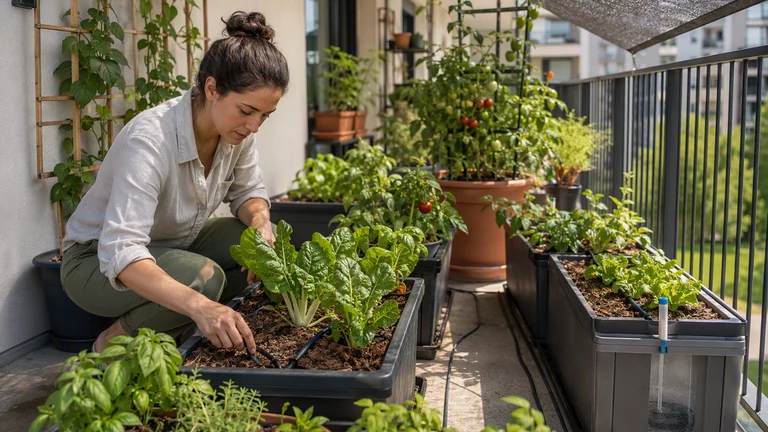
A gardener with a small patio and several containers may use stored rainwater quickly enough that a single barrel cycles repeatedly.
A gardener with low irrigation demand may benefit more from additional storage because the first barrel stays full longer.
Best Garden Uses for Stored Rainwater
For a simple garden-focused system, the most straightforward use is outdoor irrigation.
Stored rainwater can be useful for:
- container plants,
- raised beds,
- ornamental beds,
- trees and shrubs,
- and targeted hand watering during dry periods.
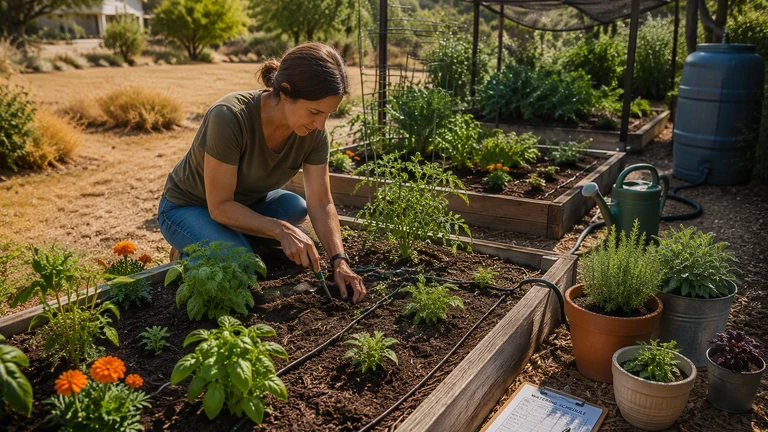
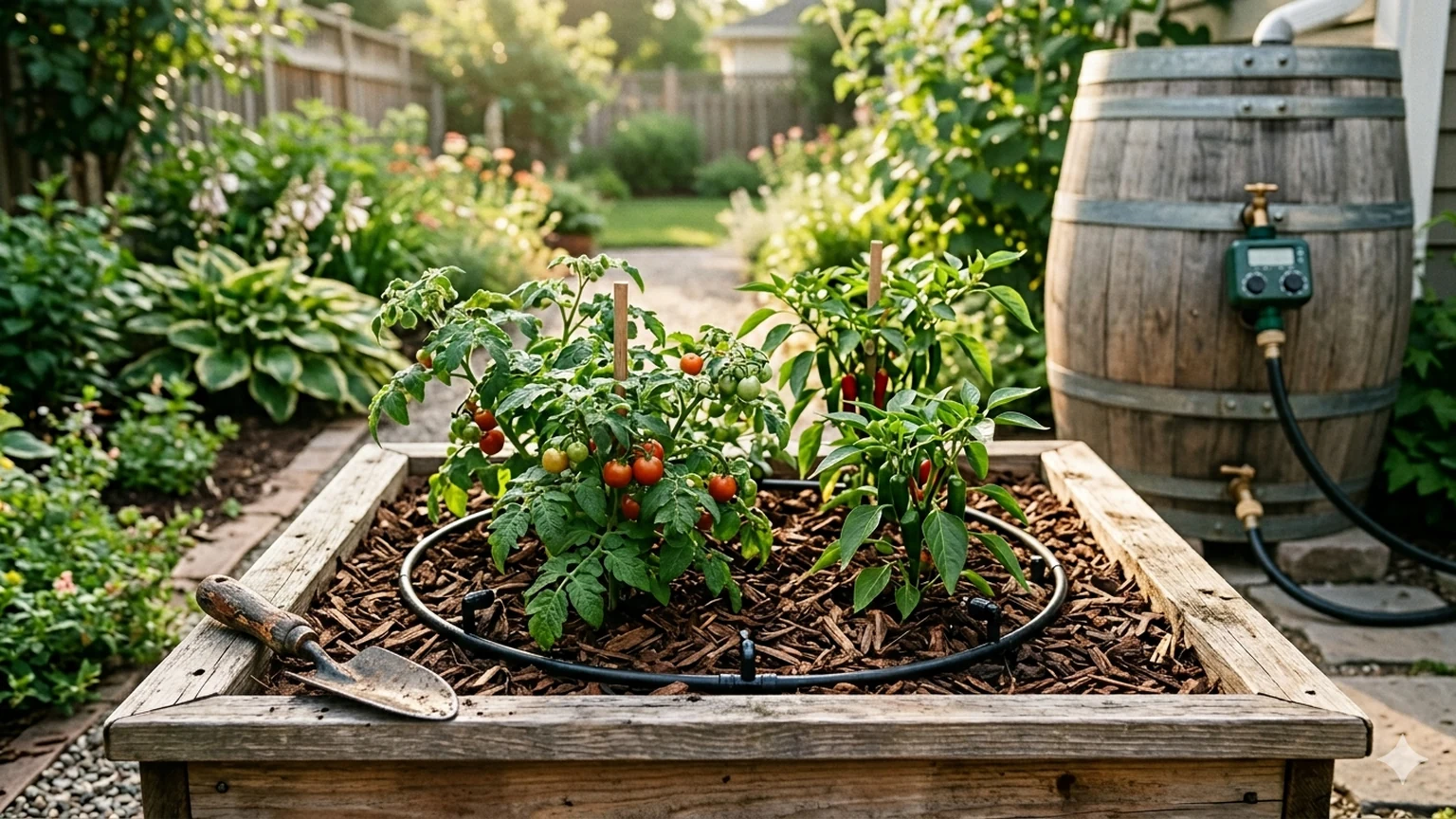
Using a watering can or low-flow hose connection can make the stored water especially useful for precise root-zone irrigation.
Do Not Assume Every Non-Potable Use Is Automatically Allowed
Rainwater harvesting rules differ by location, and outdoor irrigation is not the same as connecting harvested rainwater to indoor plumbing.
Uses such as toilet flushing or other indoor nonpotable applications may involve additional plumbing, treatment, backflow protection, permitting or local-code requirements.
For a basic rain-barrel garden system, keep the design focused on outdoor irrigation unless you have specifically verified the requirements for other uses in your jurisdiction.
Overflow Is Part of the System
A rain barrel should never be treated as a sealed container with nowhere for excess water to go.
When the barrel fills, overflow should be routed safely away from:
- building foundations,
- doors and walkways,
- neighboring property,
- and areas vulnerable to erosion.
A properly planned overflow path is just as important as the barrel itself.
Keep Mosquitoes Out
Standing water can become a mosquito breeding site if insects can reach it.
A rain-barrel system should use appropriate screening at openings and keep lids or access points properly covered.
Check screens periodically for:
- tears,
- gaps,
- debris buildup,
- or displaced fittings.
The objective is simple: collect roof runoff without creating open standing water accessible to mosquitoes.
What Is a First-Flush Diverter?
The first runoff from a roof can contain dust, pollen, leaves, bird droppings and other debris that accumulated between rainfall events.
A first-flush diverter is designed to route an initial portion of runoff away from the main storage tank before cleaner runoff enters the barrel.
Whether a small garden barrel needs one depends on:
- roof condition,
- intended use,
- local guidance,
- and the complexity of the harvesting system.
At minimum, keep gutters clean and use appropriate inlet screening.
Where Should You Put a Rain Barrel?
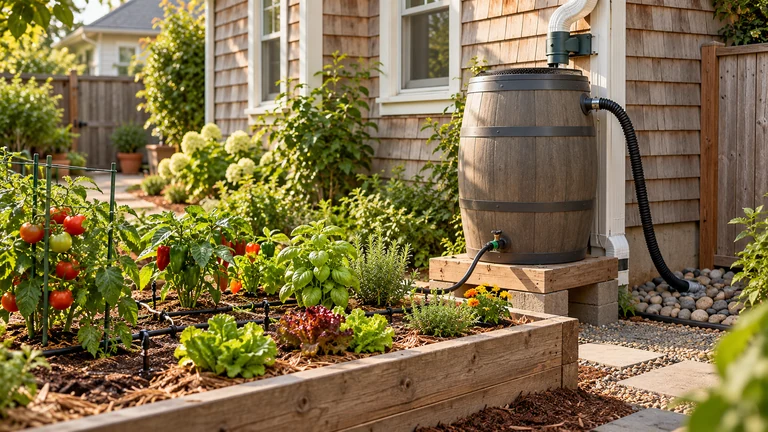
A full rain barrel is heavy.
One gallon of water weighs a little over eight pounds, so a 55-gallon barrel can contain more than 450 pounds of water before adding the weight of the barrel and hardware.
Place it on a stable, level and load-appropriate surface.
If the barrel is elevated to make filling a watering can easier or to improve gravity flow, the platform must be strong enough to support the full load safely.
Connect the Barrel to the Garden You Actually Have
The best rain-barrel system is not necessarily the biggest one.
It is the system whose storage capacity matches your real garden demand.
A useful setup might serve:
- a few large vegetable containers,
- a small raised bed,
- herbs near the house,
- or newly planted shrubs that need supplemental watering.
If the garden uses stored water regularly, the barrel creates room for the next rainfall event and increases the amount of roof runoff you can capture over time.
How to Get More Value from One Barrel
You do not necessarily need a larger barrel to improve performance.
Start by reducing unnecessary garden water demand:
- water at the root zone,
- use mulch where appropriate,
- repair leaking hoses and fittings,
- water based on actual soil moisture,
- and prioritize plants that genuinely need supplemental irrigation.
A gallon saved through better irrigation is just as useful as an extra gallon collected.
When Does a Second Barrel Make Sense?
Consider more storage when:
- the first barrel frequently overflows during useful rainfall,
- your garden can actually use the additional stored water,
- you have enough safe space for another barrel,
- and local rules permit the installation.
If the first barrel rarely empties, additional storage may not provide much benefit.
A Better Way to Measure Rain-Barrel Performance
Instead of asking only how many gallons the barrel holds, track:
- number of times the barrel fills,
- number of gallons actually used for irrigation,
- how often overflow occurs,
- which parts of the garden receive stored rainwater,
- and whether potable irrigation use decreases.
This gives you a realistic measure of water savings rather than relying on the barrel's advertised capacity.
Reality Check: Capture, Storage and Savings Are Three Different Numbers
This is the central idea:
Capture potential is how much runoff the roof can theoretically generate.
Storage capacity is how much water the barrel can hold at one time.
Actual water savings are how much stored rainwater you really use instead of potable irrigation water.
Those numbers can be very different.
The Bottom Line
A rain barrel can be an effective first step toward water-smart gardening, but its performance should be calculated rather than assumed.
Use this framework:
- estimate roof capture from roof area and rainfall,
- compare that number with barrel capacity,
- route overflow safely,
- keep mosquitoes out,
- use stored water regularly in the garden,
- and check local rules before expanding into other uses.
A single barrel may indeed replace hundreds of gallons of potable irrigation water over a productive month or season — but only when rainfall, roof area, storage turnover and garden demand all support it.
FAQ
How much water can I collect from one inch of rain?
As a planning estimate, one inch of rain falling on 1,000 square feet of roof represents about 623 gallons of theoretical runoff before system losses.
How much can a 55-gallon rain barrel actually hold?
About 55 gallons at one time. Even if the connected roof produces hundreds of gallons during a storm, the barrel cannot store more than its physical capacity unless the water is used or transferred to additional storage.
Can one rain barrel save hundreds of gallons in a month?
Potentially, yes, if it fills and is emptied for garden use several times. It is not guaranteed and depends on rainfall, roof area, storage turnover and irrigation demand.
What happens when the barrel is full?
Additional runoff must leave through a properly routed overflow system or flow into additional connected storage.
Do I need a mosquito screen?
Openings should be protected so mosquitoes cannot reach standing water. Screens and covers should be inspected regularly for damage or gaps.
Do I need a first-flush diverter?
Not every simple garden barrel uses one, but first-flush diversion can reduce the amount of roof debris entering storage. Roof condition, intended use and local guidance should determine the setup.
Can I use rain-barrel water indoors?
Do not assume that indoor nonpotable uses are automatically allowed. Plumbing, treatment and local-code requirements may apply. A basic rain barrel is simplest when used for outdoor irrigation.