Reading Time: 9 min read
What “Smart” Actually Means Under $150
A smart garden does not need to look like a robot laboratory, and it does not need dozens of sensors, apps or connected devices.
For a small garden, patio or container setup, “smart” can mean something much simpler:
- water on a reliable schedule,
- deliver water directly to the root zone,
- check whether the soil actually needs more water,
- pay attention to weather,
- and always keep a manual way to override the system.
A smart garden under $150 is not a robot garden. It is a simple watering system with timing, targeted delivery, basic feedback and manual control.
The Minimum Useful System
If you are starting from scratch, the most useful low-cost smart-garden setup is usually built around five parts:
- a basic hose or faucet timer,
- a drip-irrigation starter kit,
- a simple soil-moisture meter,
- containers or an existing small garden bed,
- and mulch or another appropriate soil-cover strategy.
The timer handles consistency. The drip system reduces wasted water. The moisture meter gives you feedback. Mulch helps stabilize moisture. You remain in control.
A Realistic Budget Breakdown
The goal is not to hit an exact universal price. Retail prices vary by region, season, brand and kit size.
Instead, use the following as a planning range:
- Basic hose or faucet timer: about $25–35
- Drip-irrigation starter kit: about $25–40
- Simple moisture meter: about $10–15
- Splitter, adapters or extra fittings: about $10–20
- Mulch or small garden supplies: about $10–20
- Contingency for missing fittings or replacement parts: about $15–25
That creates a practical planning range of roughly $95–155.
To stay under $150, reuse containers you already own, avoid unnecessary Wi-Fi hardware and buy only the fittings your actual layout requires.
Step 1 — Automate Watering, Not Everything
The first automation should usually be watering.
A basic timer can open and close the water supply at scheduled times so you do not have to remember every irrigation event manually.
That is already a meaningful smart-garden upgrade because it solves one of the most common problems in small gardens: inconsistent watering.
You do not need automatic pruning, robotic plant care or complex environmental controls for a beginner system.
Step 2 — Add Drip Irrigation
A timer becomes much more useful when it feeds a drip system instead of a sprinkler or open hose.
Drip irrigation delivers water close to the root zone and can be adapted to:
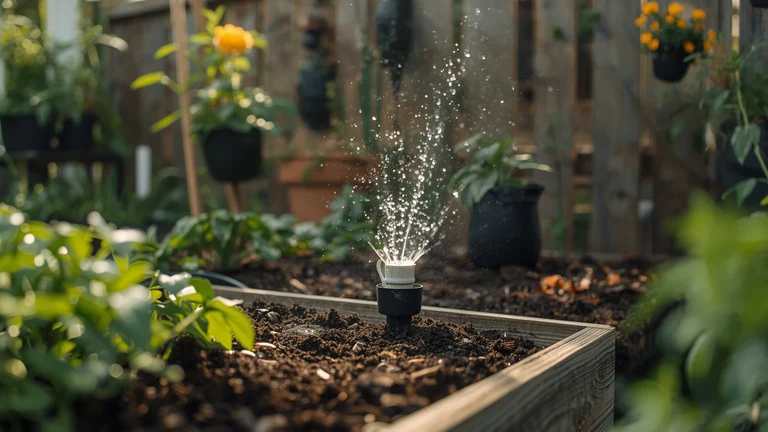
- raised beds,
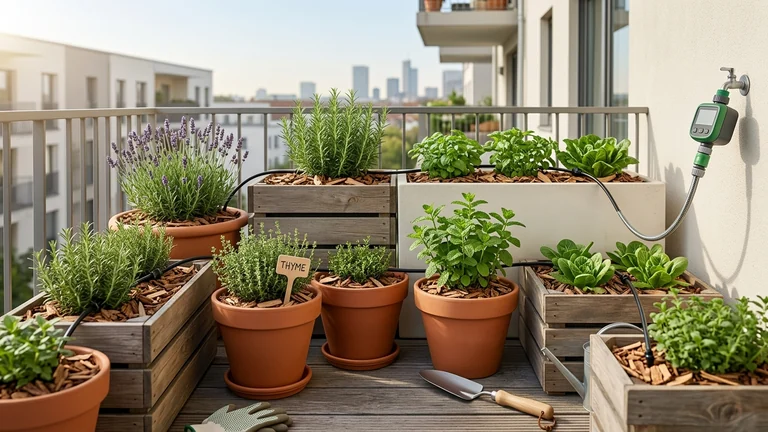
- patio containers,
- grow bags,
- herb planters,
- and small vegetable rows.
Start with a simple layout and keep tubing runs short and easy to inspect.
More emitters and more zones do not automatically make the system smarter. They only make it more complicated.
Step 3 — Use a Moisture Meter as a Check, Not an Autopilot
A low-cost moisture meter can help you compare how wet different containers or bed areas are.
But a simple meter should not be treated as a perfect scientific instrument.
Use it as one piece of information alongside:
- how the soil feels,
- how the plant looks,
- recent rainfall,
- temperature,
- wind,
- and how quickly the container normally dries.
The meter helps you question the schedule. It should not blindly control the garden.
Step 4 — Add Basic Weather Awareness
You do not need a dedicated weather station to make a garden smarter.
Checking the local forecast before a scheduled irrigation cycle is often enough.
If meaningful rain is expected, you may be able to delay watering. During a heat wave, you may need to inspect containers more frequently.
The goal is not perfect automation. The goal is to avoid watering on autopilot when conditions have obviously changed.
Step 5 — Keep a Manual Override
Every beginner smart-garden system should have an easy way to stop or bypass automation.
You should be able to:
- shut off water manually,
- skip a scheduled cycle,
- run an extra cycle when genuinely needed,
- and isolate a leaking line or failed fitting.
Automation should reduce work, not remove your ability to intervene.
What Not to Automate on a $150 Budget
The fastest way to waste a small budget is to automate things that do not need automation.
For a starter system, you can usually skip:
- automated pruning,
- motorized plant-care devices,
- multiple Wi-Fi sensors,
- complex hubs,
- cloud subscriptions,
- automated fertilizer dosing,
- and expensive weather stations.
Those features may have a place in more advanced systems, but they are not necessary to build a useful smart garden.
Containers or Raised Bed?
Both can work.
Containers are flexible and useful for renters, patios and balconies, but they can dry out quickly.
Raised beds generally provide more root volume and more stable moisture, but they require more space.
If you already have a working bed or container setup, do not rebuild it simply to make it “smart.” Add automation to the garden you already use.
Why Mulch Belongs in a Smart Garden
Mulch is not electronic, but it can make the entire watering system more efficient.
An appropriate mulch layer can help:
- reduce surface evaporation,
- buffer soil temperature,
- reduce some weed pressure,
- and make moisture conditions more stable between watering cycles.
That means your timer and drip system have an easier job.
A Simple Under-$150 Build
A practical beginner build could look like this:
- one faucet timer,
- one drip-irrigation starter kit,
- one inexpensive moisture meter,
- one hose splitter if the faucet must remain available for normal use,
- a small supply of extra connectors,
- and mulch for the main containers or bed.
Use the timer to automate one irrigation line first.
Do not build three zones on day one if one zone will handle the garden.
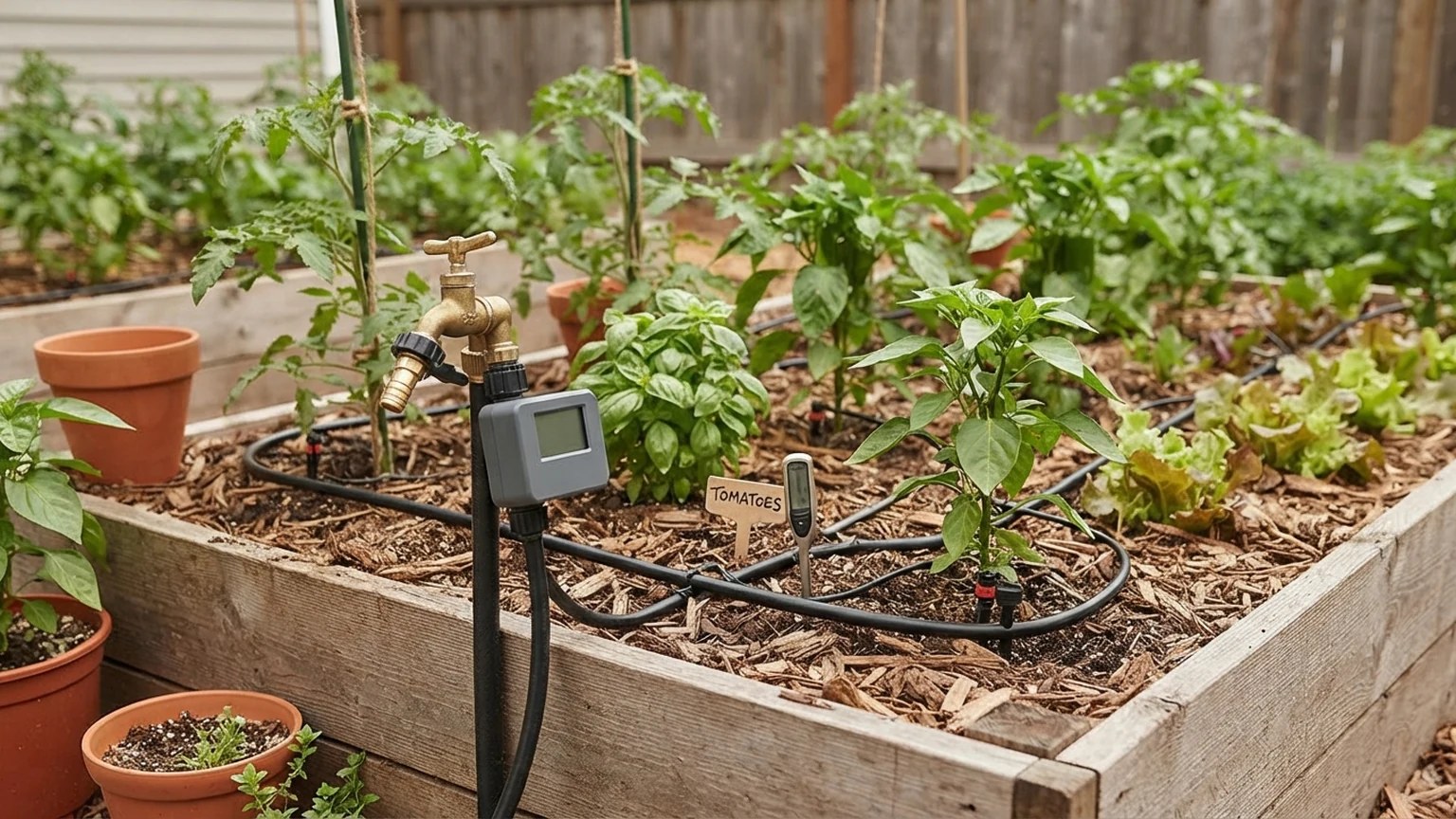
Example Layout: Small Patio Vegetable Garden
Imagine a patio with:
- two tomato containers,
- two pepper containers,
- a herb planter,
- and one shallow container of greens.
A single timer can feed a short main line. Small drip lines then branch to each container.
Each container can be adjusted separately by emitter choice or flow control, while the entire system still operates from one simple timer.
The moisture meter is used manually to check whether the schedule is working rather than to automate every decision.
Common Mistake 1 — Buying Too Much Technology
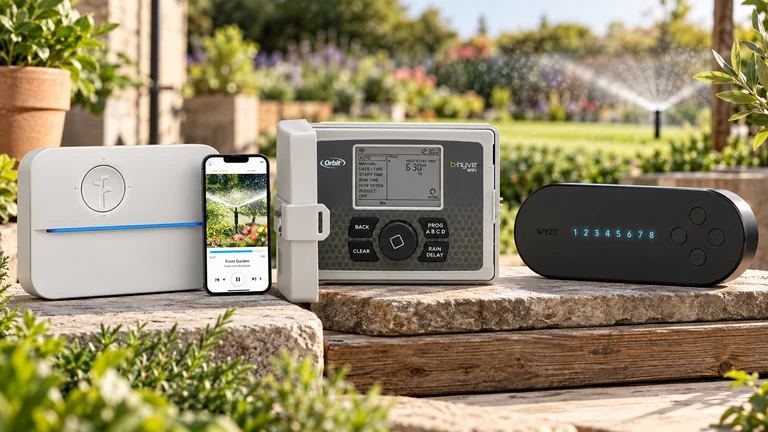
A $150 budget disappears quickly when the first purchase is a hub, app-controlled controller or collection of wireless sensors.
Start with the physical irrigation system first.
A reliable timer and correctly installed drip line usually create more practical value than a dashboard full of data.
Common Mistake 2 — Trusting the Timer More Than the Plants
A timer repeats instructions. It does not know whether your soil is still wet after a storm unless the system has additional reliable feedback.
Check the garden regularly and change the schedule when conditions change.
Common Mistake 3 — Ignoring Drainage
Automation cannot fix a container with blocked drainage or a bed where water has nowhere to go.
Before automating irrigation, make sure:
- containers have suitable drainage,
- water does not pool around roots,
- emitters are not delivering water faster than the growing medium can absorb it,
- and runoff is not creating problems around the garden.
Common Mistake 4 — No Manual Shutoff
A failed connector, split tube or stuck valve can waste water quickly.
Know where the manual shutoff is and make sure it remains accessible.
Common Mistake 5 — Setting the Schedule Once and Forgetting It
Water demand changes through the season.
A small plant in spring does not use water like a mature tomato plant during hot summer weather.
Review the schedule as plants grow and weather changes.
Do You Need Wi-Fi?
No.
A mechanical or digital timer can create a genuinely useful smart-garden system without Wi-Fi.
Wi-Fi becomes useful if you specifically need remote control, remote schedule changes or integration with other systems.
If you do not need those features, do not spend the budget on them.
Do You Need Sensors?
Not many.
For a beginner system, one basic moisture meter may be enough to teach you how different parts of the garden dry out.
Once you understand the garden's behavior, you can decide whether more advanced sensing would actually solve a problem.
Upgrade Path After the Basic System Works
Do not upgrade because a device exists. Upgrade when you can describe the problem it will solve.
Useful later upgrades might include:
- a better multi-zone timer,
- pressure regulation,
- a filter for drip irrigation,
- more precise emitters,
- an additional irrigation zone,
- or weather-aware control if your garden is large enough to justify it.
The first system should remain useful even if you never buy any of those upgrades.
What Success Looks Like
A successful $150 smart garden is not the one with the most electronics.
It is the one where:
- plants receive water consistently,
- water goes to the root zone instead of being wasted,
- you can see when the schedule needs adjustment,
- the system is easy to shut off or repair,
- and the setup saves you time without making the garden harder to understand.
The Bottom Line
You do not need to be technical to build a useful smart garden.
Start with the simplest version that solves a real problem:
- automate watering with a timer,
- deliver it through drip irrigation,
- check soil moisture rather than trusting the schedule blindly,
- watch the weather,
- use mulch to stabilize moisture,
- and keep manual control.
That is enough to create a genuinely smarter garden without turning a $150 project into an expensive technology experiment.
FAQ
Can I really build a smart garden for under $150?
Yes, if you keep the system simple and reuse the containers or garden infrastructure you already have. A timer, drip kit, moisture meter and basic fittings can often fit near this budget, but actual retail prices vary.
Do I need Wi-Fi for a smart garden?
No. A basic timer and drip system can automate the most important repetitive task — watering — without any internet connection.
What should I automate first?
Watering. It is repetitive, easy to schedule and can be delivered precisely through drip irrigation.
Should a moisture sensor automatically control watering?
Not necessarily. For a low-cost beginner setup, a simple moisture meter is often more useful as a manual check than as a fully automated control system.
Do I need an indoor garden setup?
No. This guide is designed primarily for small outdoor gardens, patios, balconies, containers and raised beds. Indoor growing involves different lighting, ventilation and environmental-control requirements.
What is the most important safety feature?
A reliable manual shutoff. You should always be able to stop the water supply if a fitting leaks, tubing fails or the timer malfunctions.
Build a More Resilient Garden
One practical system every Tuesday — water-smart gardening, food resilience, permaculture and small-space growing.
No fluff. No spam. Just practical systems that work.