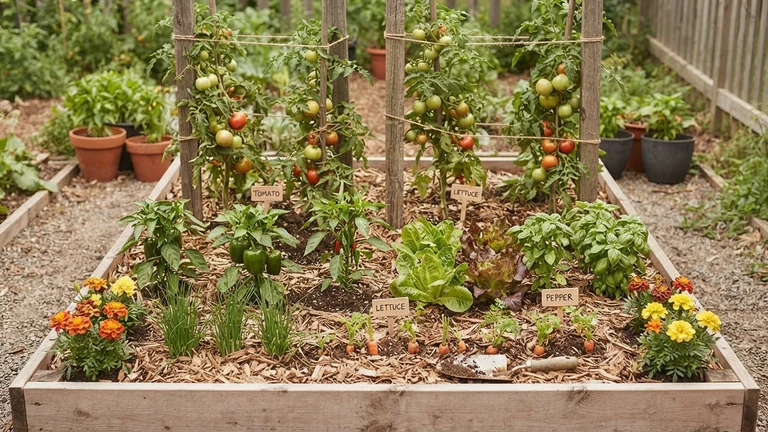
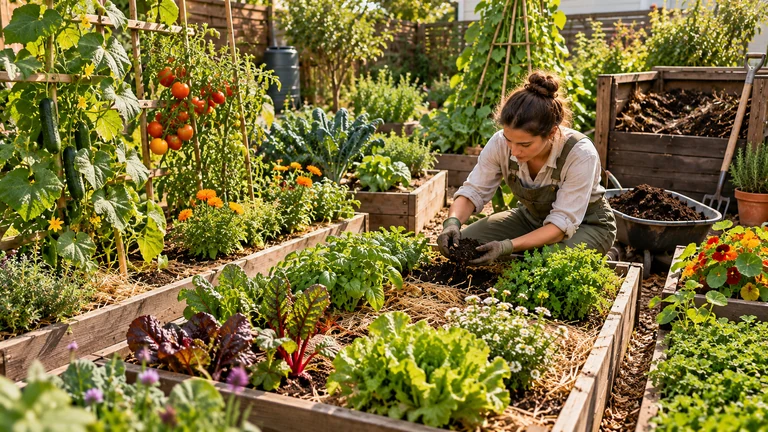
Introduction to Companion Planting
Companion planting is a long-established gardening practice in which different plant species are grown near one another. Depending on the species and growing conditions, these combinations may influence pest pressure, resource use, and crop performance. However, traditional experience does not establish that every popular pairing is scientifically effective. For example, some Tagetes species can affect particular plant-parasitic nematodes, but results depend on the species involved and how the plants are managed.
Companion planting brings species with different growth habits and ecological characteristics into the same growing area. Depending on the combination and growing conditions, this may influence insect activity, soil cover, competition for resources, and crop performance. Reduced pesticide use, healthier soil, and higher yields are possible outcomes in some systems, not guaranteed results.
Some of the key benefits of companion planting include:
- **Pest control**: Certain plants can repel or attract beneficial insects, reducing the need for pesticides.
- Soil enrichment: Legumes can form associations with nitrogen-fixing bacteria, reducing their reliance on soil nitrogen. However, this does not mean that substantial amounts of nitrogen become immediately available to neighboring crops. Benefits depend on species, soil conditions, and the timing of nitrogen release.
- **Shade and shelter**: Tall plants can provide shade for smaller ones, while sprawling plants can offer shelter from harsh weather conditions.
- **Nutrient cycling**: Plants with different nutrient requirements can work together to optimize resource use.
- Tomatoes and Basil: This is a popular garden pairing, but claims that tomatoes repel nematodes or that basil reliably protects tomatoes from aphids should not be presented as established facts. Basil may contribute to a diverse planting arrangement, although pest-control benefits depend on local conditions and require appropriate evidence.
- Marigolds and Carrots: Certain Tagetes species have shown activity against particular plant-parasitic nematodes under specific conditions. This does not establish that planting any marigold beside carrots will reliably control nematodes. Marigold flowers may also provide resources for some beneficial insects, depending on the garden environment.
- Beans, Corn, and Squash: In the traditional Three Sisters system, corn provides a structure for climbing beans, while sprawling squash can help cover the soil. Beans form associations with nitrogen-fixing bacteria, but this does not imply immediate nitrogen transfer to corn. Outcomes vary with crop varieties, spacing, soil fertility, climate, and management.
- **Choose plants with complementary growth habits**: When selecting companion plants, consider their growth habits. For example, tall plants like sunflowers or corn can provide shade for shorter plants like lettuce or herbs.
- **Consider the mature size of each plant**: Make sure you have enough space to accommodate the mature size of each plant. Overcrowding can lead to reduced yields and increased pest pressure.
- **Select plants with similar light requirements**: Plants that require different levels of sunlight may compete for resources, leading to reduced growth or even stunted development.
- **Use a diverse range of plants**: Diversity can provide habitat and resources for different organisms, but more species do not automatically produce healthier soil, stronger pest resistance, or higher yields. Choose combinations appropriate for the available space and growing conditions.
- **Pay attention to plant spacing**: Proper spacing is crucial for effective companion planting. Ensure that each plant has enough space to receive adequate air circulation, sunlight, and water.
- **Monitor your plants regularly**: Keep a close eye on your plants' growth and development. Be prepared to adjust your companion planting combinations as needed to address any issues or challenges that arise.
- Enhance soil health through beneficial mycorrhizal networks
- Attract beneficial insects and pollinators
- Repel pests and reduce chemical use
- Improve crop yields and productivity
Research into intercropping has identified several potential mechanisms, including differences in resource use, interactions with soil microorganisms, and changes in pest pressure. Studies of soybean-maize systems have examined the possible roles of arbuscular mycorrhizal fungi and rhizobia in nitrogen uptake and transfer (1). These findings are specific to the systems studied and should not be generalized to all companion-planting combinations. Some plant volatiles may also influence insect behavior, but their effects vary with species and conditions.
In this guide, we will explore the science behind companion planting, highlighting successful combinations and mechanisms that drive their effectiveness. We will also discuss limitations and challenges in implementing companion planting strategies, as well as provide actionable advice for gardeners looking to incorporate these techniques into their own gardens.
References:
(1) Chen et al. (2015). Arbuscular mycorrhizal fungi and rhizobia facilitate nitrogen uptake and transfer in soybean/maize intercropping systems. Frontiers in Plant Science, 6, 339. DOI: 10.3389/fpls.2015.00339.
The Science Behind Companion Planting: What Works and Why
Companion planting is often touted as a way to create harmonious relationships between plants in your garden. But what's the science behind this ancient practice? While some claims may be anecdotal or based on limited observations, research has shed light on the mechanisms driving successful companion plantings.
One area of research concerns the role of mycorrhizal fungi and rhizobia in nutrient acquisition within intercropping systems. A 2015 study in Frontiers in Plant Science investigated nitrogen uptake and transfer in soybean-maize intercropping (1). Its findings relate to that particular crop system and do not demonstrate that all neighboring plants share nitrogen efficiently. Nitrogen-fixing legumes and pest-attracting trap crops also perform different functions and should not be treated as equivalent.
Companion plants have also been investigated as part of aphid management strategies. Depending on the species and experimental conditions, neighboring vegetation may influence aphid behavior, pest abundance, or natural enemies. The evidence reviewed for this article does not establish that dill or nasturtium reliably repels aphids across different crops and environments. Species-specific recommendations require direct verification against the original research.
In addition to these specific examples, research has also shown that companion planting can influence the growth and development of plants through various mechanisms. For instance, some plants may release chemicals that stimulate growth or defense responses in neighboring plants. Other plants may provide shade or physical support for their companions, altering microclimates and soil conditions.
Research supports several mechanisms relevant to mixed cropping, but outcomes differ between plant combinations and environments. Evidence from a particular intercropping experiment should not be treated as proof that the same combination will improve growth or productivity in every home garden.
References:
(1) Chen et al. (2015). Arbuscular mycorrhizal fungi and rhizobia facilitate nitrogen uptake and transfer in soybean/maize intercropping systems. Frontiers in Plant Science, 6, 339. DOI: 10.3389/fpls.2015.00339.
(2) Zhang et al. (2018). Companion plants for aphid pest management. Insects, 9(4), 112. doi: 10.3390/insects8040112
Practical Combinations: Success Stories from the Field
While companion planting may seem like an ancient practice, many modern gardeners and farmers have successfully implemented these combinations to improve crop yields, reduce pests, and enhance soil health. Here are some notable examples of practical companion planting combinations that have been reported in the field:
These examples illustrate different approaches to companion planting, but they do not all have the same level of scientific support. Gardeners should distinguish traditional pairings from experimentally investigated mechanisms and evaluate their results under local conditions.
While these examples demonstrate the potential benefits of companion planting, it's essential to note that individual results may vary depending on factors like climate, soil type, and specific plant varieties. As with any gardening practice, it's crucial to monitor and adapt your approach based on your unique circumstances.
Mechanisms of Companion Planting: How Plants Interact
Companion planting is often touted as a way to create harmonious relationships between plants in your garden. But what's the science behind this ancient practice? To understand how companion planting works, it's essential to explore the mechanisms by which plants interact with each other.
Root interactions can influence nutrient and water availability in mixed plantings. Legumes such as beans and peas may form root nodules containing nitrogen-fixing bacteria, which convert atmospheric nitrogen into forms the host plant can use. Some nitrogen may later benefit other crops through residue decomposition and soil processes, but immediate transfer to neighboring plants should not be assumed. The size and timing of any benefit depend on the cropping system.
Plants release volatile organic compounds that can influence interactions with insects and, in some circumstances, responses in neighboring plants. However, these effects are highly dependent on species and environmental conditions. There is insufficient evidence here to claim that corn volatiles specifically cause beans and squash to develop deeper root systems in Three Sisters plantings.
Trap crops are a distinct approach to pest management. A trap crop is selected to attract a particular pest away from the main crop, rather than repel it. Effectiveness depends on the pest, planting arrangement, timing, and management. Taller crops such as sunflowers may also create useful shade, but excessive shade can reduce the growth of neighboring plants.
Plant height and canopy structure also play a role in companion planting. By varying the heights and densities of different plants, gardeners can create microclimates that favor certain species or deter pests. For example, planting taller crops like sunflowers or corn around shorter ones like lettuce or carrots can provide shade and reduce soil temperature extremes.
Mycorrhizal fungi form associations with plant roots and can influence nutrient acquisition. Some experiments have investigated whether shared fungal networks transmit signals associated with plant stress. However, the interpretation and ecological significance of these findings remain debated. It would be premature to claim that garden plants routinely warn one another about pests or diseases through these networks.
These mechanisms illustrate why interactions between neighboring plants can be complex. Their practical effects depend on plant species, soil, climate, timing, and management. A plausible biological mechanism does not, by itself, guarantee a useful gardening outcome.
Limitations and Challenges in Companion Planting
Companion planting and intercropping do not consistently improve crop performance. Benefits depend on the plant species, growing conditions, competition for resources, and management. In particular, nitrogen fixation by legumes should not be confused with guaranteed or immediate nitrogen availability to neighboring non-legume crops. Conclusions should be limited to the systems and outcomes actually investigated.
Another challenge facing companion planting is the complexity of plant-plant interactions. Plants can interact with each other through various mechanisms, including competition for resources, allelopathy, and mutualism (2). However, these interactions are often context-dependent, making it difficult to predict how different plants will respond in a given situation.
Furthermore, companion planting may not be suitable for all crops or growing conditions. For example, some plants may require specific soil types or moisture levels that can't be replicated in certain environments. Additionally, companion planting may not provide the same level of benefits for all plant species. Some plants may be more sensitive to environmental factors or have different growth habits that make them less amenable to companion planting.
In addition, there are also limitations related to the scale and scope of companion planting. While it can be effective in small-scale gardens or plots, companion planting may not be feasible on larger commercial farms or industrial agricultural operations. The logistics of planting multiple species together, managing pests and diseases, and ensuring adequate resources for each plant can be daunting.
Lastly, there is also a lack of standardization and regulation in the area of companion planting. As it's often based on anecdotal evidence and traditional practices, there is limited scientific research to support its claims. This makes it challenging to develop clear guidelines or protocols for implementing companion planting effectively.
In conclusion, while companion planting can be a valuable tool for gardeners and farmers, it's essential to acknowledge its limitations and challenges. By recognizing these limitations, we can better understand the complexities of plant-plant interactions and work towards developing more effective and evidence-based practices in companion planting.
References:
(1) doi: 10.3389/fpls.2015.00339
(2) doi: 10.3390/insects8040112
Actionable Advice for Effective Companion Planting
Now that we've explored the science behind companion planting and examined some successful combinations, let's dive into actionable advice to help you get started. Here are some practical tips to ensure effective companion planting in your garden:
Prepare the growing area before combining crops. Use mature compost where appropriate for the soil and crop requirements, and assess soil pH with a soil test when needed. Remove competing weeds, provide adequate drainage, and plan watering around each crop's requirements. Monitor soil moisture, pests, and plant growth after planting so that spacing and management can be adjusted.
By following these actionable tips, you'll be well on your way to creating a thriving and harmonious garden ecosystem through effective companion planting. Remember to stay flexible, observe your plants closely, and be willing to make adjustments as needed to ensure the best possible outcomes for your garden.
Conclusion: Unlocking the Power of Companion Planting
As we've explored the science behind companion planting and examined successful combinations, it's clear that this ancient practice can be a valuable tool for gardeners and farmers. By understanding how plants interact and leveraging their unique characteristics, you can create harmonious relationships in your garden that benefit multiple species.
Companion planting is not a universal solution to gardening problems. Depending on plant species and management, mixed planting may offer useful soil cover, habitat for beneficial insects, or more efficient use of space. Pest suppression and higher yields should be treated as outcomes to test and monitor rather than promises.
To unlock the full potential of companion planting, remember to consider factors like plant growth habits, nutrient requirements, and pest susceptibility. By doing so, you can create a thriving ecosystem that benefits both your plants and the environment.
As you begin experimenting with companion planting in your own garden, keep in mind that it's essential to monitor and adapt your approach based on the specific needs of your plants. With patience, observation, and an open mind, you'll be well on your way to unlocking the power of companion planting and reaping its many rewards.