Reading Time: 10 min read
By Gardhack Editorial
5 min read
A high-intensity permaculture garden is not a garden that extracts the maximum possible harvest from every square foot at any cost. The more useful goal is to grow intensively while protecting the processes that keep soil productive: organic matter inputs, living roots, surface cover, plant diversity and limited disturbance.
That distinction matters because soil fertility is not permanent. Every harvest removes nutrients, organic materials decompose, rainfall can move nutrients through the soil profile and different crops place different demands on the system.
The objective is therefore not perpetual fertility. It is a garden that continually rebuilds and manages soil fertility from season to season.
Start With Soil Function, Not Maximum Plant Density
Healthy garden soil has several jobs at once. It must hold and transmit water, provide air to roots, store and cycle nutrients, support soil organisms and maintain enough structure for roots to explore.
For a high-output garden, four practical soil-health principles provide a strong framework:
- disturb the soil only as much as necessary,
- keep the soil covered whenever practical,
- grow a diversity of plants,
- and keep living roots in the soil for as much of the growing year as conditions allow.
These practices do not eliminate the need to monitor fertility, but they create better conditions for nutrient cycling and soil structure over time.
Soil Fertility Is a Managed Cycle
Vegetables remove nutrients when leaves, roots, fruits and seeds leave the garden at harvest.
A productive system therefore needs nutrient inputs or internal recycling.
Those inputs can include:
- finished compost,
- properly managed crop residues,
- cover crops,
- legumes where appropriate,
- mulches that decompose gradually,
- vermicompost,
- and other amendments selected according to actual soil needs.
The correct quantity depends on the existing soil, crop demand and the amendment itself. More organic material is not automatically better.
Compost Is an Amendment, Not a Complete Fertility Guarantee
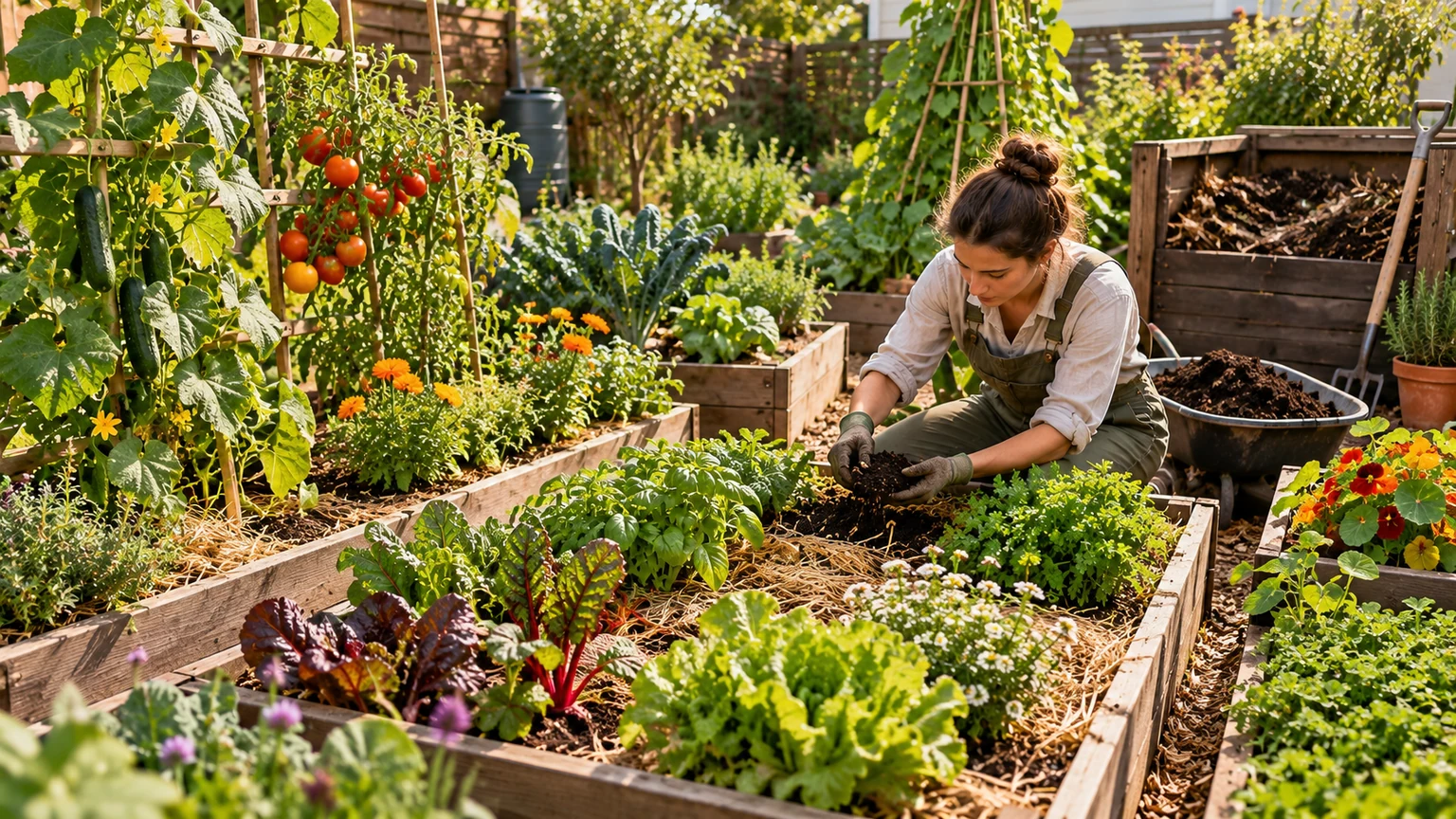
Composting converts organic materials into a more stable amendment that can return organic matter and nutrients to garden soil.
Well-made compost can improve soil physical properties and contribute to nutrient cycling, but compost composition varies considerably.
It should not automatically be treated as a complete fertilizer or applied indefinitely at high rates without considering what the soil already contains.
Depending on the feedstocks and production process, compost can differ in:
- nitrogen availability,
- phosphorus concentration,
- potassium,
- salts,
- pH,
- and degree of decomposition.
For an intensive food garden, compost works best as part of a broader fertility strategy rather than as evidence that the soil can never become nutrient-limited.
Compost and Soil Biology: Keep the Claim Proportional
Compost supplies organic materials that soil organisms can process and can support a biologically active soil environment.
Some composts and compost-based systems have shown disease-suppressive effects under particular conditions, but that does not mean ordinary garden compost universally prevents plant disease.
Disease outcomes also depend on the pathogen, crop, compost quality, soil conditions and management.
Use compost primarily to improve the growing system, not as a substitute for crop hygiene, resistant varieties or appropriate disease management.
Keep the Soil Covered
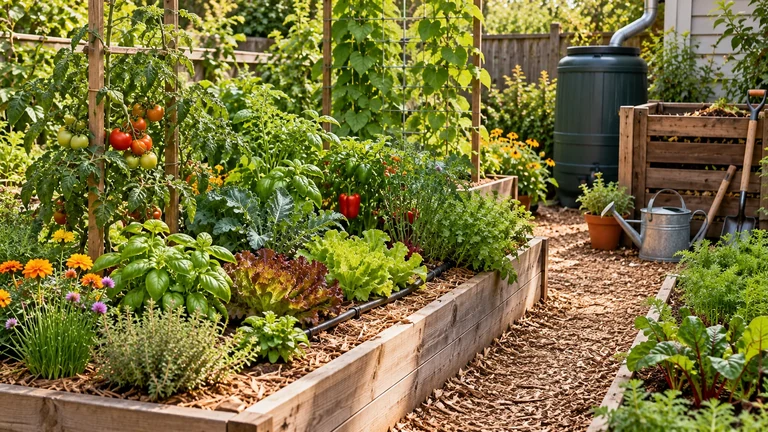
Mulch, crop residues and living cover can protect the soil surface from direct rainfall impact, reduce erosion and help moderate soil temperature and moisture loss.
The phrase permanent mulch can be misleading because organic mulch decomposes and must be monitored, replenished or adjusted.
A better objective is:
maintain useful soil cover for as much of the year as practical.
Mulch depth and material should suit the crop and climate. Avoid burying plant crowns or creating persistently saturated conditions around stems.
Keep Living Roots in the System
Living roots support an active rhizosphere, the zone immediately around roots where intense biological and nutrient-cycling activity occurs.
In a home garden, living roots can be maintained through:
- long-season crops,
- overlapping planting windows,
- cover crops,
- perennial herbs,
- perennial vegetables where climate allows,
- and quick replacement of harvested crops during the active season.
This does not mean every square inch must contain a plant every day of the year. Climate, water availability and crop rotation still matter.
Use Cover Crops Where They Solve a Real Problem
Cover crops can protect otherwise bare soil, add root activity, reduce erosion, capture nutrients and contribute organic matter.
For small gardens, the challenge is fitting them between food crops without creating excessive competition or difficult termination.
Useful options can include grasses, legumes or mixed cover crops selected for the local season and objective.
A cover crop should have a defined purpose such as:
- protecting winter soil,
- adding biomass,
- supporting nitrogen management,
- improving root diversity,
- or suppressing weeds.
Crop Rotation Still Matters in an Intensive Garden
Crop rotation means avoiding the repeated placement of closely related crops in the same soil whenever the garden layout makes that practical.
Rotations can increase plant diversity and help interrupt some crop-specific pest and disease cycles.
In a very small garden, perfect multi-year rotation may be impossible. That does not make rotation useless.
You can still:
- move crop families between beds or large containers,
- alternate heavy-feeding crops with less demanding crops,
- insert cover crops,
- and avoid repeatedly planting the same disease-prone crop in the exact same location.
Companion Planting Should Be Designed Around Functions
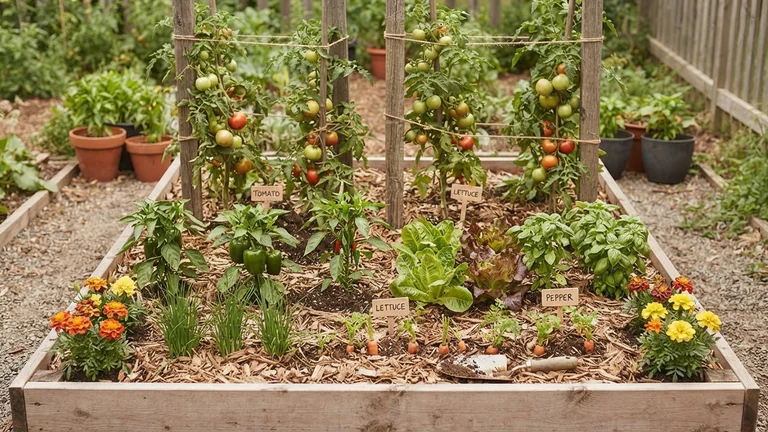
Companion planting is most useful when the claimed benefit can be described as a real garden function rather than a vague promise that two plants simply “like” one another.
Useful functions include:
- different canopy heights,
- different rooting depths,
- flowers that provide resources for beneficial insects,
- rapid crops occupying temporary gaps,
- living ground cover,
- wind protection,
- or efficient use of trellis space.
Plant diversity can improve habitat complexity, but dense mixtures do not automatically confuse every pest or prevent infestation.
Do Not Treat Marigolds as Universal Pest Protection
The common claim that planting a few marigolds beside tomatoes automatically protects tomato roots from nematodes is too broad.
Effects depend on the marigold species or cultivar, the nematode species, planting density and how the marigolds are used in the rotation or bed.
Use flowers such as marigolds for diversity, pollinator value and ornamental function where appropriate, but do not build the entire pest-management strategy around a universal repellent claim.
High Density Has a Limit
High-intensity gardening is productive only while plants still have enough light, root volume, airflow, nutrients and water.
Overcrowding can create:
- excess shading,
- competition for water,
- poor airflow,
- difficult harvesting,
- and conditions favorable to some foliar diseases.
The productive target is therefore efficient occupancy, not the maximum possible number of plants.
Use Vertical Space Before Compressing Root Space
Trellises can increase usable growing area for crops such as pole beans, peas and suitable cucumbers without requiring every plant to compete at ground level.
Vertical growing can also improve access and light distribution when trellises are positioned so they do not shade shorter crops excessively.
For small gardens, this is often more useful than simply reducing plant spacing below appropriate levels.
Succession Planting Keeps Beds Productive
When a crop finishes, its space does not have to remain bare for the rest of the season.
Where climate permits, follow one crop with another suited to the remaining growing window.
Examples might include:
- spring radishes followed by beans,
- early greens followed by a warm-season crop,
- or a harvested summer bed followed by a cool-season crop or cover crop.
The exact sequence depends on local frost dates, heat, day length and crop maturity.
Vermicomposting Is Useful — but Skip the Feeding Myth
Vermicomposting uses composting worms, commonly red wigglers, to process suitable organic materials into worm castings and partially decomposed organic matter.
The often-repeated claim that worms will reliably eat a fixed fraction of their body weight every day is not a useful management rule.
Processing rate changes with:
- worm population,
- temperature,
- moisture,
- feedstock,
- particle size,
- and bin conditions.
Feed according to how quickly the previous material is being processed rather than according to a rigid body-weight formula.
Hot Composting Can Process Larger Volumes
Where enough suitable material is available, a managed hot-compost pile can process garden residues faster than a passive pile.
Successful hot composting depends on an appropriate balance of carbon-rich and nitrogen-rich materials, moisture, oxygen and sufficient pile volume.
Not every small garden generates enough material to maintain a hot pile continuously, and that is not a failure. A slower compost system can still produce useful amendment.
Chicken Tractors Are Optional, Not a Core Requirement
A movable chicken enclosure can integrate poultry with a larger garden system, but it is not automatically appropriate for a small urban garden.
Before considering chickens, check:
- local regulations,
- space requirements,
- predator protection,
- animal welfare,
- neighbor impacts,
- manure management,
- and food-safety separation between fresh manure and edible crops.
Fresh poultry manure is nutrient-rich and should not be treated as ready-to-use compost merely because chickens deposited it in a garden area.
A chicken tractor is one possible nutrient-cycling tool, not a prerequisite for permaculture.
Build Fertility With Several Smaller Loops
The most resilient garden does not depend on one fertility source.
A practical system might combine:
- kitchen scraps routed to compost or worms,
- healthy crop residues returned as compost or mulch,
- cover crops during open planting windows,
- living roots for much of the year,
- diverse crop rotations,
- and targeted amendments where observation or testing indicates a need.
Each loop reduces waste and returns some resources to the soil, but none creates a closed system with zero nutrient losses.
Observe Before Adding More Fertility
High-output gardens can accumulate nutrients as easily as they can become deficient.
Watch for:
- poor growth,
- unusual leaf color,
- compaction,
- drainage problems,
- excessively lush but weak growth,
- and repeated crop problems.
Where appropriate, soil testing can provide better guidance than repeatedly adding compost or fertilizer by habit.
A Practical High-Intensity Permaculture Workflow
- Observe sunlight, drainage and existing soil conditions.
- Build permanent or semi-permanent beds and access paths.
- Minimize unnecessary soil disturbance.
- Add compost or amendments according to actual need.
- Keep useful cover on exposed soil.
- Plan crop diversity across space and time.
- Use trellises before overcrowding the soil surface.
- Use succession planting to reduce long bare periods.
- Insert cover crops where planting windows allow.
- Maintain living roots for as much of the growing season as practical.
- Recycle suitable organic materials through compost or vermicompost.
- Observe crop performance and adjust the fertility plan.
What This System Cannot Guarantee
A well-designed soil-building garden can improve soil function over time, but it cannot guarantee:
- perpetual fertility without nutrient management,
- maximum yield every season,
- complete pest control through companion planting,
- universal disease suppression from compost,
- zero fertilizer requirements in every soil,
- successful cover cropping in every climate window,
- or a completely closed nutrient cycle.
The Bottom Line
A productive permaculture garden is not powered by one miracle technique.
Its strength comes from combining several compatible practices: limited disturbance, soil cover, diverse crops, living roots, composting, sensible rotations and efficient use of vertical and seasonal space.
Do not try to make fertility permanent. Build a system that keeps rebuilding fertility as the garden grows and harvests continue.
FAQ
What is the best way to start a high-intensity permaculture garden?
Start by observing the site, defining permanent growing and access areas, protecting the soil surface and understanding existing soil conditions before adding large quantities of amendments.
Does compost replace fertilizer forever?
No. Compost contributes organic matter and nutrients, but its composition varies and crops continue removing nutrients at harvest. Fertility should be managed according to crop demand and soil conditions.
Should I plant as densely as possible?
No. Use space efficiently while preserving adequate light, airflow, root volume, water and access. Overcrowding can reduce rather than increase useful production.
Does companion planting keep pests away?
Plant diversity can provide useful ecological functions, but no generic companion combination reliably prevents all pests. Use companion planting as one design tool within broader pest management.
Do I need chickens?
No. Poultry integration is optional and depends on space, regulations, animal welfare and manure-management capacity. Compost, cover crops, crop residues and vermicomposting can create useful nutrient loops without livestock.
What does “living roots” mean?
It means keeping actively growing plants in the soil for as much of the suitable growing period as practical, including food crops, perennials or cover crops.
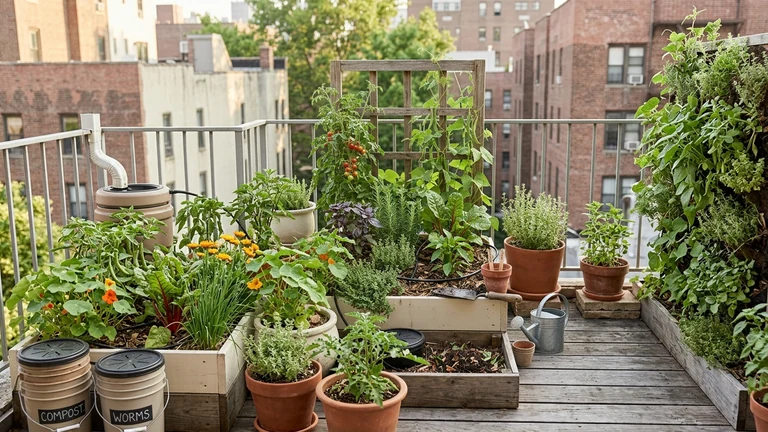
Can a small urban garden use these soil-health principles?
Yes. The tools may be smaller, but soil cover, plant diversity, living roots and limited disturbance can be applied to raised beds, compact plots and other intensive growing systems.