Reading Time: 4 min read
A Simple Guide to Maximizing Your Harvest
Are you tired of feeling overwhelmed by the prospect of planning your small-scale garden? Do you struggle to estimate realistic yields from your balcony, raised bed, or compact garden layout? Look no further! This practical planner-style guide is designed to help you achieve a bountiful harvest without breaking a sweat.
In this comprehensive resource, we'll walk you through the process of calculating realistic yields for your specific growing space. From understanding the factors that affect plant growth to learning how to optimize your space for maximum production, we've got you covered. With our expert guidance, you'll be able to confidently plan and execute a thriving garden that meets your needs and exceeds your expectations.
Estimating Realistic Yields: A Practical Guide
When planning your compact garden layout, it's essential to set realistic expectations for the yields you can expect from your plants. This guide will help you estimate the potential harvest from your balcony, raised bed, or small plot. To get started, consider the following factors:
Firstly, think about the specific growing conditions in your garden. Factors like sunlight, soil quality, and water availability will all impact the health and productivity of your plants. Next, research the average yield for each plant variety you're interested in growing. This information can usually be found on seed packets or online. Finally, consider the space available in your garden and how it will affect the density of planting.
Use the Free GardHack Small-Space Garden Planner
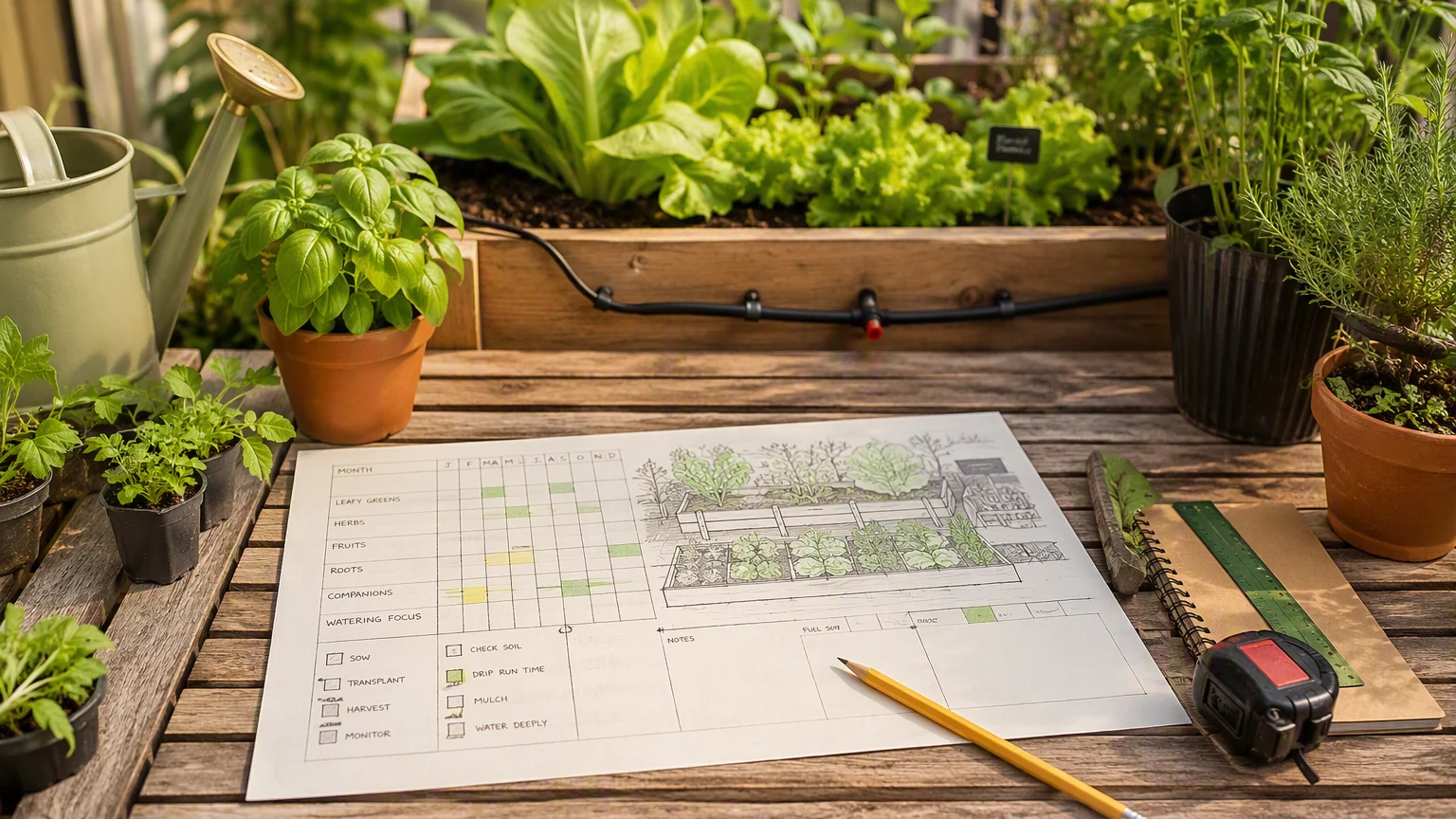
If you want to turn the ideas in this guide into an actual plan for your own space, use the free GardHack Small-Space Garden Planner. It is designed for balconies, raised beds, patios, indoor setups and small backyards, with a practical focus on better use of space and more water-conscious growing.
The planner helps you define what matters most in your setup, organize a monthly growing routine, think through watering priorities and sketch the layout of your beds, pots, zones and paths. It is a planning worksheet rather than an automatic yield calculator, so you can adapt it to your climate, crops and real growing conditions.
Plan Your Garden Before You Plant
Use the GardHack planner to map your growing space, set your priorities, organize monthly tasks and build a more practical water-smart routine.
Practical Planning Tips for Compact Gardens
To estimate realistic yields in your balcony, raised bed, or compact garden layout, consider the following factors: material choice (e.g., containers, raised beds, or in-ground planting), timing of plantings and harvests, and maintenance routines. For example, if you're using containers, make sure they have adequate drainage holes to prevent waterlogged soil.
Timing is also crucial. In areas with frost, plan for early spring or late summer plantings to avoid damage from harsh weather conditions. Regular watering and maintenance are essential for healthy plants and optimal yields. Consider the type of soil or container mix you're using, as well as the specific needs of your plants (e.g., some may require more nitrogen than others). By taking these factors into account, you'll be better equipped to estimate realistic yields in your compact garden.
Reality Checks for Your Water-Smart Garden
When using the Free Water-Smart Garden Planner, it's essential to set realistic expectations about what you can grow in your space. Many beginners make common mistakes by overestimating their ability to produce a bountiful harvest, only to be disappointed when reality sets in.
Avoid falling into this trap by conducting a thorough assessment of your garden's conditions, including sunlight, soil quality, and available water resources. This will help you determine the limits of what you can grow and ensure that you're not setting yourself up for failure. By doing so, you'll be able to create a practical plan that takes into account your unique situation and sets you up for success.
FAQ
How much space do I need for a water-smart garden?
You do not need a large garden to start. A balcony, patio, raised bed or small backyard can all support a useful growing setup. The important variables are usable space, sunlight, container or bed size, crop choice and how efficiently you organize watering and planting zones.
What kind of plants should I grow?
Choose plants that match your available sunlight, climate, season, container depth and gardening goals. The GardHack planner helps you define those priorities and organize your setup; use local growing guidance and seed or plant information to choose specific varieties appropriate for your conditions.
How do I know if my garden is water-smart?
A water-smart garden is not defined by one universal daily gallon limit. Look instead at whether you are reducing unnecessary evaporation and runoff, grouping plants with similar watering needs, retaining moisture with appropriate soil management and adjusting watering to actual plant and weather conditions.
The GardHack planner includes practical prompts for improving water efficiency and maintaining a growing routine that fits your space.
Ready to Map Your Growing Space?
Open the free GardHack Small-Space Garden Planner and turn your garden ideas into a layout and monthly routine you can actually use.