Reading Time: 11 min read
By Gardhack Editorial
6 min read
A spiral herb tea garden can fit several useful herbs into a compact footprint by using height, orientation, drainage and planting position to create slightly different growing conditions within one bed.
The important word is slightly. A herb spiral does not create completely separate climates within a few feet of garden space. Instead, its shape can create practical differences in drainage, sun exposure, wind exposure and moisture retention that help you place herbs more intelligently.
For tea herbs, the objective is especially useful: keep Mediterranean herbs toward the better-drained, sunnier parts of the spiral while reserving lower or more moisture-retentive positions for plants that prefer more consistent soil moisture.
What a Herb Spiral Actually Does
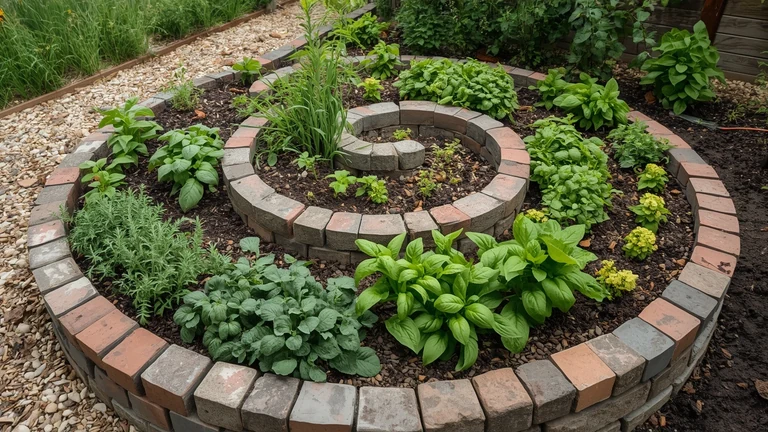
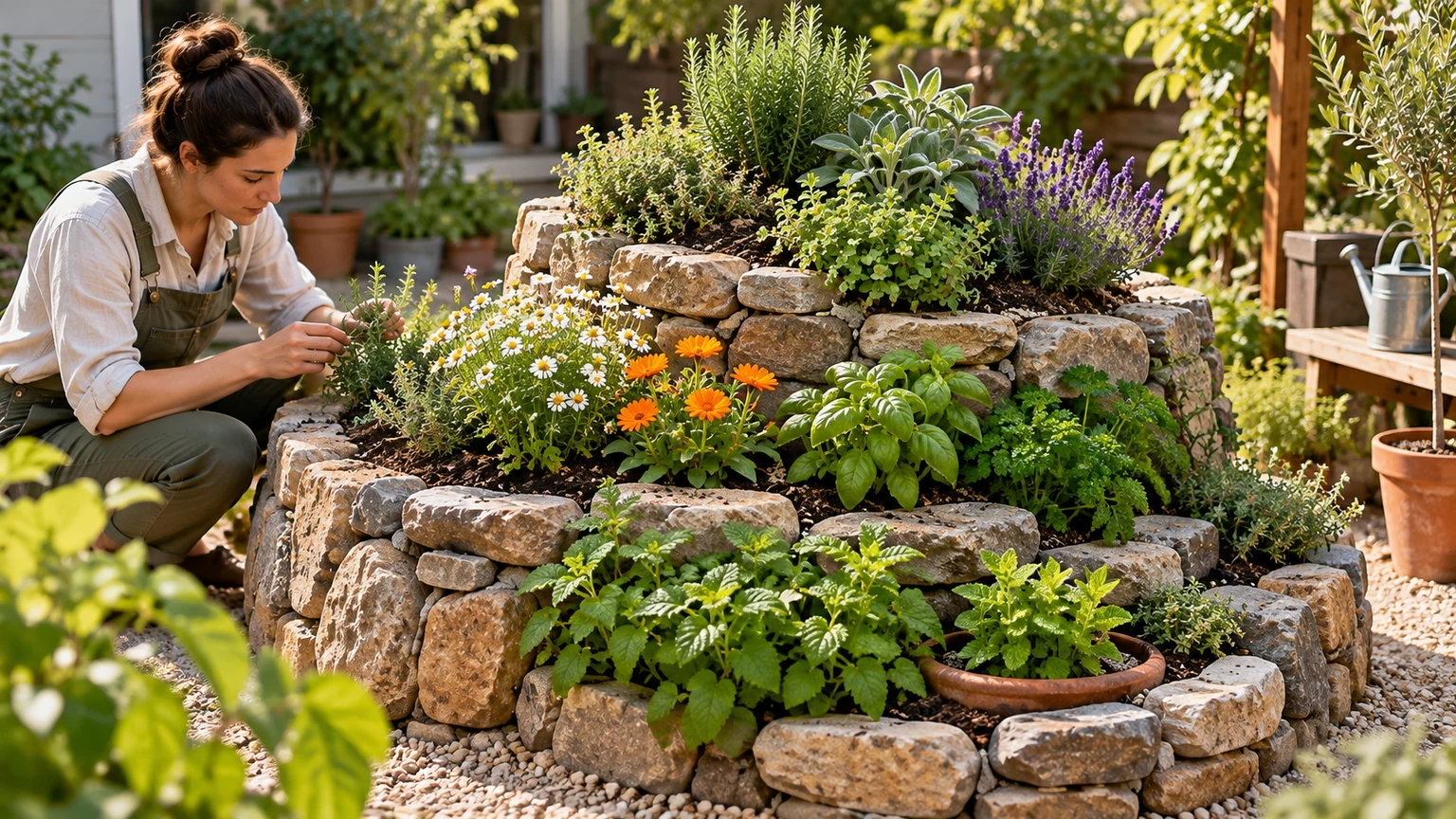
A herb spiral is a raised planting bed that climbs toward a central high point. The elevation change and curved wall create several planting positions in a relatively small area.
Those positions may differ in:
- drainage speed,
- soil moisture,
- hours of direct sunlight,
- heat reflected or reradiated by stone,
- wind exposure,
- and competition from neighboring plants.
The spiral shape therefore gives you more placement options than a flat bed of the same footprint.
It does not mean that every spiral automatically develops one hot side, one shaded side and one wet side. Orientation, surrounding buildings, trees, latitude, wall material and plant growth all change the result.
The Basic Moisture Gradient: Drier Above, More Moisture Below
The upper part of a well-built spiral normally drains more freely because it is elevated and contains a smaller column of stored water above the drainage path.
That makes the upper zone a useful location for herbs that dislike persistently wet roots.
The lower part of the spiral can retain moisture for longer because water moves downward through the profile and because lower planting pockets can be built with a somewhat more moisture-retentive growing mix.
But the lower zone should usually be described as more moisture-retentive, not waterlogged.
Most common culinary and tea herbs still need oxygen around their roots. Standing water is not a normal design target for a herb spiral.
Sun and Shade Depend on Orientation
Do not assume that the bottom of a herb spiral will automatically be shaded.
A lower planting pocket facing strong afternoon sun can be hotter than an upper pocket on the opposite side.
Before planting, observe the site at several times of day and identify:
- the side receiving the longest direct sun,
- the side receiving afternoon heat,
- the side shaded by the spiral itself,
- and any shadows cast by fences, buildings or existing vegetation.
Use those observations together with soil moisture rather than relying on a fixed compass diagram copied from another garden.
Stone Can Modify the Immediate Growing Environment
Stone is useful because it provides structural support and can absorb solar heat and release some of that heat later.
The effect is local and depends on stone color, mass, sun exposure and weather. It should not be treated as a guaranteed temperature increase throughout the whole spiral.
Stone walls can also create small sheltered pockets and help retain the stepped form of the bed.
Choose the Site Before Building the Spiral
Select the location based primarily on the herbs you actually want to grow.
Check:
- daily sun exposure,
- access to water,
- natural drainage,
- walking access for harvesting,
- distance from large competitive tree roots,
- and enough clearance to reach the center of the spiral.
A spiral that is too wide to reach comfortably becomes difficult to weed, harvest and inspect.
How Large Should a Herb Spiral Be?
There is no single required diameter or height.
The useful size depends on available space, the wall material and how many mature plants you want to accommodate.
For a compact home garden, the important design rule is reach: you should be able to harvest and maintain the central planting area without stepping into the bed or leaning dangerously over the wall.
Also consider mature plant spread. Rosemary, sage, lemon balm and mint can occupy far more space than young nursery plants suggest.
Build the Spiral From the Ground Up
- Mark the footprint. Use a hose, rope or garden-safe marking material to test the spiral shape before moving soil or stone.
- Check drainage. Avoid placing the structure in a site where water already ponds for long periods.
- Build the retaining wall progressively. Raise the wall toward the center rather than constructing one uniform-height ring.
- Backfill in stages. Add appropriate mineral and organic components while maintaining the intended slope and stability.
- Create a free-draining upper profile. The top should not behave like a sealed planter.
- Allow somewhat greater moisture retention lower down. This can be achieved through growing-medium composition and planting position rather than by creating standing water.
- Water the empty structure and observe it. Confirm that water drains without washing soil through the wall or pooling excessively.
- Plant only after the structure has settled enough to evaluate drainage and access.
You Usually Do Not Need a Pond
A small pond can be part of a larger permaculture design, but it is not a necessary component of a herb spiral.
Adding a pond changes the construction, maintenance and safety requirements and may not suit a small garden.
If the goal is simply to provide a more moisture-retentive lower planting zone, that can usually be achieved without permanent standing water.
Use Growing Media to Reinforce the Zones
The spiral shape alone does not determine soil moisture.
You can reinforce the intended gradient by adjusting the growing medium.
For example:
- the upper zone can use a free-draining mix appropriate for herbs that dislike saturated roots,
- the middle can use a balanced garden soil enriched with compost,
- and lower pockets can contain somewhat more moisture-retentive organic matter where appropriate.
Do not create abrupt layers that prevent drainage. The whole structure still needs a functioning path for excess water.
Upper Zone: Herbs That Prefer Good Drainage
The higher, sunnier and better-drained positions are often suitable for Mediterranean-style culinary herbs.
Depending on local climate and exposure, candidates can include:
- thyme,
- rosemary,
- sage,
- oregano,
- and lavender.
These plants do not all have identical requirements, but they generally benefit from avoiding persistently saturated soil.
In cold climates, winter survival and cultivar hardiness may matter more than the spiral position itself.
Middle Zone: Flexible Planting Space
The middle of the spiral is often the most flexible area because drainage and moisture are intermediate.
Depending on light exposure, this zone may suit:
- chamomile,
- calendula,
- anise hyssop,
- basil during suitable warm weather,
- parsley,
- or other compact herbs suited to the local climate.
Placement should follow the actual sunlight and moisture pattern of your spiral rather than a fixed template.
Lower Zone: Moisture-Retentive, Not Waterlogged
The lower part can support herbs that appreciate more consistent moisture.
Lemon balm and mint are common examples, although both can become vigorous.
The key distinction is:
moist soil is not the same as standing water.
If the lower zone remains saturated for long periods after ordinary watering or rainfall, improve drainage before treating that condition as part of the design.
Contain Mint Before It Takes Over
Mint spreads through underground stems and can move rapidly through a shared bed.
If you want mint in a spiral while preserving space for other herbs, consider planting it in a separate container inserted into or positioned beside the lower zone.
Even a container barrier should be inspected periodically because stems can escape over the rim or through openings.
Tea Herbs to Consider
A spiral intended for herbal infusions can combine plants chosen for aroma and flavor as well as growing habit.
Peppermint or Other Culinary Mint
Mint provides a strong, cooling aroma and is productive in a moisture-retentive position. Its aggressive spread makes containment important.
Chamomile
Chamomile flowers provide a mild, aromatic infusion and can fit into middle or lower sections depending on light and local conditions.
Lemon Balm
Lemon balm has a bright citrus aroma and generally prefers more consistent moisture than Mediterranean herbs. It can also self-seed or spread vigorously in suitable conditions.
Lavender
Lavender fits the drier end of the spiral better than a wet lower zone. Its strong floral character means only modest amounts may be desirable in blends.
Tulsi
Tulsi, or holy basil, is a warm-season plant in many climates. Treat it according to local temperature and growing-season conditions rather than assuming it behaves like a hardy perennial herb.
Thyme
Thyme prefers good drainage and is therefore a strong candidate for higher or sunnier positions.
Sage
Sage also benefits from good drainage and has a powerful flavor. Use only correctly identified edible sage species and cultivars intended for culinary use.
Growing an Herb Does Not Automatically Make It Appropriate to Drink
A gardening article can explain how plants grow, but plant identification and consumption safety remain separate questions.
Before making an infusion:
- confirm the exact plant species and cultivar,
- use plants known to be suitable for culinary use,
- avoid plants treated with products not intended for edible crops,
- and consider allergies, pregnancy, medications or other individual health considerations where relevant.
Chamomile, for example, can cause allergic reactions in some people, particularly those sensitive to related plants in the daisy family.
Some sage species contain compounds that make excessive or prolonged consumption inappropriate.
The safest approach is to separate garden placement advice from personal consumption advice.
Water According to Soil Moisture, Not Zone Labels Alone
The dry, middle and moist zones are design tendencies, not fixed watering schedules.
Check the soil before watering.
The upper zone may dry faster in hot weather, but a mature rosemary plant in a large soil volume may still need less frequent irrigation than a thirsty annual in a smaller lower pocket.
Watering frequency changes with:
- temperature,
- rainfall,
- wind,
- soil composition,
- plant size,
- root development,
- and season.
Use the zones to guide placement, then use actual soil conditions to guide irrigation.
Mulch Selectively
Mulch can reduce evaporation and suppress weeds, particularly in moisture-retentive areas.
But the same mulch depth is not necessary everywhere.
A thick moisture-holding layer around a drought-adapted herb in the upper zone may work against the drainage pattern you are trying to create.
Keep mulch away from crowns and stems where prolonged contact could encourage decay.
Harvesting Helps Manage the Spiral
Regular harvesting can keep many herbs compact and productive.
Remove dead, damaged or diseased material and trim vigorous plants before they shade smaller neighbors.
Do not assume that preventing every herb from flowering is desirable. Flowering herbs can provide resources for pollinators, and some plants are grown specifically for their flowers.
Instead, harvest according to your objective: foliage, flowers, seeds, plant shape or pollinator value.
Watch for Self-Shading
A spiral changes during the growing season.
A small rosemary, mint or lemon balm plant can eventually shade neighboring herbs.
Review the layout after plants mature and relocate, divide or prune plants when one species begins to dominate the microclimate of another.
Common Herb Spiral Mistakes
- Building first and observing sunlight later. Site exposure should influence the layout.
- Making the spiral too wide to reach. Maintenance becomes difficult.
- Assuming the lower zone should hold standing water. Moisture retention and waterlogging are different conditions.
- Using one soil mix everywhere. The growing medium can reinforce the moisture gradient.
- Planting mint without containment. It can dominate shared soil.
- Ignoring mature plant size. Small nursery plants do not remain small.
- Following a fixed watering calendar. Soil moisture and weather are better guides.
- Treating the spiral diagram as universal. Every site's sun, wind and drainage pattern is different.
A Practical Spiral Herb Tea Garden Workflow
- Choose the herbs you actually want to grow.
- Observe sun, shade, wind and drainage.
- Mark a spiral that remains easy to reach.
- Build a stable wall that rises toward the center.
- Create a free-draining upper profile.
- Create somewhat greater moisture retention lower down.
- Test drainage before planting.
- Place herbs according to actual moisture and exposure.
- Contain aggressive spreaders such as mint.
- Water according to observed soil moisture.
- Harvest and prune to prevent self-shading.
- Reassess the zones as the garden matures.
What a Herb Spiral Cannot Guarantee
A spiral can organize several growing conditions efficiently, but it cannot guarantee:
- perfect microclimates for every herb,
- identical results in every orientation or climate,
- a permanently dry top and moist bottom without management,
- successful overwintering of tender herbs,
- zero irrigation,
- or automatic suitability of every herb for tea consumption.
The Bottom Line
A successful spiral herb tea garden is not simply a decorative pile of stone and soil.
It is a compact planting system in which elevation, drainage, sun exposure, growing medium and plant behavior are used together.
Keep the top relatively free-draining, allow lower areas to retain somewhat more moisture, observe the real sunlight pattern and place each herb according to the conditions it actually prefers.
The spiral gives you useful planting zones. Observation and maintenance make those zones work.
FAQ
Does a herb spiral need a pond?
No. A pond can be part of a broader garden design, but a spiral herb garden can create a useful moisture gradient without permanent standing water.
Which herbs belong at the top?
Well-drained upper positions commonly suit herbs such as thyme, rosemary, sage, oregano and lavender, provided the site's climate and sunlight also suit those plants.
Which herbs can go near the bottom?
Plants that prefer more consistent moisture, such as mint or lemon balm, can work well in lower positions. The soil should generally remain aerated rather than waterlogged.
Should the lower part always be shaded?
No. Shade depends on orientation, surrounding structures and mature plant growth. Observe the site rather than assuming a fixed shade pattern.
How often should I water a herb spiral?
There is no universal schedule. Check soil moisture in different parts of the spiral and adjust irrigation for weather, plant size, soil composition and season.
Can I plant mint directly in the spiral?
You can, but mint spreads aggressively. A contained pot or other root-control strategy can make the spiral easier to manage.
Can every culinary-looking herb be used for tea?
No. Correct species identification and suitability for consumption should be confirmed separately from garden-placement advice.