Reading Time: 10 min read
A spiral herb garden is a compact raised planting bed arranged as a rising spiral rather than a flat circle. Its main value is not that the shape magically increases yield, but that one small structure can provide different combinations of sun exposure, drainage, soil depth and moisture.
Built well, a herb spiral can place drought-tolerant Mediterranean herbs higher in the structure while herbs that prefer more consistent moisture grow lower down. Built badly, it is simply a decorative mound that dries unevenly and is difficult to maintain.
The design works best when the spiral follows the real conditions of the site: sunlight, rainfall, wind, soil, drainage and the water needs of the herbs you actually want to grow.
What a Spiral Herb Garden Actually Is
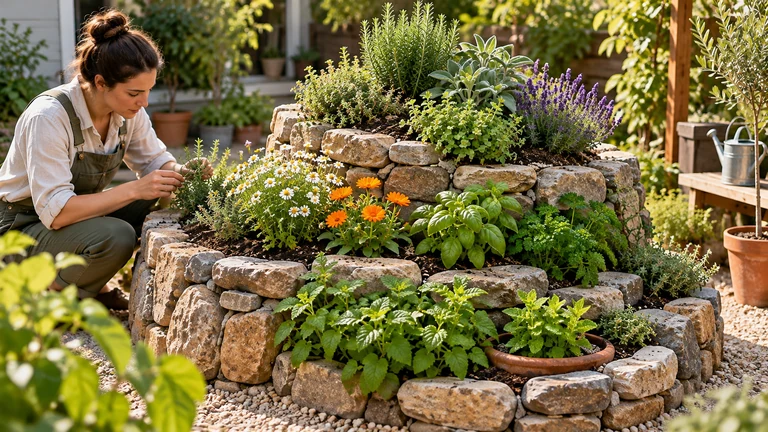
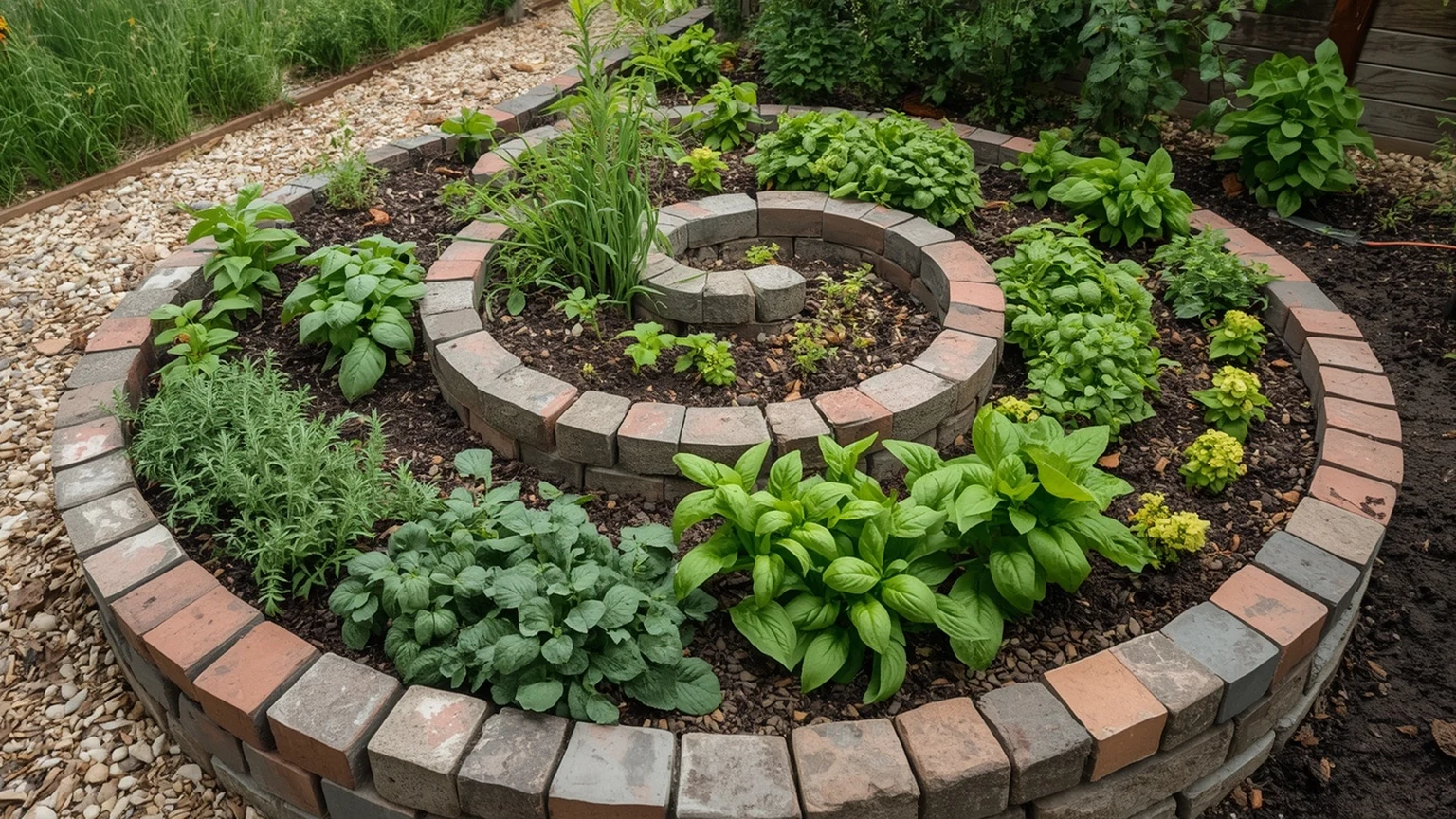
A traditional herb spiral is usually built from stone, brick, block or another durable edging material arranged in a circular spiral that gradually rises toward the center.
The inside is filled with suitable growing medium. The height creates changes in soil depth and drainage, while the spiral shape creates several planting faces with different exposure to sun and wind.
It is not normally a planter box with a spiral trellis in the middle.
A trellis can be added nearby for climbing plants, but it is not the defining structure of a herb spiral.
What the Spiral Can — and Cannot — Do
A herb spiral can create useful differences within a relatively small footprint, but those differences should not be exaggerated.
Depending on orientation, construction and climate, the structure may provide:
- a drier upper zone,
- a more moderate middle zone,
- a somewhat moister lower zone,
- different sun exposure around the structure,
- and convenient access to several herbs from one location.
However, the spiral does not automatically create perfect microclimates.
Local weather, shade from buildings or trees, soil composition, irrigation and prevailing wind can matter more than the spiral geometry itself.
Drainage Is Designed — Not Guaranteed
The upper part of a raised spiral will often drain faster than the lower part, but the spiral shape alone does not guarantee good drainage.
Drainage still depends on:
- the native soil underneath,
- the material used to fill the spiral,
- how compacted that material becomes,
- rainfall or irrigation volume,
- and whether water has somewhere to move after reaching the lower zone.
If the base sits on poorly drained soil, water can still accumulate.
Do not build the spiral as a sealed basin unless you are deliberately constructing a container system with controlled drainage.
Choose the Site Before Choosing the Herbs
Most common culinary herbs perform best when they receive substantial light, so begin by observing the proposed location.
Check:
- hours of direct sun,
- afternoon heat,
- wind exposure,
- where rainwater naturally moves,
- how quickly the existing ground drains,
- and whether you can reach every part of the spiral comfortably.
A spiral placed in deep shade cannot compensate for the light requirements of sun-loving rosemary, thyme or sage.
How Large Should a Herb Spiral Be?
For many home gardens, a spiral roughly 1.5 to 2 metres across is large enough to create useful planting zones while remaining reachable from the outside.
The center is commonly raised above the surrounding ground, but there is no single mandatory height.
The important design rule is access: you should be able to reach the center without stepping onto the planting area.
A smaller spiral can work, but very small structures provide less separation between dry and moist zones.
Materials You Actually Need
A basic herb spiral can be built with:
- stone, brick, block or another durable edging material,
- topsoil or suitable planting mix,
- compost where appropriate,
- coarser mineral material if needed to improve drainage in the upper zone,
- mulch suited to the herbs and climate,
- and herb seedlings or seeds.
You do not need a proprietary spiral planter, plastic box or irrigation system.
Automatic irrigation can be added later if the climate or maintenance schedule makes it useful.
Step 1: Mark the Footprint
Mark a circle where the spiral will sit.
Confirm that you can walk around it and reach the future center comfortably.
Do not place it where it blocks paths, utilities, drainage routes or access to other garden areas.
Step 2: Lay Out the Spiral
Use stones, bricks or blocks to form the outside edge and continue the wall inward in a gradual spiral.
The wall should rise progressively toward the center rather than remaining the same height.
Dry-stacked stone or brick is commonly used because it is easy to adjust, but the structure must still be stable enough that soil pressure and weather will not collapse it.
Step 3: Fill the Structure Gradually
Fill the spiral as the walls rise rather than constructing a tall empty shell first.
This supports the structure and makes it easier to shape the slope.
A practical fill strategy is:
- use suitable bulk soil through most of the structure,
- improve the planting layer with compost where needed,
- keep the upper zone relatively free-draining for Mediterranean herbs,
- and retain somewhat more moisture lower in the spiral for herbs that prefer it.
Avoid creating abrupt layers that prevent water movement or encourage perched water inside the mound.
Step 4: Water the Empty Spiral Before Planting
Water the finished soil structure before planting and observe what happens.
This is an important test.
Look for:
- areas where water immediately runs away,
- areas where it pools,
- soil that settles excessively,
- unstable walls,
- and erosion channels.
Correct those problems before adding herbs.
Step 5: Plant According to Real Needs
The classic zoning idea is useful, but plant placement should follow the actual sun and moisture pattern of your site.
Upper, Drier Zone
Good candidates often include:
- rosemary,
- thyme,
- sage,
- and other herbs that prefer good drainage.
These plants generally dislike persistently wet root zones.
Middle Zone
Depending on climate and exposure, suitable plants may include:
- oregano,
- chives,
- marjoram,
- and basil where adequate warmth and moisture are available.
Basil should not automatically be treated like a drought-tolerant Mediterranean herb. It usually needs more consistent moisture than rosemary or thyme.
Lower, More Moist Zone
Possible choices include:
- parsley,
- cilantro in suitable temperatures,
- and moisture-loving herbs appropriate to the local climate.
The lower zone should be more moisture-retentive, not permanently waterlogged.
Keep Mint Contained
Mint can spread aggressively through underground stems and may move through a spiral faster than expected.
If you want mint, the safer approach is often to keep it in its own container or sink a separate contained pot into the lower portion of the spiral.
Do not assume that placing mint at the bottom of the spiral will keep it there.
Do Not Overplant the Spiral
A newly planted herb spiral can look sparse, but many herbs expand substantially during the growing season.
Overplanting creates:
- competition for water and nutrients,
- reduced airflow,
- difficult harvesting,
- and plants shading one another.
Leave space based on mature plant size rather than the size of the seedlings on planting day.
Water by Zone, Not by Habit
A herb spiral should not necessarily receive the same amount of water everywhere.
Rosemary and thyme generally tolerate a drier root zone than basil or parsley.
Instead of soaking the entire structure every day, check moisture in different zones and water according to actual need.
The spiral may reduce some unnecessary watering when plants are grouped intelligently, but it does not guarantee lower water use.
Mulch Carefully
Mulch can reduce surface evaporation and suppress weeds, particularly in the middle and lower portions of the spiral.
Do not bury herb crowns or pile wet organic mulch tightly against stems.
In wetter climates, excessive mulch around drought-tolerant Mediterranean herbs can keep the root zone wetter than intended.
Pruning and Harvesting
Regular harvesting often helps many culinary herbs remain compact, but pruning practices depend on the plant.
Do not apply one rule to every herb.
For example:
- basil can be pinched regularly to encourage branching,
- chives can be harvested repeatedly during active growth,
- thyme can be trimmed lightly,
- and rosemary should generally not be cut aggressively into old leafless wood.
Flower removal is also not universally necessary. Allowing some herbs to flower can provide resources for pollinating and beneficial insects.
Common Spiral Herb Garden Problems
The Top Dries Too Fast
The upper zone may contain too little soil, have excessive drainage or receive intense heat and wind.
Add organic matter cautiously, increase soil volume where possible or adjust irrigation rather than assuming drought stress is part of the design.
The Bottom Stays Wet
Check whether runoff from the whole spiral is concentrating there and whether the native soil can drain.
Persistent saturation is not a required “moist zone.” It is a drainage problem.
One Herb Takes Over
Fast-spreading plants, especially mint, may need removal and container isolation.
Plants Lean or Stretch
This can indicate inadequate light rather than a problem with the spiral itself.
The Wall Starts Moving
Stop adding soil or water until the edging is stabilized. A herb spiral should not depend on loose decorative stacking that cannot resist the pressure of wet soil.
Does a Herb Spiral Save Water?
It can help organize plants by moisture requirement and may make targeted watering easier.
That does not mean every spiral automatically uses less water than a conventional herb bed.
Actual water demand depends on:
- climate,
- soil volume,
- wind,
- plant selection,
- mulch,
- irrigation method,
- and how densely the spiral is planted.
Does a Herb Spiral Increase Yield?
A spiral can fit several herbs into a compact footprint and can make harvesting convenient.
But the geometry itself does not guarantee higher yield.
Healthy growth still depends on adequate light, root space, nutrients, moisture and suitable temperatures.
When a Herb Spiral Is Not the Best Choice
A spiral may not be ideal if:
- the available location is heavily shaded,
- you need wheelchair-level or highly accessible raised beds,
- the site has severe drainage problems,
- you grow only one or two herbs,
- or a simple rectangular raised bed would be easier to maintain.
Permaculture design is about choosing the structure that fits the problem, not using a spiral because spirals look ecological.
A Practical Herb Spiral Workflow
- Observe the site. Check sun, heat, wind and drainage.
- Choose the footprint. Make sure the center remains reachable.
- Build the spiral wall. Raise it gradually toward the center.
- Fill and shape the soil. Avoid compacted or sealed layers.
- Water-test the structure. Look for pooling, erosion and settling.
- Map moisture zones. Do not assume where they will be.
- Plant by actual requirements. Put drier-zone herbs where drainage and sun support them.
- Contain aggressive spreaders. Especially mint.
- Observe and adjust. Move, prune or replace plants according to performance.
The Bottom Line
A spiral herb garden is a useful compact design, but its strength comes from thoughtful zoning rather than from the spiral shape alone.
Build stable walls. Use appropriate soil. Test drainage before planting. Put drought-tolerant herbs in the genuinely drier parts of the structure and moisture-demanding herbs where the soil stays more consistent.
A good herb spiral is not one that follows a diagram perfectly. It is one that responds to the real sun, water, soil and plants in your garden.
FAQ
What is a spiral herb garden?
It is a raised planting bed arranged in a spiral that gradually increases in height, creating different planting positions within a compact footprint.
Do I need a spiral trellis?
No. A trellis is not the defining feature of a herb spiral. The spiral itself is normally created by the raised retaining wall and soil profile.
Which herbs should go at the top?
Herbs that prefer good drainage, such as rosemary, thyme and sage, are often suitable for the upper zone if that part of your spiral is genuinely sunny and relatively dry.
Where should basil go?
Basil generally prefers warmth, good light and more consistent moisture than rosemary or thyme. A middle or lower-middle position may work better depending on the site.
Can I grow mint in a herb spiral?
Yes, but containing it in a separate pot is often advisable because mint can spread aggressively through the surrounding soil.
Does a herb spiral automatically save water?
No. It can help organize plants by moisture requirement, but water use still depends on climate, soil, plant selection, irrigation and maintenance.
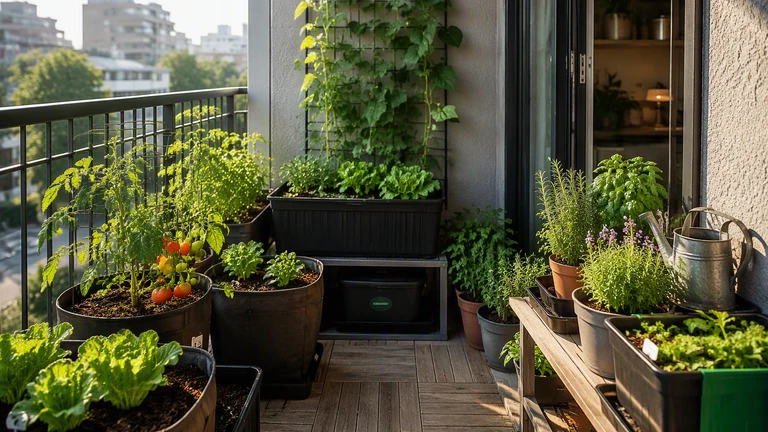
Can I build one on a balcony?
Only if the structure and load are appropriate for the balcony. A soil-filled masonry spiral can become very heavy. Containers or lightweight modular systems are usually more practical where structural load is a concern.
Build a More Resilient Garden
One practical system every Tuesday — water-smart gardening, food resilience, permaculture and small-space growing.
No fluff. No spam. Just practical systems that work.