Quick Start Shopping List
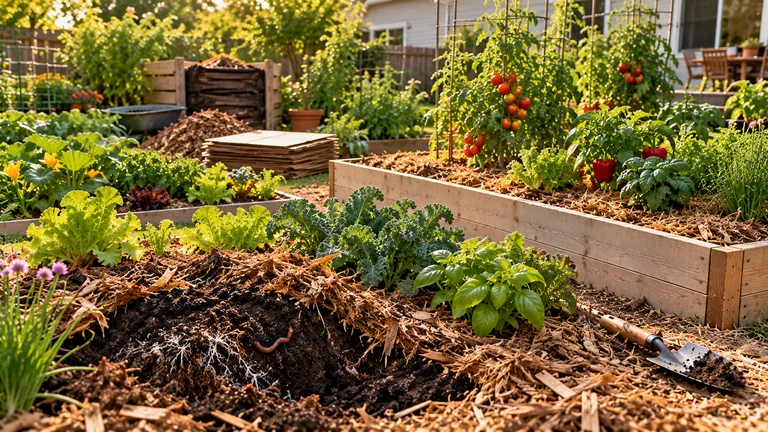
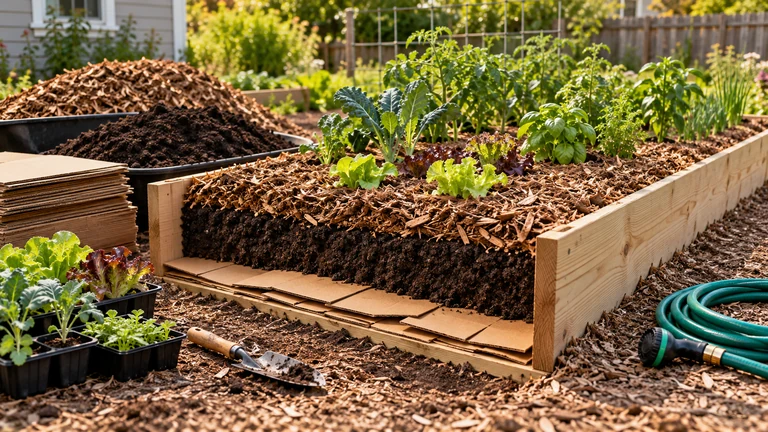
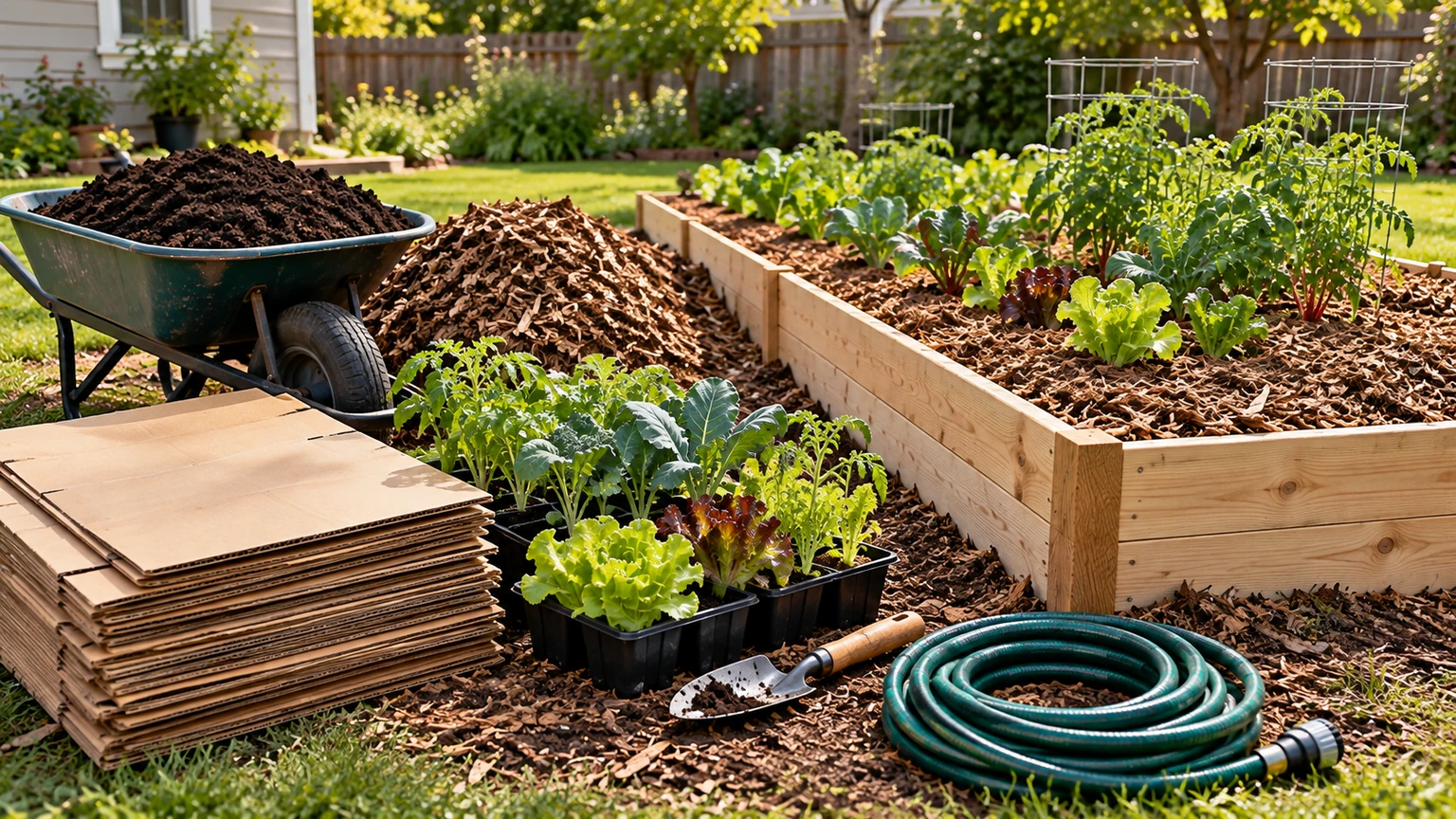
If you want to start a basic no-till bed without overbuying, begin with a short list: plain cardboard, finished compost, organic mulch, seeds or transplants, a reliable watering source and one or two simple hand tools.
You do not need a rototiller, a large collection of specialty tools or a shelf full of soil amendments. A no-till setup works by building and protecting the soil from the surface, so the smartest shopping list is usually shorter than a conventional garden-equipment list.
Must-Have Materials
1. Plain Cardboard
Use plain brown cardboard as a weed-smothering base when establishing a new bed over grass or weedy ground. Remove plastic tape, shipping labels and staples where practical.
Buy cardboard only if you cannot source clean boxes locally. For many gardeners, this is a free material rather than a purchased one.
2. Finished Compost
Finished compost is the most important purchased or prepared material in a basic no-till system. It provides the plantable upper layer and can be added from the surface in future seasons.
For a new 4 × 8 foot bed, plan the quantity according to the depth you want to add rather than buying by bag count alone.
3. Organic Mulch
Mulch protects the soil surface, slows evaporation and suppresses many annual weeds. Suitable materials can include straw, shredded leaves or another locally appropriate organic mulch.
Choose material that is clean and practical for your garden. Avoid paying premium prices for decorative mulch when an inexpensive functional material will do the same job.
4. Seeds or Transplants
Buy crops that fit the bed size, season and your actual eating habits. A no-till bed does not require special seeds.
If you are starting late in the season, transplants may be more practical for slow-growing crops, while fast crops such as radishes, beans or some greens can often be direct-sown.
5. A Watering Source
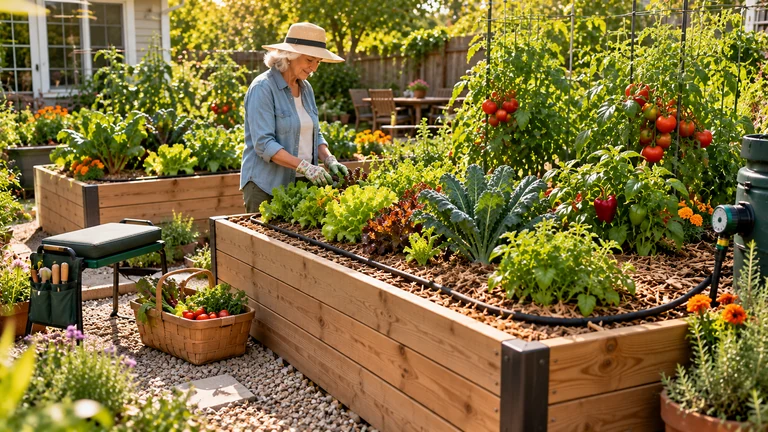
You need a reliable way to deliver water to the root zone. That can be a watering can for a very small bed, a garden hose, a soaker hose or a drip line.
Do not buy an elaborate irrigation system before measuring the distance from the water source and the actual bed layout.
6. One Simple Hand Tool
A trowel or hori-hori style garden knife is enough for many planting and small maintenance jobs. You do not need a large tool set to begin.
Useful, But Optional
These items can make the garden easier to manage, but they are not required for a functional no-till bed.
- Wheelbarrow or garden cart: useful for moving compost and mulch.
- Garden fork or broadfork: useful for initial loosening when the site is severely compacted, without routine soil inversion.
- Soaker hose or drip line: useful for consistent watering and reduced hose handling.
- Timer: useful when watering needs to run slowly and consistently.
- Soil test: useful when you have a reason to investigate pH or nutrient problems.
- Bed edging or raised-bed frame: useful for structure and clean paths, but not essential to the no-till principle.
- Mulch fork: useful if you routinely handle large amounts of straw or leaves.
Usually Do Not Buy These for a Basic No-Till Setup
Rototiller
A rototiller works against the basic low-disturbance approach. If the goal is no-till gardening, there is little reason to buy a machine designed specifically to turn the soil repeatedly.
Large Collections of Specialty Tools
Start with the tools needed for the tasks you actually perform. A trowel, pruning tool and perhaps a fork can cover much of the work in a small bed.
Random Soil Amendments
Do not automatically buy lime, sulfur, concentrated fertilizer or mineral amendments without a specific reason. If a soil test identifies a problem, buy the material needed to correct that problem.
Landscape Fabric Under the Growing Bed
For a bed built over soil, plain cardboard is usually a more compatible temporary weed-smothering layer because it decomposes. Permanent synthetic fabric can complicate future root growth and bed maintenance.
Premium Potting Mix for a Ground Bed
A no-till garden bed does not normally need to be filled with expensive container potting mix. Finished compost, existing soil and suitable organic materials are usually the more relevant components.
Shopping List for a 4 × 8 Foot No-Till Bed
A 4 × 8 foot bed has 32 square feet of surface area. Use that area to estimate material quantities.
| Material | Practical planning amount | Priority |
|---|---|---|
| Plain cardboard | Enough for full coverage with overlapping seams | Must have for new bed over grass/weeds |
| Finished compost | About 8 cu ft per 3-inch layer | Must have |
| Finished compost | About 11 cu ft per 4-inch layer | Must have if deeper planting layer desired |
| Mulch | About 5 to 8 cu ft for roughly 2 to 3 inches | Must have |
| Seeds/transplants | Based on crop plan | Must have |
| Soaker hose/drip line | Based on actual route through bed | Optional |
| Soil test | One kit or lab test if needed | Optional |
These are planning quantities, not exact prescriptions. Compost and mulch settle differently, and bag sizes vary widely by supplier.
How to Convert Cubic Feet Into Bags
Before buying bagged compost, check the volume printed on the bag.
If your 4 × 8 foot bed needs about 8 cubic feet of compost for a 3-inch layer:
- with 1-cubic-foot bags, you need about 8 bags;
- with 1.5-cubic-foot bags, you need about 6 bags;
- with 2-cubic-foot bags, you need about 4 bags.
Bulk compost may be more economical once you are filling several beds, but bagged compost can be easier to transport for one small project.
Budget Tier 1: Minimum Viable No-Till Setup
This is the simplest workable version.
- free clean cardboard;
- finished compost;
- low-cost local mulch or leaves;
- seeds or a few transplants;
- existing hose or watering can;
- existing hand trowel.
If you already own basic tools, most of the budget can go into compost and plants rather than equipment.
Budget Tier 2: Convenience Setup
Add items that reduce recurring labor:
- garden cart or wheelbarrow;
- soaker hose or drip line;
- simple timer;
- durable pruning tool;
- basic bed edging if needed.
This tier makes sense when you expect to maintain the bed for several seasons.
Budget Tier 3: Upgraded Setup
Spend more only where the upgrade solves a real problem.
- higher raised-bed frame for easier access;
- multi-zone irrigation for several beds;
- quality garden cart for frequent material movement;
- durable trellis system for vertical crops;
- formal soil testing if soil performance is questionable.
The goal is not to build the most expensive system. It is to spend on infrastructure that saves time or improves access over multiple seasons.
Buy Locally vs Order Online
Usually better to buy locally
- bulk compost;
- mulch;
- straw or leaves;
- raised-bed lumber or bulky frame materials;
- transplants during the local planting season.
These products are heavy, bulky or locally variable, so shipping often adds cost without adding much value.
Often reasonable to order online
- specialty seeds;
- timers;
- irrigation fittings;
- small ergonomic tools;
- replacement connectors;
- compact trellis hardware.
What Can Wait Until Later?
Do not feel pressure to buy every possible garden accessory before planting.
These purchases can usually wait:
- automatic irrigation, if manual watering is currently easy;
- soil testing, unless you suspect a specific problem;
- expensive trellises before you know which crops you enjoy growing;
- specialty hand tools;
- decorative bed accessories;
- additional amendments without evidence they are needed.
One-Trip Shopping Checklist
If you want to make one practical supply run for a new bed, use this checklist:
- finished compost;
- mulch;
- seeds or transplants;
- trowel if you do not already own one;
- watering connector or hose only if your existing setup cannot reach the bed;
- soaker hose or drip line only if you already know the required length;
- raised-bed frame materials only if you are actually building a framed bed.
Source cardboard separately if possible instead of paying for it.
What Do I Need to Start a No-Till Garden?
At minimum, you need a place to grow, organic material to build or improve the surface, plants and water.
For a simple new bed, that usually means plain cardboard, finished compost, mulch, seeds or transplants, and basic watering equipment. Everything beyond that should solve a specific problem such as access, irrigation, transport or poor soil conditions.
Bottom Line
The best no-till shopping list is not the longest one. Spend first on the materials that become part of the growing system: compost, mulch and plants.
Add irrigation, carts, raised frames and specialty tools when they save meaningful work. Skip the rototiller, unnecessary amendments and equipment you cannot yet identify a use for.
If you can leave the store knowing exactly where every purchased item will be used in the bed, you have probably bought enough.