Why No-Till Gardening Is Getting More Attention
No-till gardening is moving from a niche soil-building idea into a mainstream home-garden practice because it solves several problems at once: repeated digging, exposed soil, rapid moisture loss and the constant need to rebuild bed structure.
For home gardeners, the appeal is straightforward. Instead of turning the soil every season, compost and mulch are added from the surface, roots are left to create channels where practical, and the soil profile is disturbed only when there is a specific reason.
The result is not a garden with zero work. It is a garden where more of the work shifts from digging and rebuilding toward covering, feeding and observing the soil.
What “No-Till” Means in a Home Garden
In agriculture, no-till often refers to crop production systems that avoid conventional plowing and use specialized equipment to seed into untilled ground. Home gardening is different.
In raised beds and backyard plots, no-till is closer to a no-dig or minimal-disturbance system. Gardeners usually add compost at the surface, keep soil covered, plant directly into the upper layer and disturb only the small area needed for planting or harvesting.
This distinction matters because a backyard gardener does not need to copy a farm system. The useful principle is reducing unnecessary disturbance while maintaining a productive root zone.
Soil Structure Is One of the Main Reasons
Soil is not just a loose collection of mineral particles. Healthy garden soil develops aggregates, pores and channels that influence how water, air and roots move through it.
Repeated intensive digging can break those structures apart temporarily. Soil may look loose immediately after cultivation, but that does not always mean its long-term structure is improving.
In a low-disturbance bed, roots, organic matter and soil organisms gradually help create and maintain channels. Surface compost adds organic material without requiring the entire bed to be turned over.
Soil Organisms Benefit From a More Stable Habitat
Earthworms, fungi, bacteria and other soil organisms operate in different layers and microenvironments. Frequent full-bed disturbance changes those conditions repeatedly.
No-till gardening does not guarantee a perfect soil ecosystem, but it creates a more stable physical environment than routine deep cultivation. Organic residues remain near the surface, roots decompose in place and fungal networks have more opportunity to persist between crops.
This is one reason mulch and compost are so closely associated with no-till systems. They provide both cover and a continuing source of organic material.
Moisture Retention Is Becoming More Important
Gardeners dealing with hotter summers, irregular rainfall or watering restrictions are paying more attention to practices that reduce unnecessary evaporation.
No-till alone does not save water. The larger effect usually comes from the system around it: keeping the soil covered, increasing organic matter over time and avoiding bare, repeatedly cultivated surfaces.
Mulch shades the soil and slows direct evaporation. Better soil structure can improve infiltration and help water move into the root zone instead of immediately running off the surface.
Less Bare Soil Means Less Erosion
Bare soil is vulnerable to heavy rain, wind and surface crusting. A covered no-till bed is less exposed.
Mulch reduces the force of raindrops hitting the surface, while plant roots help hold soil in place. In sloped gardens or areas that receive intense storms, this can be an important practical advantage.
The principle is simple: soil that stays covered is usually better protected than soil repeatedly left bare between crops.
Why Compost Fits So Naturally Into No-Till Systems
Traditional garden advice often treats compost as something that must be dug deeply into the bed. A no-till system uses it differently.
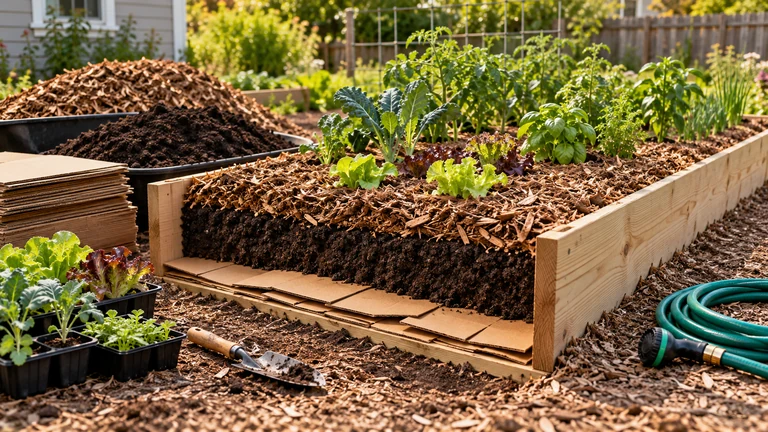
Finished compost can be spread at the surface in a relatively thin layer and incorporated gradually through watering, roots and biological activity. New seedlings or transplants are planted into or through that upper layer.
This makes seasonal bed preparation simpler because the gardener does not have to empty, turn or rebuild the entire bed every year.
Why American Home Gardeners Are Interested
Several practical trends make no-till attractive to home gardeners in 2026.
- Water efficiency: gardeners want soil systems that work well with mulch and low-flow irrigation.
- Lower recurring labor: fewer people want gardening to depend on annual heavy digging.
- Raised-bed gardening: permanent beds naturally fit a surface-feeding approach.
- Soil-health awareness: gardeners are paying more attention to organic matter, roots and biological activity.
- Composting: more home systems produce compost that can be added directly to beds.
- Resilience: gardeners want systems that remain productive through weather variability and irregular watering.
These factors explain the appeal without requiring claims that a specific percentage of American gardeners has already converted to no-till.
No-Till Is Not the Same as Never Touching the Soil
The term can be misunderstood. Minimal disturbance is the goal, not a prohibition against using tools.
You may still need to dig when:
- removing a deeply rooted perennial weed;
- installing a tree, shrub or large perennial;
- correcting a serious compaction or drainage problem;
- harvesting certain root crops;
- repairing irrigation or bed infrastructure.
The difference is that disturbance becomes purposeful and localized instead of an automatic annual ritual.
No-Till and Raised Beds Are a Natural Match
Raised beds already have permanent boundaries, which makes them well suited to a no-till system. Gardeners can keep foot traffic out of the growing area, add compost from above and maintain mulch without repeatedly reconstructing the bed.
The most important design rule is simple: do not walk in the bed if you can avoid it. Permanent paths and beds help protect the structure you are trying to preserve.
The Limitations: Where No-Till Is Not a Magic Fix
No-till gardening is useful, but it does not solve every soil problem automatically.
A bed with poor drainage, contaminated soil, extreme compaction or an unsuitable soil profile may need corrective work before a low-disturbance system is established.
No-till also does not mean adding unlimited organic material. Compost and amendments should still be used sensibly. Excess nutrients can be a problem just as deficiencies can.
And while mulch can suppress many weeds, perennial weeds may still require direct removal or a targeted control strategy.
What the Evidence Supports—and What It Does Not
The strongest practical case for home no-till comes from established soil-management principles: reducing unnecessary disturbance, maintaining soil cover, adding organic matter and supporting continuous root activity where possible.
Those practices are consistent with better protection of soil structure, lower exposure to erosion and improved moisture management.
What should be treated more cautiously are broad claims that no-till always produces higher yields, eliminates pests or creates perfect soil within one season. Results depend on climate, soil, crops and how the system is managed.
Why the Movement Feels Bigger Than a Technique
For many gardeners, no-till represents a change in how a garden is understood.
Instead of treating soil as a material that must be repeatedly broken apart and reconstructed, the gardener starts treating it as a living system that can be protected, covered and fed.
That shift is one reason no-till has become part of broader conversations about permaculture, regenerative gardening, composting and water-smart landscapes.
How to Try No-Till Without Rebuilding Your Whole Garden
You do not need to convert every bed at once. Start with one bed for a full growing season.
- Stop routine digging in that bed.
- Add a surface layer of finished compost.
- Keep the soil covered with mulch.
- Plant through the surface layer.
- Use targeted hand tools only where necessary.
- Observe moisture, weed pressure and soil condition through the season.
This gives you a direct comparison with conventionally managed beds in the same garden.
What to Watch Over the Next Few Seasons
No-till systems are cumulative. The most interesting changes often appear over more than one season.
Watch for:
- how quickly water infiltrates;
- how long mulch keeps the surface moist;
- whether soil becomes easier to work without digging;
- changes in earthworm activity;
- weed pressure;
- how much compost is needed each year;
- whether seasonal bed preparation becomes faster.
Why Is No-Till Gardening Better for Soil?
No-till gardening can be better for soil because it reduces repeated physical disturbance while encouraging practices that protect the surface and add organic matter.
The main benefits come from the combined system: less disruption of soil structure, continued root channels, compost added from above and mulch protecting the surface from drying and erosion.
The practical lesson is not that digging is always harmful. It is that gardeners often dig more than the soil actually requires.
The Bottom Line for 2026
The no-till movement is gaining attention because it aligns with several priorities at once: healthier soil structure, less repetitive labor, better use of compost, water conservation and more resilient permanent beds.
For American home gardeners, the easiest entry point is not a radical garden redesign. It is one permanent bed where the soil stays covered, compost is added from the surface and digging happens only when there is a clear reason.
That small change is enough to test the central idea behind the no-till revolution: sometimes the best way to rebuild soil is to disturb it less and manage its surface better.