Design the Garden Around Less Work, Not More Willpower
A productive garden does not have to depend on repeated digging, heavy lifting or long sessions of weeding. For a retired gardener, the best no-till bed is one designed so routine maintenance requires less bending, less carrying and fewer repetitive tasks.
The goal is not to remove every physical task. It is to place the most frequent jobs—watering, harvesting, light weeding and adding mulch—within comfortable reach and make the heavy setup work occasional rather than weekly.
No-till gardening helps because the soil is built from the surface with compost and mulch instead of being turned over every season. When that principle is combined with a sensible bed height, narrow reach distance, clear paths and simple irrigation, the garden becomes easier to maintain without giving up useful yields.
Start With Bed Height and Reach
Bed height matters because bending is one of the most repeated movements in a garden. A low bed may be inexpensive to build, but it can become tiring if every planting, harvest and maintenance task requires reaching to ground level.
For many gardeners, a raised bed in roughly the 18- to 30-inch range is easier to work than a bed close to grade. The exact height depends on personal comfort, whether you work standing or seated, and how much soil volume you want to manage.
More important than height alone is reach. If a bed is accessible from both sides, keeping it around 3 to 4 feet wide makes the center easier to reach without climbing into the bed. If it is accessible from only one side, a narrower bed is usually better.
Keep Paths Wide, Firm and Uncluttered
Good paths reduce more effort than many specialty tools. Leave enough room to turn comfortably with a bucket, cart or watering can. If you use a wheelbarrow or garden cart, make the main path wide enough for it from the beginning.
Firm surfaces are easier to walk on than loose, uneven ground. Wood chips, compacted gravel, pavers or another stable surface can reduce mud and make movement more predictable.
Avoid placing hose connections, loose tools or storage bins in narrow travel routes. The easier it is to move through the garden, the more likely small maintenance tasks will stay small.
Use No-Till to Eliminate Annual Digging
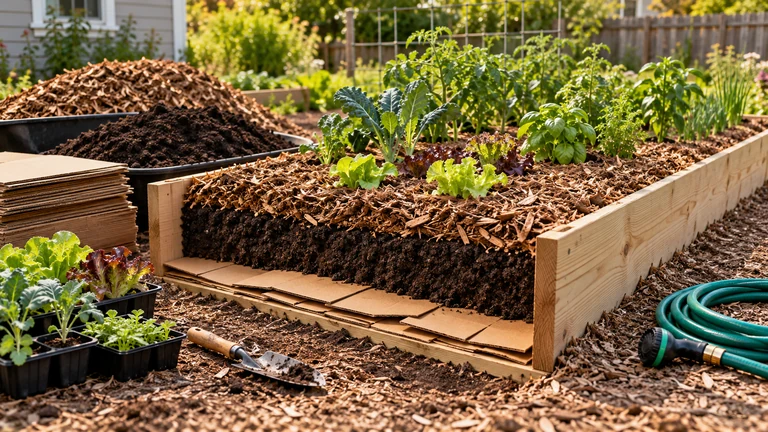
A no-till bed is maintained from the top. Instead of turning the soil over each season, add finished compost at the surface and cover exposed soil with mulch.
This has two practical advantages. First, it removes a major recurring physical task. Second, it helps preserve soil structure so the bed becomes easier to work over time rather than requiring annual reconstruction.
If a new bed begins on compacted ground, you may loosen the initial footprint with a garden fork or broadfork without inverting the layers. After that, avoid routine digging unless a specific problem requires it.
Mulch Is Your Main Labor-Saving Tool
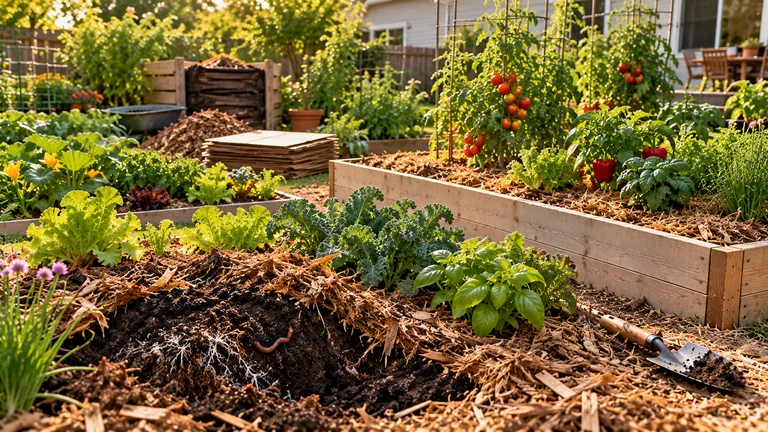
Mulch reduces the amount of exposed soil where weeds can establish and slows moisture loss between watering cycles. Both effects reduce repetitive maintenance.
Use a manageable organic mulch such as shredded leaves, straw or another locally suitable material. Add enough to cover the soil surface while keeping it clear of small stems and new seedlings.
Rather than waiting for weeds to become large, maintain the mulch layer and remove small weeds during regular harvest visits. A few minutes of light maintenance is usually easier than a separate weeding session.
Automate the Most Repetitive Job: Watering
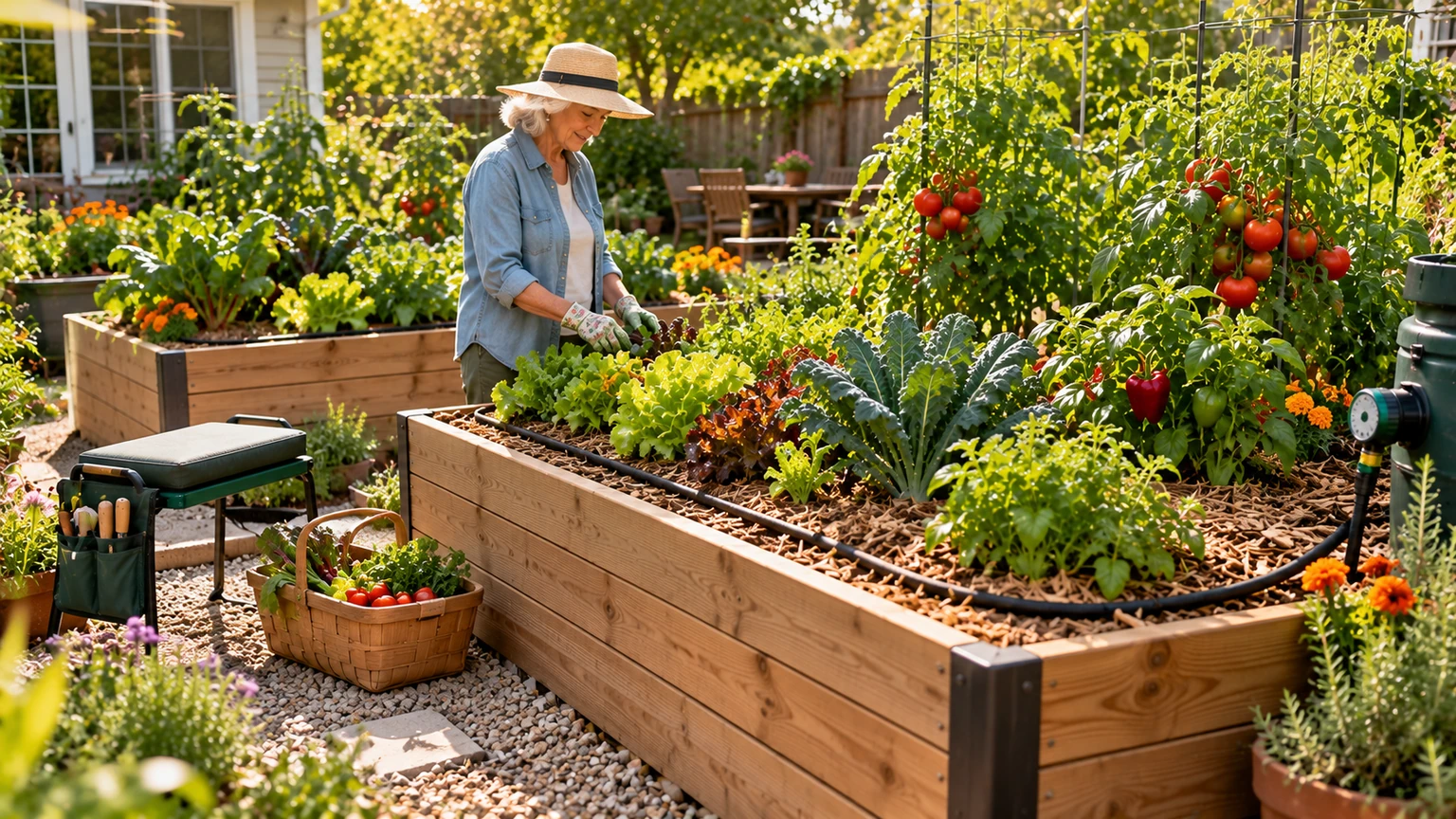
Hand watering can become one of the most time-consuming tasks in summer. A simple timer connected to a soaker hose or drip line can reduce daily carrying and repeated hose handling.
For raised beds, the simplest useful system is often one watering zone per bed or small group of adjacent beds. Test the system before covering the line with mulch so you can see whether the whole root zone receives water evenly.
Automation does not mean ignoring the garden. Check soil moisture periodically and adjust the schedule for weather, crop stage and season. The benefit is that watering becomes an adjustment task rather than a daily lifting task.
Choose Tools for Reach and Control
Ergonomic tools are useful when they reduce a movement you perform frequently. You do not need a large collection.
- Long-handled cultivator or hoe: useful for light surface work without kneeling.
- Lightweight hand trowel: useful for transplanting and small corrections.
- Garden fork or broadfork: useful mainly for initial setup or occasional loosening.
- Small cart or stable wheelbarrow: reduces repeated carrying of compost and mulch.
- Comfortable pruning tool: useful for crops that require frequent harvest or cleanup.
Choose tools that feel balanced in the hand. A lighter tool that is comfortable to use may be more valuable than a stronger tool that is tiring after five minutes.
Choose Crops That Reward Regular Harvesting
High yield does not have to mean high maintenance. Favor crops that produce repeatedly, fit the bed well and are easy to reach.
- leaf lettuce and other cut-and-come-again greens;
- bush beans;
- cherry tomatoes on a sturdy trellis;
- peppers;
- compact cucumbers trained vertically;
- herbs used regularly in the kitchen;
- Swiss chard or similar long-producing greens.
Vertical supports can improve access to tomatoes, cucumbers and climbing beans, but place them where they do not force you to reach across the entire bed.
Use Vertical Space Without Making Harvest Harder
Trellising can increase production per square foot and keep fruit easier to see, but a trellis is only useful if the harvest remains within comfortable reach.
Place tall crops toward the side or back of the bed where they can be accessed directly. Avoid building extremely tall structures that require ladders or repeated overhead reaching.
The best high-yield layout is not the one that fits the maximum number of plants on paper. It is the one you can maintain and harvest comfortably throughout the season.
A Low-Effort 4 × 8 Foot Bed Example
A simple layout for one 4 × 8 foot bed might include:
- a tomato trellis along one long edge;
- two or three pepper plants within easy reach;
- a short row of bush beans;
- leaf lettuce along the front edge;
- herbs near the corner closest to the path;
- a soaker hose or drip line under mulch.
The bed can be topped with compost once or twice per year and kept mulched. This creates a system where most weekly work is harvesting, quick observation and minor adjustment rather than digging and rebuilding.
Separate Setup Work From Maintenance Work
The first season may require more effort because frames, paths, irrigation and soil layers need to be established. Treat that work as infrastructure.
Once the system is in place, the maintenance pattern should become simpler:
- check moisture;
- harvest mature produce;
- remove a few small weeds;
- inspect plants for visible problems;
- add mulch where soil is exposed;
- add compost at the surface when the bed needs replenishment.
If the weekly routine still involves repeated digging, moving heavy soil or dragging long hoses around the garden, redesign that specific task instead of assuming the effort is unavoidable.
A 15-Minute Weekly Maintenance Routine
For an established bed, a short routine can cover most basic maintenance.
- Minutes 1–4: harvest anything ready and remove obviously damaged plant material.
- Minutes 5–8: check soil moisture and irrigation connections.
- Minutes 9–12: remove small weeds and check mulch coverage.
- Minutes 13–15: inspect leaves and stems for emerging pest or disease issues.
The purpose is not to finish every possible garden job in 15 minutes. It is to prevent routine tasks from accumulating into large jobs.
Reduce Lifting by Storing Materials Near the Beds
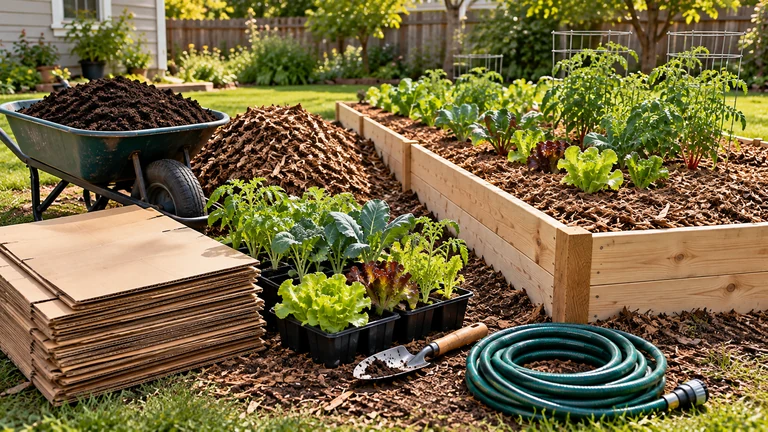
Compost, mulch and tools are easier to use when they are close to where they are needed. If possible, keep a small covered tool area or storage bin near the garden rather than carrying equipment from a distant garage for every visit.
Move bulk compost or mulch in several smaller loads if that is more comfortable than handling one heavy load. Garden efficiency is not measured by how much weight you can move at once.
What to Avoid in a Low-Effort Garden
- very wide beds that require climbing or deep reaching;
- annual rototilling;
- long unsupported hoses that must be moved repeatedly;
- dense plantings that are difficult to access;
- heavy decorative containers that must be relocated seasonally;
- too many crop varieties with completely different maintenance schedules;
- tools bought for occasional tasks when a simpler tool already works.
What Is the Easiest Type of Garden to Maintain?
For many home gardeners, one of the easiest productive setups is a small number of narrow raised beds with permanent paths, surface-applied compost, organic mulch and simple automated irrigation.
The exact bed height and crop mix should match the gardener, but the underlying design principle stays the same: bring frequent tasks within comfortable reach and remove unnecessary repeated work.
Bottom Line
A low-effort no-till garden is not a garden where nothing needs to be done. It is a garden where the design absorbs much of the repetitive work.
Start with accessible bed dimensions, firm paths, mulch and simple watering. Choose crops that are easy to reach and harvest. Add compost from the surface instead of rebuilding the soil every year. Once those systems are in place, the garden can deliver useful yields with shorter, more predictable maintenance sessions and more time spent harvesting than digging.