Reading Time: 8 min read
What a “Zero-Toxin” Family Garden Can Realistically Mean
For a family vegetable garden, the practical goal is not to promise a literally toxin-free environment. Plants, soil, compost, insects and even many naturally occurring substances contain chemicals. A more useful goal is to reduce unnecessary pesticide use, choose lower-risk controls when intervention is needed, follow label directions for any product that is used, and involve children in age-appropriate garden tasks.
You can grow vegetables without routine pesticide spraying, especially when pest pressure is low and the garden is designed around prevention. But “no pesticides ever” is not a guarantee that every crop will remain pest-free, and “natural” does not automatically mean harmless. The safest system is one that starts with prevention, monitoring and physical controls before considering any treatment.
Start With Prevention, Not Sprays
The strongest low-input pest strategy begins before a problem appears. Healthy plants grown in suitable conditions generally tolerate stress better than plants that are overcrowded, poorly watered or planted in unsuitable light.
- Choose crops suited to your season and site. Heat-loving crops, cool-season greens and shade-tolerant plants have different needs.
- Give plants enough spacing. Good airflow can reduce the conditions that favor some foliar diseases.
- Use clean containers and tools. This is especially useful when plants previously suffered from disease.
- Rotate plant families where space allows. Rotation can help interrupt some soil-borne pest and disease cycles.
- Remove badly diseased plant material when appropriate. Do not automatically compost material that may spread a persistent disease.
Build Soil for the Crop, Not for the Label
“Organic,” “natural” and “chemical-free” are not substitutes for understanding soil conditions. In containers, use a growing medium designed for containers rather than ordinary garden soil. In beds, compost can improve organic matter and soil structure, but it is not necessarily a complete fertilizer for every vegetable.
A soil test can be useful for established in-ground gardens when fertility, pH or contamination is uncertain. Avoid adding amendments simply because they are described as natural. Too much of an otherwise useful nutrient can still create problems.
Water According to the Root Zone
There is no universal rule that every vegetable should be watered “deeply but infrequently.” Containers, seedlings, raised beds and mature in-ground plants can have very different moisture needs.
Check moisture where the active roots are growing and adjust for container volume, drainage, temperature, wind, rainfall and plant stage. Watering at the root zone with a watering wand, drip system or soaker hose can reduce unnecessary wetting of paths and foliage, but the correct frequency still depends on actual conditions.
Children can help with simple moisture checks, watering cans or observing wilt and recovery, provided the tasks are suitable for their age and supervised where necessary.
A Practical Pest-Control Ladder for Family Gardens
Instead of jumping directly to a spray, use a step-by-step response. This is essentially an integrated pest management approach: identify the problem first, decide whether intervention is actually needed, and start with the least disruptive effective method.
- Identify the pest or damage. Holes in leaves do not automatically tell you what caused them.
- Check how serious the problem is. A few damaged leaves may not justify treatment.
- Use physical removal when practical. Hand-picking pests, pruning a localized infestation or washing aphids from sturdy plants can sometimes be enough.
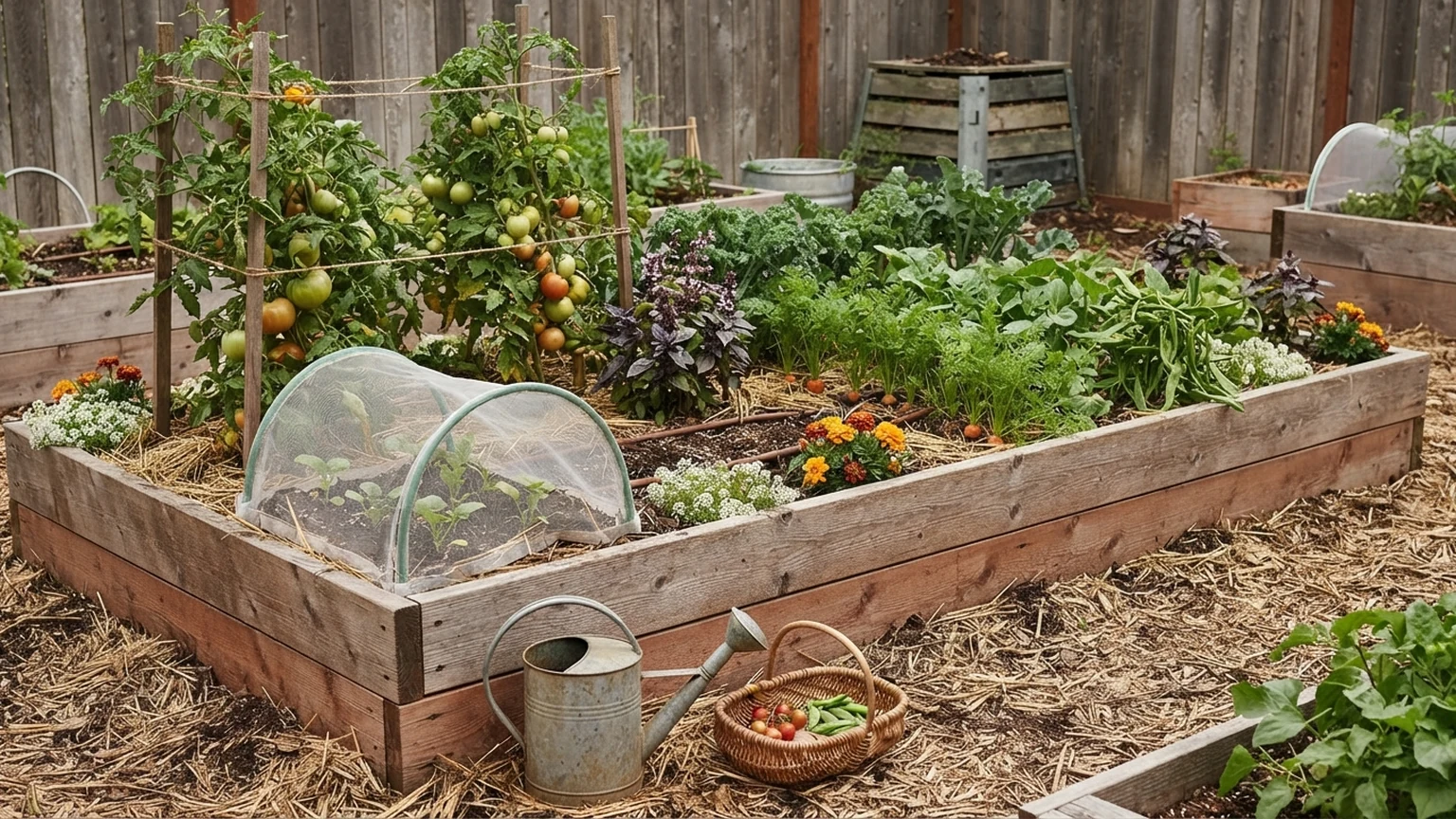
- Use barriers. Row covers, insect mesh and collars can prevent some pests from reaching crops when installed correctly.
- Protect beneficial organisms. Avoid broad treatments when predators or pollinators are already helping control pests.
- Consider a targeted product only when needed. If you use an insecticidal soap, horticultural oil, neem-based product or another pesticide, follow the product label and crop-specific directions. “Natural” products can still injure plants, beneficial insects or people when misused.
What About Beneficial Insects?
Lady beetles, lacewings, predatory bugs, parasitoid wasps and other beneficial organisms can contribute to pest suppression, but they are not an instant universal cure. The most useful strategy is often to create habitat that supports naturally occurring beneficial insects rather than assuming that releasing purchased insects will solve every infestation.
Flowering plants with accessible nectar and pollen, reduced unnecessary pesticide use and habitat diversity can help support beneficial species. Results vary by climate, pest pressure and garden design.
Companion Planting: Useful Tool, Not Pest-Proofing
Companion planting can be useful for space efficiency, biodiversity and attracting pollinators, but it should not be presented as guaranteed pest control. Marigolds, herbs and mixed plantings may have specific benefits in certain situations, but planting one species next to another does not make vegetables automatically resistant to insects or disease.
Use companion planting as one layer in a broader garden design, not as a replacement for monitoring and diagnosis.
Seeds: Heirloom Does Not Mean Pest-Resistant
Heirloom varieties can be valuable for flavor, seed saving and genetic diversity, but the term “heirloom” does not mean that a variety is naturally resistant to pests or diseases. Resistance is variety-specific.
If disease resistance matters in your area, look for cultivar descriptions that identify resistance to the particular disease you are trying to manage. In some cases, modern hybrids have been bred specifically for resistance to important crop diseases.
Containers, Raised Beds and Materials
You do not need to avoid all metal or all manufactured materials. The relevant questions are what the container was designed for, whether it previously held hazardous materials, whether drainage is adequate and whether the material is suitable for prolonged outdoor use.
For edible gardening, avoid repurposing containers that previously stored fuels, solvents, pesticides or other hazardous substances. If you are building a raised bed, choose materials based on durability, intended use, local conditions and current product guidance rather than assuming that every treated, plastic or metal material presents the same risk.
Kid-Friendly Garden Jobs
A family garden can teach observation, responsibility and food literacy without turning children into pesticide applicators. Tasks can be matched to age and ability.
- watering with a small watering can;
- planting large seeds;
- harvesting ripe vegetables;
- counting insects or leaves;
- checking labels and garden markers;
- adding suitable scraps to a compost bin with supervision;
- washing harvested produce before it enters the kitchen.
Keep fertilizers, pesticides, concentrated garden products, sharp tools and other hazardous materials stored securely and out of children's reach.
Food Safety Still Matters After Harvest
Growing vegetables with little or no pesticide use does not remove the need for normal food-safety practices. Soil, compost, animals, irrigation water and handling can all introduce contamination.
Use properly managed compost, keep pet and wildlife feces away from edible crops, wash hands after gardening, and wash produce under clean running water before eating or preparing it. Growing food at home changes where food comes from; it does not eliminate ordinary hygiene requirements.
For Children With Food Allergies
A garden can help families keep varieties clearly labeled, but growing a crop yourself does not make an allergenic food safe for a child who is allergic to it. Do not substitute one seed or crop for another on the assumption that home-grown food changes its allergen status.
If a child has a diagnosed food allergy, the family's existing medical and dietary guidance still applies. Garden labels and separate storage can help prevent mix-ups, but they do not replace allergy-management advice.
A Simple Family Garden Plan
- Start with three to five crops your family already eats.
- Choose varieties suited to your climate and space.
- Use clean, well-drained beds or containers.
- Build a simple watering routine based on actual soil moisture.
- Inspect plants at least a few times each week.
- Identify pests before treating them.
- Use physical and cultural controls first.
- Use any pesticide product only when justified and according to its label.
- Give children safe, age-appropriate garden jobs.
- Wash harvested produce and hands before eating.
FAQ
Is it safe to grow vegetables without pesticides?
Yes, many home gardeners grow vegetables without routine pesticide applications. Success depends on prevention, crop choice, monitoring and accepting some cosmetic damage. If a serious pest problem develops, identify the pest first and choose an appropriate control rather than assuming that either spraying or never spraying is always the safest option.
Are natural pesticides automatically safer for children?
No. A product can be naturally derived and still cause irritation, harm beneficial insects or damage plants if it is misused. Treat any pesticide as an active product: read and follow the label, store it securely and keep children away during mixing or application.
How can children safely participate in a vegetable garden?
Give them tasks appropriate to their age, such as planting, watering, harvesting, observing insects and washing produce. Adults should handle concentrated fertilizers, pesticides, sharp tools and other potentially hazardous materials.
Choose Controls by Problem, Not by Marketing Label
If prevention is not enough, compare options by the pest they actually control, how they are applied, compatibility with edible crops, effects on beneficial organisms, maintenance requirements and label restrictions. A row cover, insect mesh or targeted treatment may each be appropriate in different situations; there is no single “chemical-free” product kit that fits every garden.