Reading Time: 9 min read
Why the 123% Search Surge Should Be Treated as a Trend Signal
No-till farming has become a much more visible topic in sustainable agriculture and home gardening. But the headline figure in this article — a reported 123% rise in search interest — needs to be interpreted carefully.
GardHack has not independently verified a public dataset showing that no-till searches increased exactly 123% across all search platforms in 2026. Without the original dataset, date range, geography and methodology, the number should be treated as a reported search-interest signal, not as proof that no-till adoption itself increased by 123%.
That distinction matters:
Search interest measures curiosity and information demand. It does not directly measure how many farmers or gardeners have changed their soil-management practices.
Why No-Till Is Getting More Attention
The broader interest in no-till is easier to explain than the exact search percentage.
Farmers and gardeners are increasingly looking for ways to:
- reduce soil disturbance,
- protect soil structure,
- reduce erosion,
- keep soil covered,
- improve water management,
- support soil biology,
- and reduce unnecessary passes, digging or cultivation.
No-till sits naturally inside that conversation because it changes the default approach from repeatedly disturbing the soil to disturbing it only when there is a clear reason to do so.
What No-Till Actually Means
At its simplest, no-till means establishing crops while minimizing mechanical soil disturbance.
In commercial agriculture, that may involve specialized seed drills, residue management, cover crops and large-scale crop rotations.
In a home garden, the same principle usually looks very different.
A gardener might:
- avoid turning the entire bed every season,
- leave healthy soil structure largely intact,
- apply compost at the surface,
- use mulch or living cover,
- remove individual weeds with targeted disturbance,
- and transplant or sow into localized openings rather than cultivating the whole bed.
No-till therefore describes a soil-disturbance strategy, not one rigid technique.
The Four Soil-Health Principles Behind the Idea
USDA Natural Resources Conservation Service guidance frames soil health more broadly than simply “never till.” Four principles are especially useful for understanding the system:
1. Minimize soil disturbance
Repeated aggressive cultivation can disrupt aggregates, expose soil to erosion and disturb biological habitat.
The goal is not necessarily zero disturbance under every circumstance. It is to avoid unnecessary disturbance.
2. Maximize soil cover
Bare soil is vulnerable to erosion, crusting, temperature extremes and rapid moisture loss.
Cover can come from crop residue, mulch, cover crops or actively growing plants.
3. Maximize biodiversity
Different plant species produce different root structures and residues and support a more diverse biological community.
Crop rotation, mixed plantings and cover-crop diversity can all contribute.
4. Maximize continuous living roots
Living plants feed soil organisms through root exudates and keep biological processes active for more of the year.
Where climate and crop schedules allow, reducing long periods of bare, inactive soil can support a healthier soil system.
No-Till Does Not Mean “Never Touch the Soil Again”
This is one of the most common misunderstandings.
No-till does not require a gardener to ignore compaction, drainage failures, perennial weed infestations or other structural problems.
Targeted disturbance can be justified when you need to:
- remove a deeply rooted invasive weed,
- correct severe compaction,
- install irrigation,
- repair drainage,
- plant a tree or perennial,
- or correct a major soil problem.
The practical objective is to disturb only the area that needs intervention rather than automatically turning the entire bed.
What Research Supports — and What It Does Not Guarantee
No-till and reduced-tillage systems can provide important soil-conservation benefits, especially when combined with soil cover, diverse rotations and good residue management.
Potential benefits can include:
- lower erosion risk,
- better protection of soil aggregates,
- improved infiltration in appropriate conditions,
- greater surface residue,
- reduced moisture loss from exposed soil,
- and habitat for a more active soil biological community.
But none of these outcomes should be treated as automatic.
Results depend on factors including:
- soil type,
- climate,
- crop rotation,
- organic-matter management,
- compaction,
- weed pressure,
- equipment,
- and how the system is managed over time.
What About Soil Carbon?
Reduced soil disturbance can be part of climate-smart soil management, but claims about carbon should remain conditional.
No-till can help protect soil organic matter and may contribute to carbon-management goals in some systems. However, the amount and location of carbon stored in soil can vary substantially by climate, soil profile, cropping system and management history.
For a home gardener, the more useful objective is straightforward:
build and protect organic matter instead of repeatedly exposing and degrading the soil surface.
No-Till Farming and No-Dig Gardening Are Related — Not Identical
Commercial no-till farming and home-scale no-dig gardening share the principle of minimizing soil disturbance, but the operational systems are different.
A large farm may seed directly through crop residue with specialized equipment.
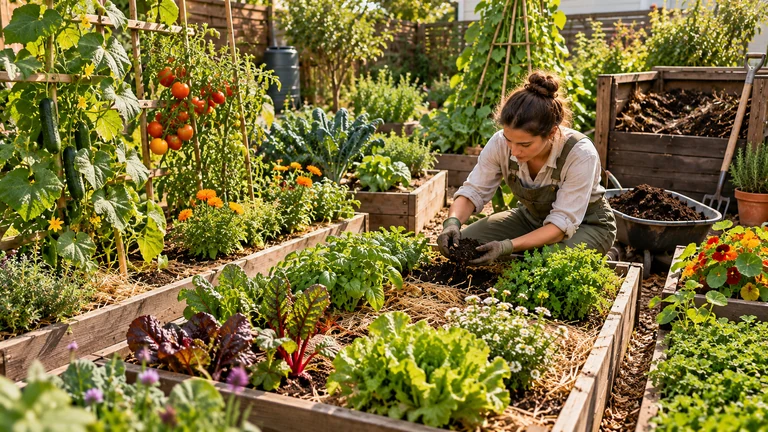
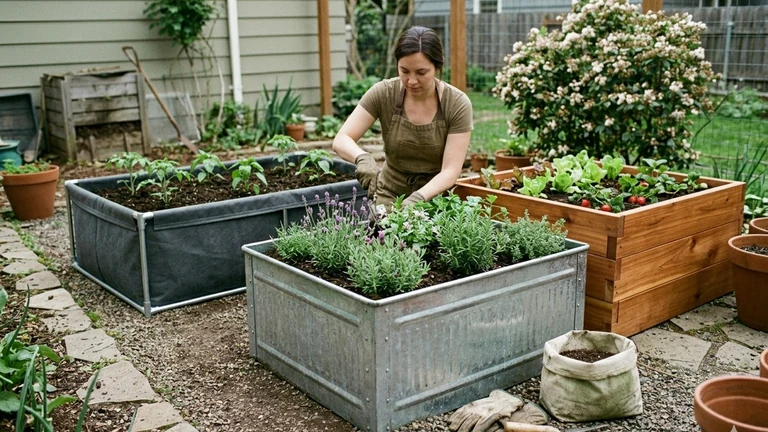
A home gardener may maintain a raised bed by:
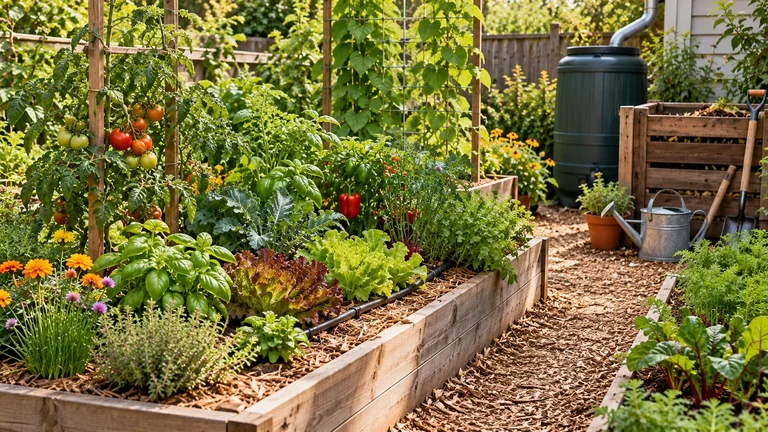
- adding compost to the surface,
- mulching exposed soil,
- planting through that surface layer,
- and leaving most of the soil profile undisturbed.
The scale changes. The underlying soil-health logic remains similar.
Where Compost Fits
Compost is useful in many no-till gardens, but it does not need to be deeply incorporated every season.
A mature compost layer can be applied to the surface and allowed to interact gradually with:
- soil organisms,
- rainfall and irrigation,
- plant roots,
- and normal biological decomposition.
This avoids turning the entire bed simply to distribute organic matter.
Where Mulch Fits
Mulch supports one of the central soil-health principles: keeping soil covered.
Depending on the crop and garden, mulch may help:
- reduce evaporation,
- buffer soil temperature,
- suppress some weeds,
- protect the surface from heavy rainfall,
- and gradually contribute organic residues.
The correct material and depth depend on the crop, local climate, irrigation method and pest pressure.
Is Cardboard Required for No-Till?
No.
Cardboard is sometimes used in sheet-mulching systems to suppress existing vegetation when converting an area into a new bed.
It is not a defining principle of no-till gardening, and an established no-till bed does not need a new cardboard layer every season.
Use it only when it solves a specific establishment problem and avoid treating it as a universal requirement.
A Practical Home-Garden Transition
You do not need to convert an entire garden at once.
A simple transition can start with one bed.
Step 1: Stop routine full-bed digging
If the soil does not have a structural problem that requires correction, avoid automatically turning it before every crop.
Step 2: Remove weeds selectively
Pull, cut or locally remove weeds rather than cultivating the entire soil surface.
Step 3: Add mature compost at the surface
Use compost where fertility or organic matter needs improvement without automatically mixing it deeply throughout the profile.
Step 4: Keep exposed soil covered
Use plants, suitable mulch, crop residues or cover crops according to the season and garden design.
Step 5: Plant with localized disturbance
Open only the planting hole, furrow or small area needed for the crop.
Step 6: Observe what happens
Monitor:
- soil moisture,
- infiltration,
- weed pressure,
- compaction,
- crop performance,
- and surface organic matter.
No-till works best as an adaptive management system rather than a rule followed blindly.
What No-Till Does Not Automatically Solve
Switching off the tiller does not automatically correct every garden problem.
You may still need to address:
- poor drainage,
- severe compaction,
- nutrient deficiencies,
- soil pH,
- persistent perennial weeds,
- irrigation problems,
- or unsuitable crop selection.
No-till is one part of a broader soil-management system.
Why Search Interest Is Still Useful
Even without independently validating the precise 123% figure, rising search interest can still tell us something useful.
It can indicate that more people are asking questions about:
- soil health,
- erosion,
- water conservation,
- regenerative agriculture,
- cover crops,
- mulching,
- and lower-disturbance gardening.
What it cannot tell us by itself is how many of those people actually changed their farming or gardening practices.
Search Interest Is Not Adoption
This distinction is worth stating directly:
A reported 123% rise in search interest is best treated as a trend signal, not proof that no-till adoption itself rose 123%.
Someone can search for no-till because they:
- want to adopt it,
- are comparing systems,
- are researching a school project,
- are troubleshooting weeds,
- are interested in regenerative agriculture,
- or simply encountered the term for the first time.
Search behavior measures attention. Adoption requires separate evidence.
The Bottom Line
The exact “123%” search-growth claim should not be confused with a verified 123% increase in real-world no-till adoption.
But the interest behind the trend makes sense.
No-till and reduced-disturbance gardening address issues that matter increasingly to both growers and home gardeners:
- protecting soil structure,
- keeping soil covered,
- managing water efficiently,
- supporting biological activity,
- and reducing unnecessary disturbance.
For a home gardener, the most practical starting point is not a dramatic conversion.
Start with one bed, disturb it only when necessary, keep the surface protected, add organic matter thoughtfully and observe how the soil responds.
FAQ
Did no-till farming adoption increase 123% in 2026?
That cannot be concluded from a search-interest figure. A reported 123% increase in searches would measure attention to the topic, not actual adoption. GardHack has not independently verified a public dataset demonstrating that adoption itself increased by that amount.
What is the main principle of no-till gardening?
Minimize unnecessary soil disturbance while maintaining soil cover, plant diversity and living roots whenever practical.
Do I have to use cardboard?
No. Cardboard is sometimes useful when establishing a new sheet-mulched bed, but it is not a required component of no-till gardening.
Can I add compost without digging it in?
Yes. Mature compost can often be applied at the soil surface and used as part of a reduced-disturbance garden system.
Does no-till mean I can never dig?
No. Targeted digging may still be appropriate for planting, correcting severe compaction, removing difficult perennial weeds, repairing drainage or installing irrigation.
Does no-till always increase soil carbon?
No single outcome is guaranteed. Reduced disturbance can contribute to soil-carbon management, but results depend on climate, soil, crops, organic inputs and the overall management system.
Build a More Resilient Garden
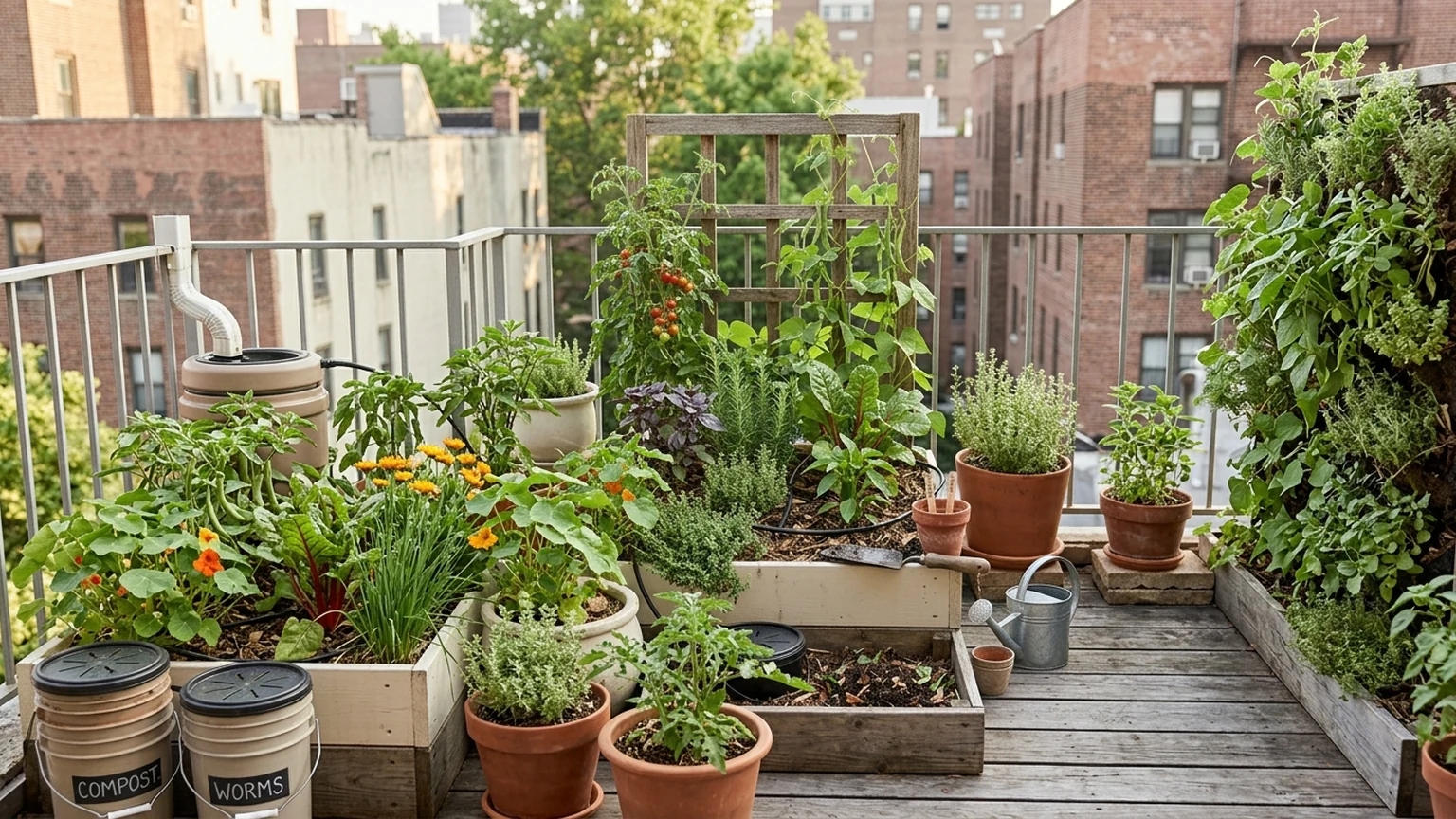
One practical system every Tuesday — water-smart gardening, food resilience, permaculture and small-space growing.
No fluff. No spam. Just practical systems that work.