Reading Time: 8 min read
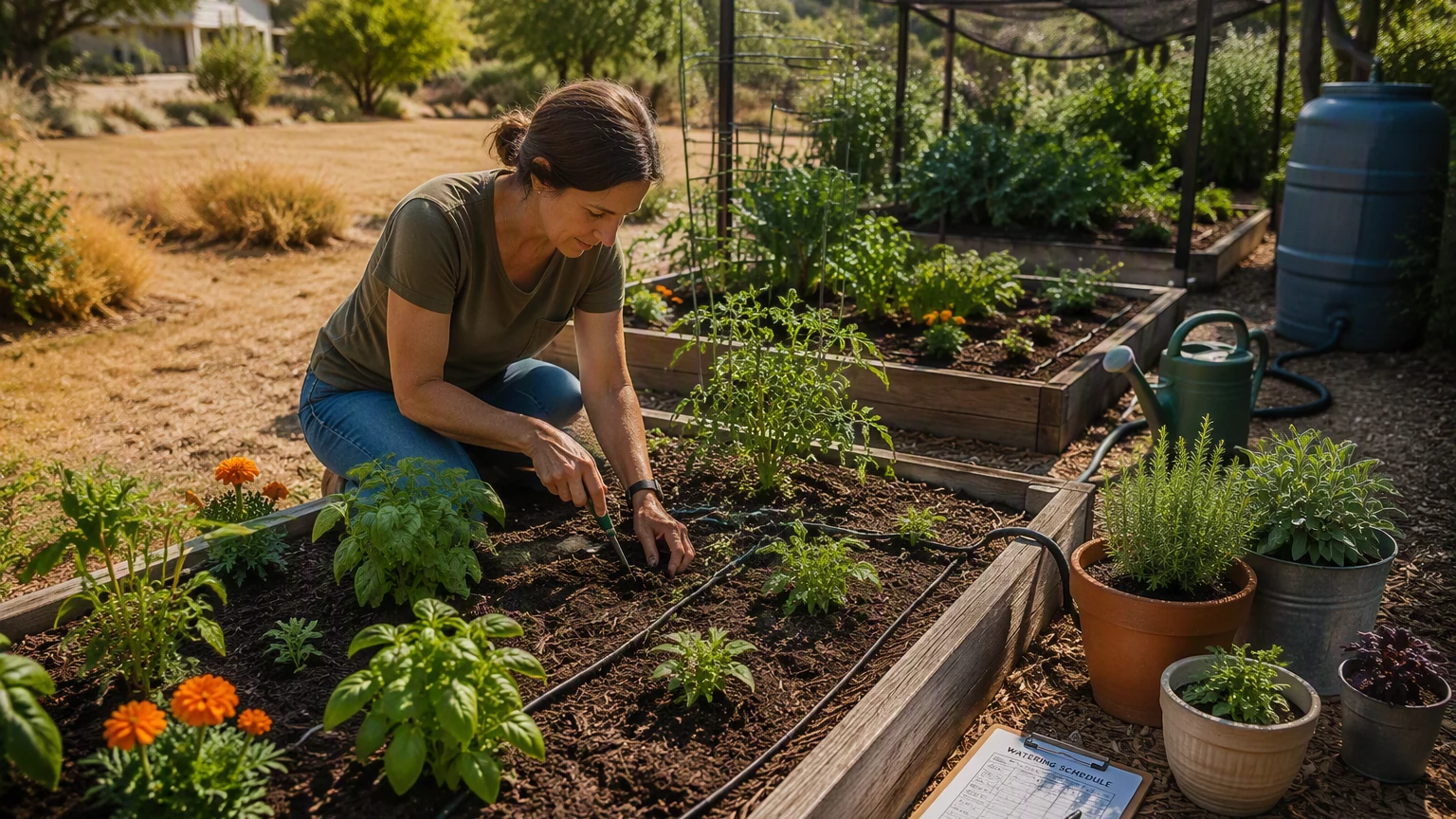
Large parts of the United States have faced significant drought pressure in 2026, but the severity, timing and restrictions are not the same everywhere. A gardener in Texas, Oklahoma or the Southeast may be dealing with very different conditions from someone in the Upper Midwest or Pacific Northwest.
That distinction matters. “Drought gardening” is not one universal method. The practical response starts with local conditions: current drought status, municipal watering rules, soil type, crop stage, heat, wind and how much water the garden actually needs.
The biggest shift is not toward one special drought-proof technique. It is toward better water decisions.
2026 Drought Pressure Is Regional, Not Uniform
It is useful to talk about drought pressure across the United States, but not as if the entire country is experiencing identical conditions.
Drought intensity can range from abnormally dry conditions to exceptional drought, and conditions can change quickly across state and county lines.
Before changing a garden plan, check:
- local drought status,
- municipal or utility watering restrictions,
- current rainfall deficit,
- heat and wind conditions,
- and whether restrictions distinguish between lawns, edible crops and newly established plants.
A national headline can tell you drought is widespread. It cannot tell you exactly how to water your own garden.
Check the Soil Before You Water
One of the most useful drought-season habits is simple: check whether the root zone actually needs water before irrigating.
Surface soil can look dry while deeper soil still contains usable moisture.
For garden beds, check below the surface rather than judging only by color or texture on top. For containers, remember that smaller root volumes can dry much faster than in-ground beds.
The goal is not to delay watering until plants wilt severely. It is to avoid automatic watering when adequate moisture is still available.
Mulch Reduces Evaporation — But It Does Not Replace Water
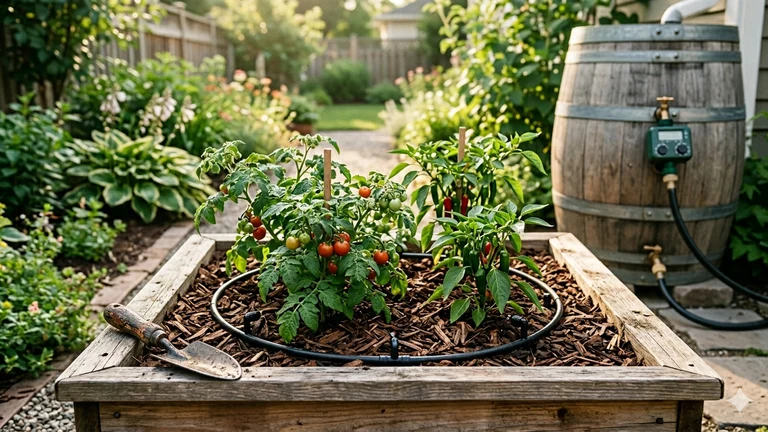
A suitable mulch layer can reduce direct evaporation from the soil surface, moderate temperature swings and suppress weeds that compete for moisture.
Useful materials can include:
- shredded leaves,
- straw,
- wood chips in appropriate beds,
- or other locally suitable organic mulches.
Keep mulch away from plant crowns and stems where constant moisture could encourage rot.
Mulch improves water management, but it cannot compensate for an undersized root zone, poor soil structure or prolonged lack of irrigation.
Drip Irrigation Can Improve Delivery Efficiency
Drip irrigation can deliver water close to the root zone and reduce some losses associated with broad overhead watering.
But drip systems are not automatically efficient.
They still need:
- correct emitter placement,
- appropriate run time,
- pressure control where needed,
- regular inspection for leaks or blocked emitters,
- and adjustment as plants grow.
A badly configured drip system can under-water some plants and waste water around others.
Watering Time Matters Less Than Watering Well
Early morning is often a practical watering window because temperatures are lower and plants have time to take up water before peak heat.
Evening watering can also reduce direct evaporation, but it may leave foliage wet for longer in some climates, especially where humidity is high.
The more important factors are:
- getting water into the root zone,
- avoiding unnecessary runoff,
- watering deeply enough for the crop,
- and following local restrictions.
There is no single clock time that is best in every region and every season.
Container Gardens Need Special Attention During Drought
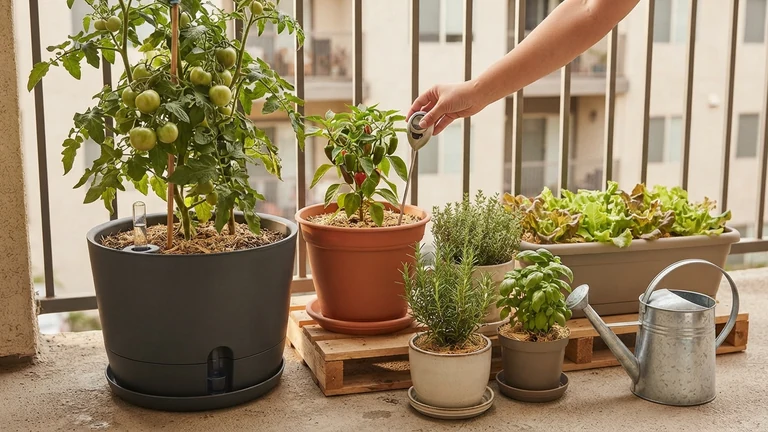
Containers can be useful in small spaces, but they are not automatically more water-efficient than garden beds.
In fact, containers can dry much faster because they hold a limited volume of growing medium and are exposed to heat and wind on several sides.
During hot, dry weather:
- use adequately sized containers,
- group plants with similar water needs,
- consider self-watering designs where appropriate,
- shade containers from extreme afternoon heat where practical,
- and monitor moisture more frequently.
A tiny container with a large tomato plant may require far more attention than the same plant in a well-prepared garden bed.
Native Plants Can Help — But “Native” Does Not Mean “No Water”
Native plants can be valuable because they are adapted to regional ecological conditions and may support local wildlife.
However, “native” is not the same as “drought-proof.”
A plant native to a wet woodland, stream edge or high-rainfall region may still need substantial moisture.
Choose plants based on:
- their native habitat,
- your local climate,
- sun exposure,
- soil drainage,
- and mature root needs.
For water-smart landscaping, the useful question is not only “Is it native?” but also “Is it suited to this site?”
Established Plants and New Plants Need Different Strategies
Newly planted vegetables, herbs, shrubs and perennials usually have smaller root systems and can be much less tolerant of water stress than established plants.
A drought-tolerant species can still require regular irrigation while establishing.
That is why watering rules should distinguish between:
- seedlings,
- new transplants,
- fruiting vegetables,
- established perennials,
- and mature landscape plants.
Prioritize Crops During Severe Water Restrictions
When water is limited, gardeners may need to prioritize rather than trying to maintain every plant equally.
Priority often goes to:
- young plants that have not established roots,
- edible crops at flowering or fruiting stages,
- high-value perennial plants,
- and plants that cannot recover easily after severe stress.
Temporary annuals or water-intensive ornamental areas may receive lower priority depending on local rules and garden goals.
Improve Soil Water-Holding Capacity Over Time
Healthy soil can store more usable moisture than highly compacted or extremely low-organic-matter soil.
Long-term improvements can include:
- adding compost where appropriate,
- maintaining soil cover,
- reducing unnecessary compaction,
- protecting soil structure,
- and keeping living roots in the soil when practical.
These practices do not eliminate irrigation needs, but they can make water management more forgiving.
Rainwater Harvesting Can Help — Where It Is Practical and Allowed
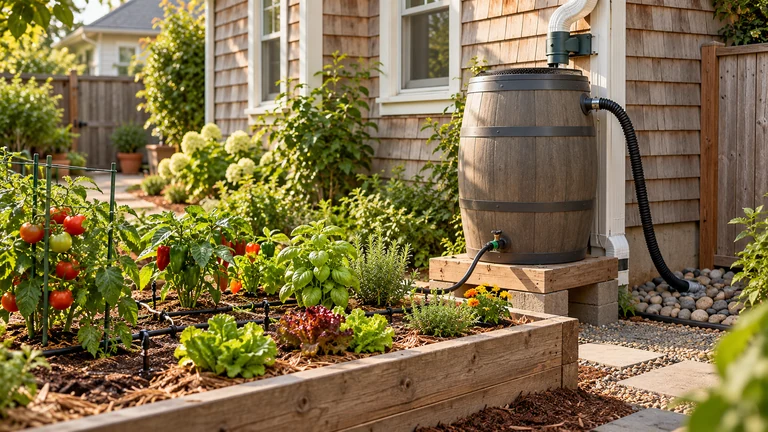
Stored rainwater can supplement irrigation, especially when captured from roofs during wetter periods.
But rainwater harvesting is not a universal drought solution.
Its usefulness depends on:
- roof catchment area,
- local rainfall timing,
- storage capacity,
- overflow design,
- mosquito control,
- and local rules.
During a long dry period, a small barrel can be emptied quickly.
Think of rainwater as one component of a water strategy, not an unlimited source.
Shade Can Reduce Stress During Extreme Heat
Drought and heat often occur together.
Temporary shade cloth can reduce afternoon heat stress for some vegetables, especially in exposed gardens.
Shade should be used carefully because too much can reduce photosynthesis and crop performance.
The goal is not to turn full-sun crops into shade plants. It is to reduce extreme heat load when conditions justify it.
Vertical Growing Saves Space, Not Necessarily Water
Trellises and vertical systems can improve space efficiency and airflow, but they do not automatically reduce water demand.
A vertically trained tomato, cucumber or bean still needs enough root-zone moisture to support its leaf area and crop load.
Use vertical growing because it improves layout and access, not because it is inherently drought-proof.
Hydroponics Is Not a Universal Drought-Garden Solution
Recirculating hydroponic systems can use water efficiently under controlled conditions, but they also require equipment, nutrient management and reliable operation.
They are not a direct replacement for ordinary home gardening in every drought-affected location.
For many gardeners, improving irrigation, soil moisture retention and crop selection is simpler than changing the entire growing system.
What Water-Smart Gardening Cannot Guarantee
Water-smart practices can reduce waste and improve resilience, but they do not guarantee:
- zero irrigation,
- zero crop loss,
- maximum yield,
- complete drought immunity,
- or compliance with every local restriction.
Local conditions and regulations still control what is possible.
A Practical Drought-Season Workflow
- Check local drought status and restrictions.
- Inspect soil moisture before watering.
- Fix leaks and irrigation inefficiencies.
- Group plants by water need.
- Protect exposed soil with suitable mulch.
- Prioritize vulnerable and high-value plants.
- Use shade strategically during extreme heat.
- Adjust irrigation as weather changes.
- Review what actually worked before the next dry period.
The Bottom Line
The 2026 drought is not one identical event across every American garden.
What it is doing is making water management harder to ignore.
The most useful response is practical rather than dramatic: understand local restrictions, know when the root zone actually needs water, reduce avoidable evaporation, improve irrigation delivery, choose plants that fit the site and prioritize carefully when water becomes limited.
A resilient garden is not one that never needs water. It is one that uses available water deliberately.
FAQ
Is the entire United States in drought in 2026?
No. Drought conditions are widespread in some periods and regions, but severity varies substantially by state, county and week. Use current local drought information rather than assuming national conditions apply equally everywhere.
Should I water every day during a drought?
Not automatically. Water according to crop needs, root-zone moisture, weather and local restrictions. Containers and seedlings may need more frequent monitoring than established in-ground plants.
Are native plants always drought-resistant?
No. Native plants come from many different habitats. Choose species adapted to the moisture, sun and soil conditions of your specific site.
Is drip irrigation always more efficient?
It can be very efficient when designed and maintained correctly, but leaks, poor emitter placement or excessive run times can still waste water.
Do containers save water?
Not necessarily. Containers allow precise watering, but they can also dry much faster than garden soil, especially in hot or windy conditions.
Should I use rainwater harvesting?
It can be useful where local rules, catchment area and storage capacity make sense. A small barrel should be treated as supplemental storage, not an unlimited drought-season water source.
What should I do first?
Check your local drought status and watering restrictions, then inspect actual soil moisture before changing your irrigation routine.
Build a More Resilient Garden
One practical system every Tuesday — water-smart gardening, food resilience, permaculture and small-space growing.
No fluff. No spam. Just practical systems that work.